10 Postpartum Diet Mistakes New Mums Should Avoid After Birth
What you eat after giving birth can affect your recovery, energy levels and breastfeeding, according to experts
Share this article
Eating well after giving birth is important, so avoid making these mistakes that can slow down your postnatal recovery and plans to lose the pregnancy weight. Find out how to do it right.
The mistake: You think it's okay to eat for two because you are breastfeeding
Well done for persevering with breastfeeding! It’s true that lactating mums need to eat more – as much as 500 calories more a day – because you’re producing food for your little one, Sarah Sinaram, manager of the Nutrition and Dietetics Department at Mount Alvernia Hospital, points out.
But be aware of the quality of calories that you are consuming. “Make sure they are healthy calories, not empty ones,” says nutritional therapist Susie Rucker.
Nutritious options include lean meat and fish, wholegrains, seeds, fruit, vegetables, and good fats like olive oil, coconut oil and avocado.
“To boost milk production, increase your intake of oats, sip on fennel tea, and make sure you get sufficient rest,” Susie recommends.
The mistake: You skip breakfast because you have no time
Your demanding new baby has been keeping you busy and you simply have no time for a morning meal, and perhaps even lunch. By dinner time, you’re so ravenous that you wolf down everything at the table.
Eating too much too late in the day is not good for your digestion, says Susie. It can also interfere with your sleep and concentration.
And if you don’t have the opportunity to burn off the calories, this habit can lead to weight gain. Even though your mornings may be hectic, it’s important to set aside time to eat when you wake up. If breakfast is really not possible, at least have brunch, and eat a small serving every three or four hours.
“Choose unrefined and unprocessed food, such as salmon, eggs and avocado, which have protein and healthy fat, and fibre-rich grains,” says Susie.
The mistake: You are eager to lose the pregnancy weight

The energy and nutrient needs of a nursing mother are higher, so you shouldn’t cut back on your meals, says Sarah.
“The good news is that, because of the increased energy requirements during breastfeeding, most new mums will experience some weight loss during this period,” she shares.
Focus on providing good nutrition in the form of healthy food to your child and yourself instead. You can start to lose the postnatal weight once you have weaned your baby off breast milk. The World Health Organization recommends nursing for up to two years or more.
The mistake: You are not eating mindfully
With so much to do, you can’t help multitasking during mealtimes – rocking your child to sleep, catching up on Instagram and thinking about your grocery list.
It’s therefore important to learn how to eat mindfully, that is, with intention and attention, says Sarah. “This means eliminating or minimising distractions so you can be tuned in to your meal – its flavour, aroma, temperature, texture and taste. Then, you can listen to your body’s cues of hunger and fullness.”
She suggests planning your meals around nap times or asking someone to keep an eye on your baby while you eat.
The mistake: You settle for fast food because you don’t have time to make dinner
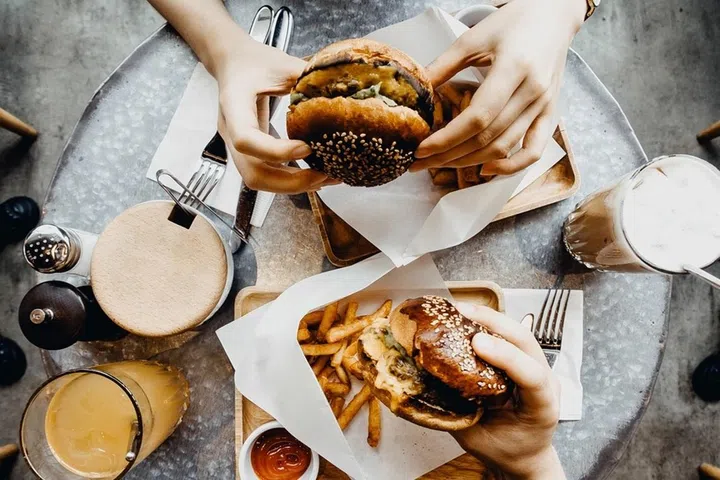
When you don’t have time to prepare a healthy meal, it’s easy to fill your tummy with a burger-and-fries combo or greasy fried noodles. Items like these may satisfy the taste buds and be cheap and convenient, but they are often devoid of nutrients.
Susie recommends preparing and freezing healthy meals, like soups and casseroles, ahead of time. You can also stock up on frozen veggies so you can prepare stir-fries in a pinch. If you have to resort to a takeaway meal, note that some cuisines are healthier than others.
So choose Thai or Indian dishes over, say, pizza and burgers. “It’s fine to cut corners, but not at the expense of your baby’s and your health,” Susie adds.
Remember, too, that whatever you eat will be consumed by your breastfeeding baby, reminds Sarah.
The mistake: You turn to comfort food because you’re stressed and tired
Comfort eating is a bad habit, so try not to succumb to the temptation. If you’re feeling low, reach for good food that will increase your energy while helping to alleviate some of your anxiety.
“Cottage cheese, chicken and turkey contain tryptophan, which helps produce serotonin, a mood-boosting chemical; while avocado and salmon contain healthy essential fat, which can improve your mood,” says Susie.
Avoid refined and processed carbohydrates, such as cookies, cakes and candy bars. “These provide no nourishment and will only make you feel more tired and down,” she adds.
The mistake: You’re not drinking enough water
Drink 2.5 litres of fluid a day, but avoid caffeinated drinks and soft drinks as these can dehydrate you. Besides, caffeine is not good for Baby. Instead, stick to still or sparkling water and herbal teas, Susie advises.
Homemade soups also provide hydration while giving you extra nutrition, but keep it simple with plenty of vegetables, lean meat or fish, and a non-creamy, low-fat, and low-sodium broth.
In traditional Chinese medicine (TCM), red date tea is thought to have numerous benefits for new mums, says TCM advisor and physician Lim Sor San.
It replenishes the blood and has a calming effect on the body. When combined with black dates and ginger, it’s said to nourish the digestive system and, in turn, reduce constipation, a common problem for new mums.
While red-date tea is recommended in TCM postnatal recovery, Sor San also advises drinking other warm beverages, such as lemongrass or ginger tea.
The mistake: You overload on Chinese herbs since they are supposed to help with postnatal recovery.
The right herbs taken in appropriate amounts can help speed up a new mum’s recovery after birth and boost milk production, Sor San explains.
This is why ingredients such as red dates, wolfberries, dried longan, dang gui, dang shen and bei qi are commonly used in confinement dishes.
But you shouldn’t take more than 15g of each in a day, as a rule of thumb. When consumed in large amounts without a certified TCM physician’s prescription, it can lead to overdosing and other complications.
It’s also important to know that not all herbs are recommended for mums immediately after childbirth. Speak to a TCM professional first.
The mistake: You avoid all high-fat food
Not all high-fat food is bad. Avocados, for instance, contain monounsaturated fat, which is actually healthy, so don’t drop them from your diet, Sarah says. Plus, the green fruit has plenty of folic acid, vitamins C, B6 and K, and potassium, which are important for breastfeeding mums.
Ensure that all your meals are balanced, that is, representative of the four food groups: Rice and starch alternatives, vegetables, fruit, and meat and meat alternatives.
“If you eat only a certain type of food, you will be missing out on the nutrients that other food can provide,” says Sarah. “Practise moderation when consuming unhealthy food such as deep-fried items. And limit your oily-fish consumption to no more than twice a week because of the high mercury content.”
The mistake: You cave in to unhealthy snacks
Control your blood sugar to keep hunger pangs at bay, so you don’t feel tempted to snack constantly throughout the day, says Susie.
To prevent your blood sugar level from spiking and then crashing just before lunchtime, start the day with a protein-rich breakfast dish, such as eggs. Then, have a nutritious lunch that includes plenty of fibre and water, to keep you satisfied till dinner. Do also drink lots of water to curb those hunger cravings.
If you feel like a snack, keep it small but make sure it’s filling and nutrient-dense. A combination of carbohydrates and protein always hits the spot. Susie suggests chicken kebabs, seaweed or a handful of mixed nuts with dark chocolate.
A version of this article first appeared in Young Parents.