8 Festive Dishes From Chefs To Ring In Chinese New Year
These classic dishes are sure to please all your family and friends at Chinese New Year. Six chefs share their best festive recipes
While you can find all sorts of newfangled Chinese New Year goodies nowadays, it is also important to remember the classic dishes. Some dishes are sure winners at festive feasts because they look fantastic, taste delicious and they're guaranteed to please family and friends.
We asked seven chefs in Singapore to share their favourite traditional recipes for the Chinese New Year festive season. These recipes are crowd-pleasers - and not too hard to make at home. Just imagine how impressed everyone will be when you serve them!
Think fork-tender braised beef slices glazed with a braising sauce of aromatic Chinese herbs. Paired with fried Wawa cabbage that adds crunch and texture, it’ll be a hit at the dining table.
The recipe is by Chef Leon Yee, chef de cuisine of buffet restaurant Peppermint at Parkroyal Collection Marina Bay.
Get The Recipe
If you’re a fan of the zi char staple sweet and sour pork, consider making this upgraded version with fresh fruits and slices of pork belly. Both sweet and savoury, this dish is sure to wow the family! Best eaten with a bowl of white or brown rice.
Get The Recipe
It’s the brainchild of Chef Masaki (who received the Tokyo Governor Recognition Outstanding Chef Award in 2013) who has helmed the Dynasty Chinese Restaurant in Hilton Tokyo for over 10 years.
Impress your guests with these handmade Teochew prawn rolls – when sliced and plated, the rolls look like a flower, which will look pretty for the Lunar New Year reunion dinner feast.
Get The Recipe
The filling for chef Cheng's steamed phoenix prawn rolls is made by hand. Prawns and pork are mashed, chopped and kneaded to achieve a springy consistency.
The versatile filling can also be used for fried prawn rolls (hae choh), says the chef, who was born in Hong Kong but grew up in a Teochew household.
He says in Cantonese: "When I started as a chef at the age of 18, I kept getting scolded for not making it properly. When sliced and plated, the rolls look like a flower, which is good for Chinese New Year."
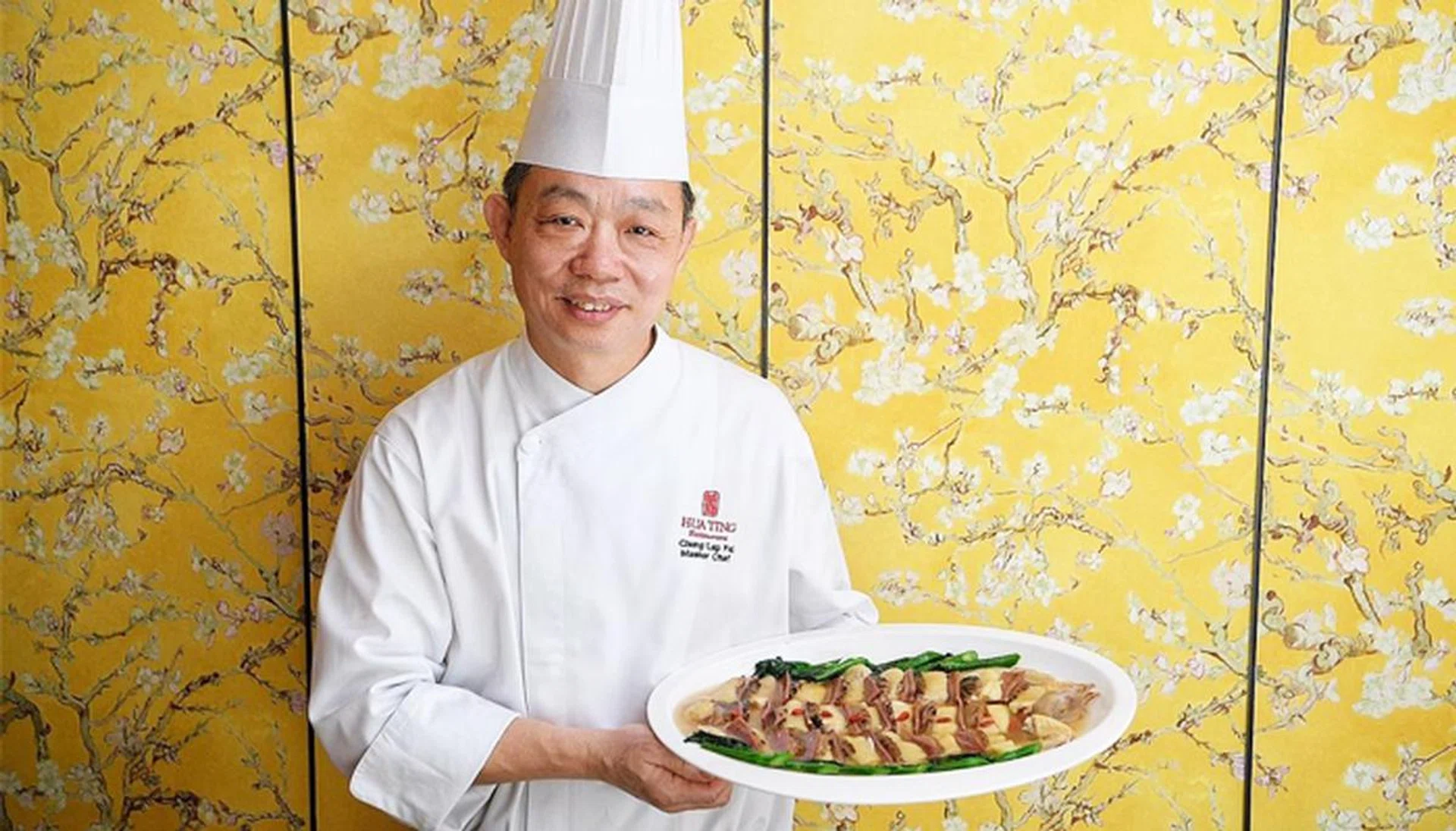
This classic Cantonese dish comprises of poached chicken arranged on a plate of ham and vegetables. While it is simple to prepare, the challenge comes from ensuring the strips of meat are almost the same size. Give this traditional favourite a try!
Get The Recipe
According to this Hong Kong-born chef, you cannot have a festive meal without the meaty trinity of chicken, duck and pork. With Jinhua Yu Shu Ji (yuk lan gai in Cantonese, or Jade Flower Chicken), you nail down two of those ingredients.
The classic Cantonese dish comprises poached chicken arranged on a plate with Jinhua ham and vegetables. The dry-cured ham is named after the city of Jinhua in Zhejiang province, eastern China, where it is produced. It is often used in stews and soups and can be bought at Yue Hwa Chinese Products in Chinatown.
The dish is relatively simple to prepare, but the challenge is in ensuring that the pieces of deboned chicken, ham and mushrooms are of a similar length and size. It is best to eat all three items together as the ham can be very salty on its own.
The dish is not commonly found anymore, although some traditional Cantonese restaurants still serve it. It is not on the menu at Hua Ting, but chef Chung can cook it upon request. It is priced at $80 and needs to be ordered in advance.
He says in Mandarin: "With the Jinhua ham in the dish, you get more flavour and fragrance. The dish was common for weddings, but you would need many chefs to debone and plate the chicken for hundreds of guests. It's easier to manage at home."
Packed with a variety of different ingredients, pen cai is a great way to satisfy everybody's taste buds. This version of the Hakka pen cai uses a light broth flavoured with seafood and meat instead of the usual braised sauce.
Get The Recipe
Chinese New Year is always a family affair for Then and her mother Soh Lee Chin, 73, a retired hawker.
From baking pineapple tarts to preparing pots of pen cai (one-pot meal) or steamboat for reunion dinner, they make sure everyone is well-fed through the festive season.
Their version of Hakka pen cai does not come with the usual rich braising sauce. Instead, it comes with a light broth flavoured with seafood and meat.
Madam Soh says in Mandarin: "This version is lighter, suitable for those who are more healthconscious. The flavour of each ingredient is not masked by a thick sauce."
For a more child-friendly version of the fiery Sichuan mala fish, try one braised in the traditional Sichuan bean paste. More people in the family will be able to handle the heat and it will still be as delicious.
Get The Recipe
For a flavourful main dish, try this glutinous rice recipe which is a staple in most Hokkien families' reunion dinner.
Get The Recipe
A staple for Hokkien Chef Louis Tay during Chinese New Year is fragrant glutinous rice with roast pork belly and Chinese sausages.
To ensure the rice grains remain whole and do not turn mushy, he recommends an overnight soak.
As he will be working on Chinese New Year Eve, he is having an early reunion dinner with his family today at Chinese restaurant Tasty Court in Figaro Street, run by his good friend, fellow Chef Pung Lu Tin.
On the second day of Chinese New Year, he will invite his friends to his home and whip up some dishes, including fish soup from a recipe by Chef Pung.
Besides eating glutinous rice, Chef Tay has other festive favourites. He says: "I love steamed rabbit fish as it has plenty of roe during the Chinese New Year period. For snacks, I must have bak kwa."
Set the table with this homely dish of pork ribs which originated from Huaiyang cuisine from Jiangsu, China – it's full of flavours and has a hearty sweetness.
Get The Recipe
Huaiyang cuisine from Jiangsu, China, is considered to be one of the "Four Great Traditions" representing the country's culinary heritage and Chef Qi has been honing his craft in this tradition for more than 20 years.
The food tends to be on the sweeter side and a key ingredient is Zhenjiang vinegar from Jiangsu.
In this homely dish of braised pork ribs with sweet and sour sauce, the flavours come from the vinegar as well as sugar. Chef Qi prefers using ribs with a layer of fat in the middle so the meat remains tender and juicy throughout the cooking process.
Text: Eunice Quek/The Straits Times Additional reporting: Michelle Lee