All You Need To Know Before Buying A Postpartum Belly Binder
Postpartum belly binders sound like a great way to offer support and shrink your stomach back down, but does it really?
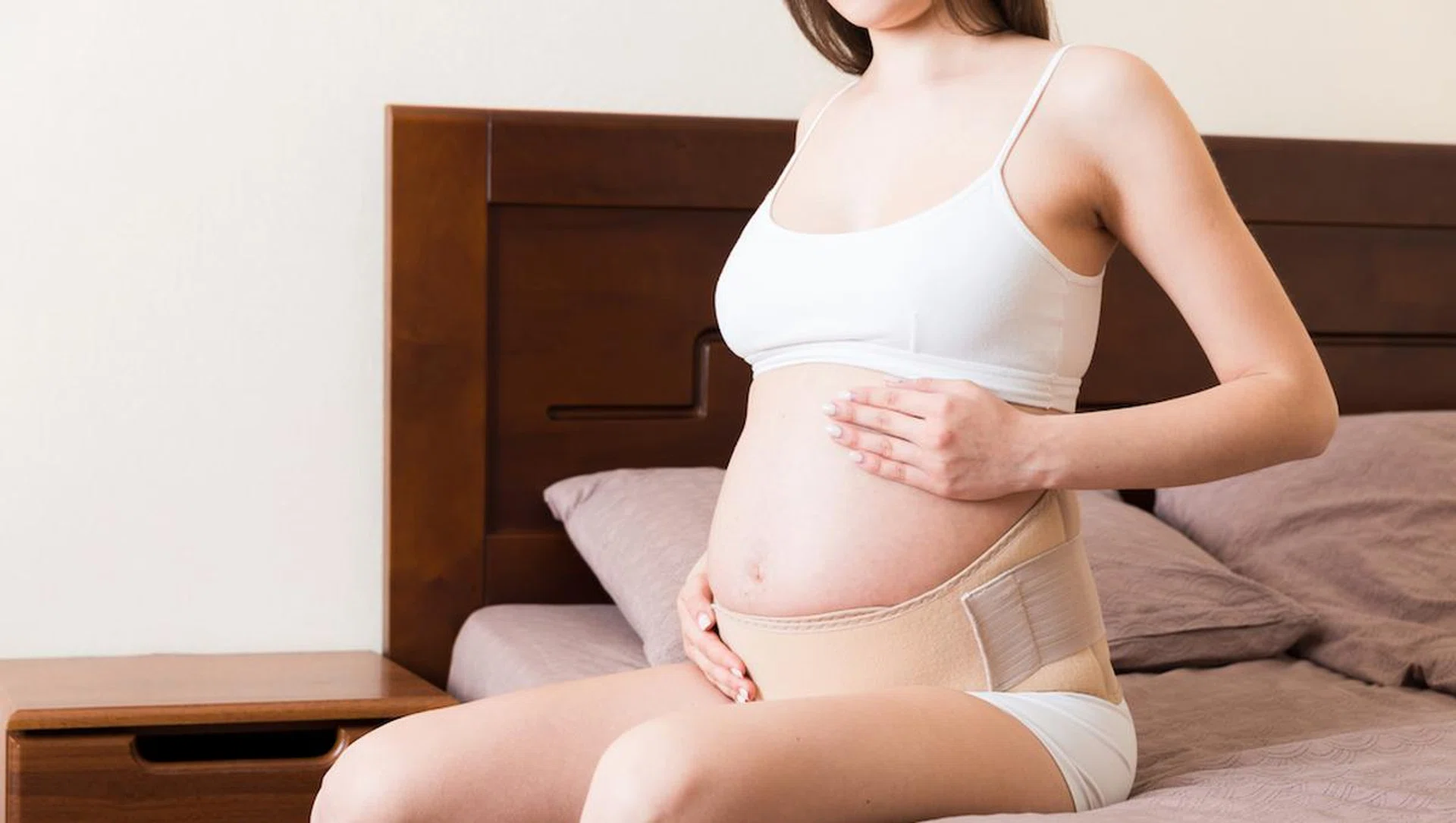
You might have heard that belly binders are a postpartum must-have. These belts worn around the stomach area are said to help give you extra support, after the baby you’ve been carrying for about 9 months has really stretched those muscles to the max. They’re also said to help shrink the excess skin and firm up core muscles.
That’s a tall order, and a lot of hope and expectation resting on one piece of cloth (essentially). So, what are the real benefits of these postpartum belly binders? Do they really work? We break it down here.
What is a belly binder?
“When choosing a binder, you should be able to breathe normally and not feel restricted. But the most important thing when it comes to choosing and wearing a binder is that there must not be any pressure felt in the pelvis/perineum area while wearing it,” says Leah Kieffer, Pelvic Health Physiotherapist at Physio Down Under. “This means that the binder is too tight, causing increased pressure on the pelvic organs which is unsafe for a postpartum woman.”
There are generally three types of postpartum belly wraps: a thinner belt, wider wraps, or entire pieces of shapewear. You will know you’ve got the right belly binder when you feel supported enough to move around freely without that jelly-like and empty-bellied unbalanced postpartum feeling in your tummy, and when you’re sitting or standing upright in good and improved posture.
It is very crucial that you do not mistake postpartum belly binders for weight-loss waist trainers or waist-defining dressing corsets. They are vastly different, and are often constructed differently whether in cutting, material, or function.
How can a belly binder help?
Some postpartum women find wearing binders helpful after childbirth, in particular for those who have had caesarean sections. Some doctors even have their patients wear them immediately after giving birth. They can help promote wound healing and reduce swelling and help new mums be mobile and get around so soon after giving birth. “An abdominal binder may help support the abdominal fascia during healing from delivery,” says Leah, adding that more evidence to support the use of a binder in the early postpartum period is coming in the near future.
“Postpartum binders are generally helpful for support of the mother’s back and abdominals post delivery. Those that can adjust to the changes over the first 6 weeks postpartum are ideal as the uterus will shrink as does the size of the abdomen. Most women should be able to stop wearing a binder by 6 weeks postpartum and if they don’t feel ready to do so, that would be an indication to see a women’s health physio to see what is limiting them from stopping the binder use.”
But will it help you lose weight and get back into shape?
Putting aside how contentious asking mums to “bounce back” from having a baby already is, most mothers would agree a belly binder is not going to help tighten loose skin or with weight loss.
“A belly binder or waist trainer may help postpartum ladies who have a weaker core to feel more support so they may feel less pain in the lower back,” says Filza Dorah, owner of Bold Fitness and a postpartum women’s trainer. “But otherwise, postpartum or not, wearing a binder mainly helps make you more aware of your core engagement and over time, helps tighten up the muscles you have inside.” But she adds that this can be tricky and relies on the individual to know how to properly engage their core muscles, even when wearing a binder.
“All women who go through pregnancy will experience weakness in their core and abdominal muscles,” adds Leah. “Recovering strength and function is important in order to return to exercise and care for a baby. A physiotherapy assessment to look for diastasis recti and to guide a patient through her abdominal exercises is best. The binder may complement her abdominal recovery but is not a substitute for targeted exercise.”
For postnatal mums looking for that extra support, we’ve rounded up five of the most popular binders that can help with healing and movement.
One of the most renowned brands of belly binders around is the Belly Bandit.
Founded by three sisters, namely Kari, Jodi, and Lori Caden who wanted to solve real-life menstrual and postpartum problems in 2008, Belly Bandit is best known for the Upsie Belly maternity support belt, the original Bamboo postpartum belly wrap, the Luxe version of the original belly wrap, and their Mother Tucker maternity compression leggings.
Here in Singapore, you will find Belly Bandit’s original bamboo postpartum Belly Wraps retailed in motherhood stores such as Mothercare. The belly wrap features Belly Bandit’s PowerCompress Core technology, is latex-free, and made from medical grade elastic.
Belly Bandit Original wrap is available on Mothercare for $74.90.
Closer to home, Mamaway is a Malaysian mothercare accessories brand founded in 2003 by a lady called Deborah. The brand started out with breastfeeding and nursing accessories, but is now also known for their maternity clothes and accessories.
This Bamboo Postnatal recovery band retails for MYR330 on the official Mamaway website (they do ship to Singapore). With velcros and elastic bamboo fabric, you can quite easily adjust the belly wrap throughout the day to find the right compression and pressure.
Mamaway Bamboo Postpartum Belly Band is available on Amazon at $89.95.
For ladies who are not sure about the maternity belt and are not convinced enough to shell out $90+ on a band, go for this $29.99 brandless maternity belt from Amazon instead.
The belt spans a whopping five metres (great for taller build mothers), and you can use it from pregnancy to postpartum. Wrap it under your pregnancy bump for extra support, and then all over your rib to hips for postpartum support.
This belt is made from spandex and polyester, which may not be as breathable as the above bamboo options. However, reviews from users are positive generally,
Maternity Belt is available on Amazon at $29.99.
Upspring is a Texas-based maternity and child brand founded in 2005. The brand’s signature products include the lactation supplement Milkflow, nausea relief drops Stomach Settle, alcohol detection test pad for breast milk called Milkscreen, the Shrinkx bamboo belly wrap, the high-waist maternity C panty, and Shrinkx postpartum Hip Binder.
The Upspring ShrinkX hip compression belt retails for $67.90 on the official Upspring Singapore website. Due to its smaller surface area, you can actually wear such belts for long periods of time than the full length belly girdle wraps.
Upspring’s belt is made of nylon and spandex, and can be used throughout pregnancy to provide your belly with extra support.
Even though such belts provide your lower belly with great support, the downside of such postpartum belly or hip belts is the muffin top that might ensue, making them inappropriate for going out and dressing up.
Upspring Shrinkx postpartum hip wrap is available on Amazon at $49.99.
There are, however, evolving opinions about the role of a postpartum belly wrap.
Some personal trainers have noticed the undue pressure a belly wrap has on the pelvic floor (it pushes all your organs downwards) and have started recommending mothers to wear all-rounded compression tights instead to even out the pressure.
Here, the polyester Nike One women’s high-rise maternity leggings comes with a pregnancy bump zone that stretches and shrinks to fit the ever-changing size of your bump from pre- to post-pregnancy.
Nike One women’s high-rise maternity legging is available on the Nike website at $79.