Research Says Bluey Teaches Kids Resilience. A No-TV Dad Weighs In
Have I missed the boat because my child is eight now?
By Raymond Goh -
Share this article
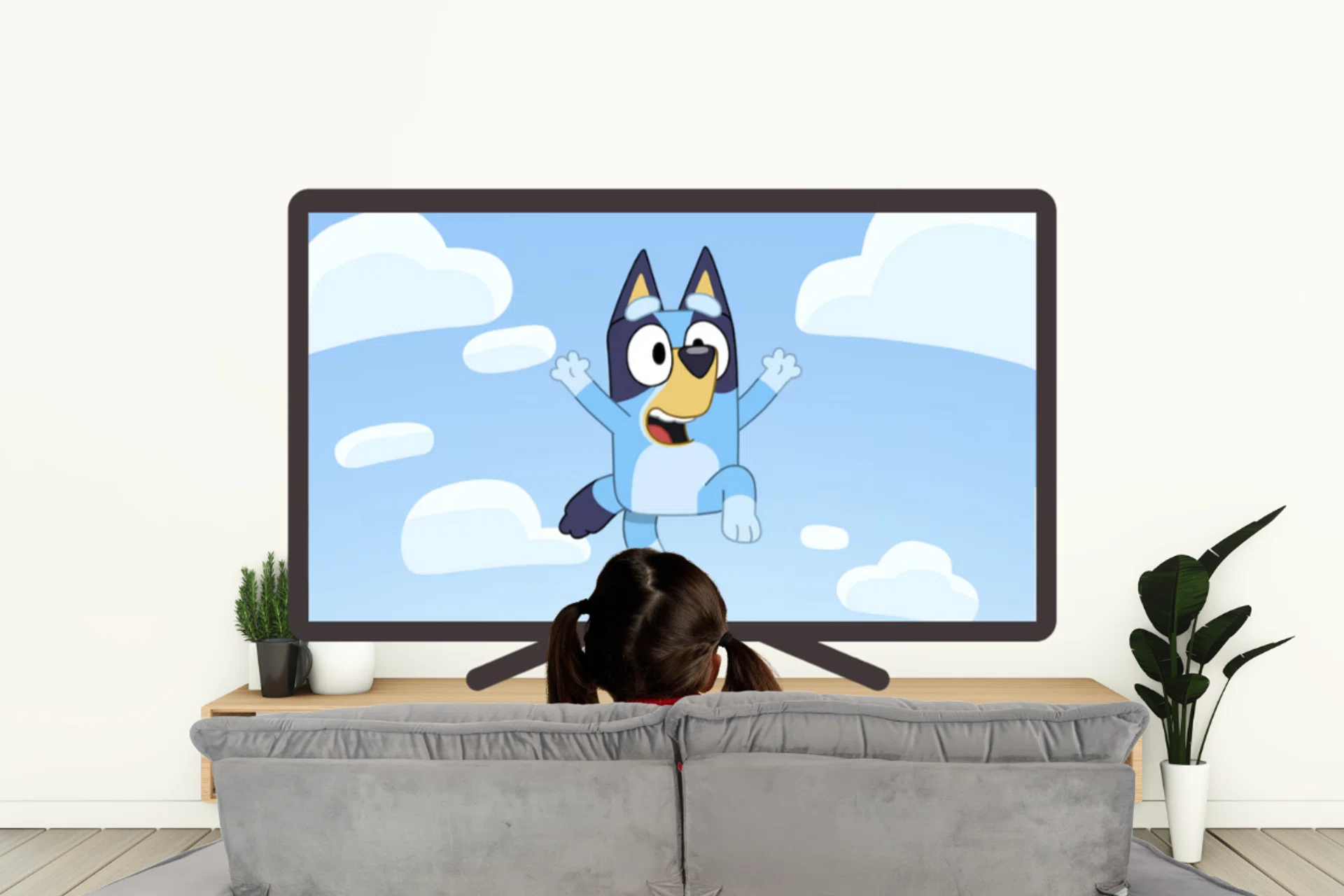
Three scientists recently sat through 150 episodes of Bluey (2018 to present), the popular Australian cartoon series, and concluded that it is a great way to teach children about resilience.
When I first read what these intrepid martyrs did for the sake of science, I thought to myself: three intelligent adults binge-watching 150 episodes of an animated series intended for five-year-olds, overcoming challenges like bleary eyes, acute tedium and even exploding brains... What better way to demonstrate resilience to children, right?
But after reading the full study published in the academic journal, Educational and Developmental Psychologist, I quickly learnt that I was mistaken.
What these three resolute researchers did was to map all 150 episodes of the animated series onto something called the Grotberg Resilience Framework. With the data it yielded, they could then confidently compute that nearly half of all the episodes showcased scenarios with Bluey – the eponymous character and talking puppy – exhibiting resilient behaviour.

They also discovered that Bluey’s grit is very often facilitated by Chilli. By that, I don’t mean to say that a fiery spice is employed to extort resilience from the poor puppy, but that Bluey’s mother, who gently encourages her to be resilient, is named Chilli.
By incorporating Bluey’s show of hardiness and her mother’s show of support as a recurring story arc, the target audience – bleary-eyed five-year-olds – gets to see resilient behaviour being modelled on-screen and are thus guided to become quite resilient themselves.
In fact, they might become so resilient that they are able to power through more episodes of Bluey being resilient, with nary a brain exploding.
Resilient is the new obedient
Resilience is defined as the ability to bounce back from adversity and setbacks. It is the capacity to fail and to fall, but to pick yourself up, recalibrate your strategy and just keep inching forward.
If you are a parent of a young child today, you will know that there is much emphasis on cultivating resilience in the next generation.

And you know resilience is serious business when even TikTok has dedicated entire short-form videos to helping parents gird their delicate progeny.
Unfortunately, my eight-year-old daughter, JJ, did not watch Bluey in her pre-school years and so did not have the opportunity to learn resilience from a cartoon.
I was under the impression that screen time is anathema to the brains of growing children, so I kept her away from the TV. This lack of exposure to screens and devices is supposed to make her less anxious and depressed... until she is unable to recover from failure and starts to wallow nervously.
No one told me, hitherto, that TV could teach such important life skills. And it is too late now, as I can no longer foist a Bluey marathon onto JJ seeing how she has outgrown such “baby stuff”.
So, on top of feeling completely confused as to whether screen time is bad for kids, this whole new whirl around resilience has also left me nonplussed.
To be clear, I don’t doubt for a second that resilience is a good thing for our children (except maybe when their sass just won’t quit). But for the life of me, I don’t seem to recall that it was such a big deal when I was growing up.
During my time, if you fail, you don’t have to be resilient – you have to be punished. And I don’t mean that your parents will rescind your Bluey rights for a week. Instead, your mouth might be stuffed with chilli (by that, I mean with actual chilli, not Bluey’s inspiring mother); or your buttocks might be flogged with a rattan cane.
A difficult childhood
So, what has changed such that our kids today seem to have become such pale and brittle versions of our hardy selves?
For starters, the contemporary childhood experience is plagued by more social strife and academic struggle than what we were used to. Their maths is harder, their bullying is cyber and their social lives – held ransom by the approval algorithms of Snapchat and TikTok – are a lot more complex than our classmate merely not “friending” us at recess.
And don’t get me started on kids vaping. Those heinous hell spawn who peddle vapes to primary school children should really be sung to death by a band of screechy Kpod demon hunters.
My point is this: Kids today have a lot of reasons to give up. They are not resilient because there is just too much to bounce back from, too many expectations to meet and too many opportunities to underperform. After a while, it is just easier to languish in a constant state of subpar mediocrity than to fail on multiple fronts – repeatedly.
In some countries, kids have already grown old enough to quit modern life as they know it.
The Japanese subculture of hikikomori is where young men and women voluntarily sequester themselves in their rooms, doing nothing but eat instant noodles and read manga.
In China, a similar sub-cultural resistance is “tang ping”, which literally means “lying down flat”. It is a metaphor for Chinese youth’s rejection of the high-pressure rat race, signifying a low-energy inertia that is placid and potent all at once.
The socio-economic capitulation of these Japanese and Chinese youth is an indication of one thing: They clearly did not watch enough Bluey when they were growing up. Which might perhaps explain why there is no such quiet rebellion Down Under among Australian kids and young. Since 2018, they have been taught well by Bluey and Chilli.
In Singapore, we have no equivalent for hikikomori or tang ping either. Instead, we have tuition.
The billion-dollar tuition industry is in so many ways responsible for teaching our kids about resilience. Tuition gives them no choice but to press on, even when they would really rather play Roblox. And just when they think the school holidays are here, tuition hits them with extra virtual lessons and homework to truly test their mettle.
Not least of all, tuition enables them to resist that deep, primordial yearning to “tang ping” on an early Saturday morning, instead of turning up for a dreary two-hour mother-tongue enrichment class.
Now, if that’s not resilience, I don’t know what is.
Raymond Goh is a father of an eight-year-old and an editorial director with SPH Media.