After Losing Their Daughter To Childhood Brain Cancer, They Started A Non-Profit To Help Other Kids
They first started noticing that their daughter walked with a limp
By Venessa Lee -
Share this article
Natasha Loo was excited about starting Primary 1.
At the beginning of 2024, she would bound out of bed at 5.45am to get ready for her school bus. She made friends easily at CHIJ (Katong) Primary.
Before the school year began, she went with her family to Japan for their first ski trip in December 2023. Just three months later, however, the six-year-old began walking with a limp.
She wanted to help her friend fill up a water bottle at the water cooler in school, but cried when she had no strength to unscrew the cap.
Her parents, lawyers Linda Ong and Johnson Loo, were alarmed when Natasha’s paediatrician referred them immediately to a hospital. A neurologist suspected a possible stroke.
On March 28, 2024, Loo had a medical check-up at Mount Elizabeth Hospital, the same day his daughter had an MRI scan there.
Loo’s doctor waved him away after the routine colonoscopy, saying he would see him in five years for his next one. But when Loo arrived at the radiology department to meet his wife and their daughter, he and Ong received worse news than what they had been steeling themselves for.
Natasha’s MRI showed a massive tumour in her brainstem, which a biopsy later confirmed to be DIPG, or diffuse intrinsic pontine glioma. The malignant growth is located in the pons – an area in the brain that controls vital functions like breathing – and its diagnosis is virtually a death sentence.
With no proven genetic, lifestyle or environmental links, the exact underlying causes of this paediatric brain tumour are unknown. The median survival rate is nine to 11 months after diagnosis.
DIPG gained prominence in the 1960s, when the two-year-old daughter of American astronaut Neil Armstrong, the first man to walk on the moon, died from it.
DIPG mostly affects children aged five to 10. Only about 300 cases of the cancer are diagnosed in the US every year. In Singapore, there have been 24 cases of DIPG over the last five years, according to the Ministry of Health.
“We went to various doctors in Singapore, and they all said the same thing. There was no cure. We were told to ‘make memories’ with Natasha,” says Ong.
But she and her husband, now 48 and 49, respectively, refused to accept their daughter’s grim prognosis.
“Maybe we were naive, but back then, that’s what kept us going: the idea that maybe if we tried hard enough, if we tried everything we could, maybe we could crack the code, maybe we could get a miracle,” says Ong.
They were determined to figure a way out, even after their family was plunged into what Loo calls a Kafkaesque universe as they tried to stave off a rampaging disease. The couple, who are partners in different law firms, also have a 13-year-old son, Damien.
The parents’ search for any kind of reprieve for Natasha quickly became global. They took their daughter on flights across the world – to San Francisco and Shanghai – to take part in clinical trials and experimental therapies for DIPG that were unavailable in Singapore.
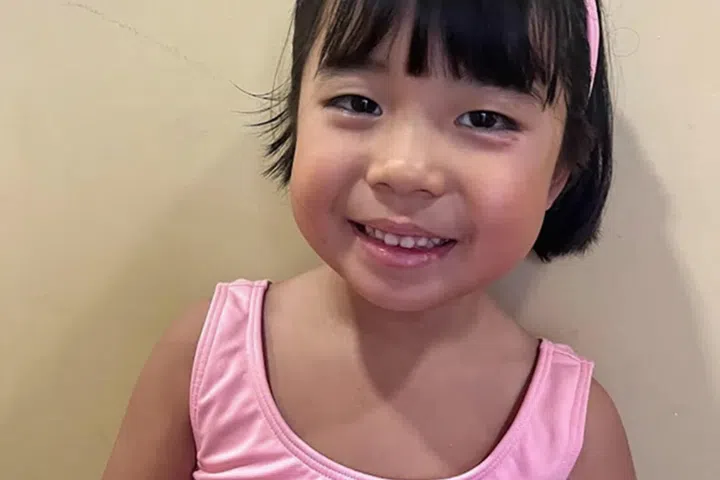
Natasha’s school switched her classroom to one near a lift to help her get around when she had problems walking up the stairs in March 2024. But she never went back to school.
The brain tumour that first made its presence felt as weakness in her arms and legs turned her into a quadriplegic in three months, and she eventually lost the ability to speak.
She died on Aug 26, 2025, at the age of seven, 17 months after being diagnosed with DIPG.
Access to new clinical trials, therapies
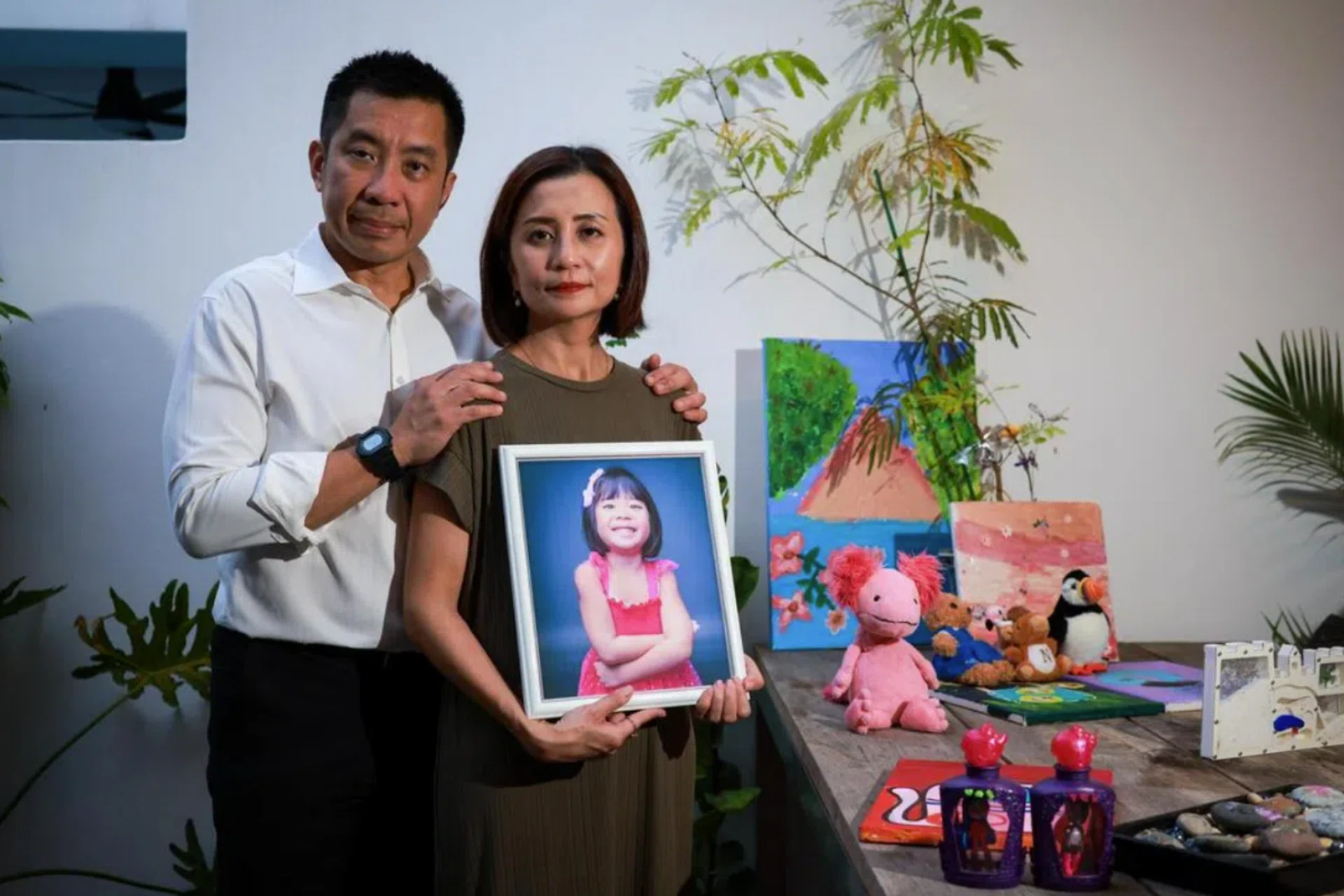
A year after losing their daughter, Ong and Loo have become co-founders of DIPG Alliance, the first non-profit in Singapore dedicated to funding and researching DIPG and other paediatric brain cancers. The other co-founders – Joe Chew and Annette Chua, and Syed Tirmizi and Myra Hussain – are couples who also lost their daughters to DIPG in 2025.
The non-profit will be launched at a private event at Temasek Shophouse in Orchard Road on Sept 30. September is recognised internationally as Childhood Cancer Awareness Month.
In a first, KK Women’s and Children’s Hospital (KKH) has partnered DIPG Alliance to develop the KIND Programme, whose acronym stands for KKH Integrated Neuro-oncology Development.
KIND focuses on paediatric brain tumours and serves children, adolescents and young adults. It prioritises clinical trials, precision medicine, regional collaboration and the development of future therapies.
The programme is supported mainly through philanthropic funding by organisations like DIPG Alliance, which hopes to raise $5 million for KIND in the next few years, Ong says.
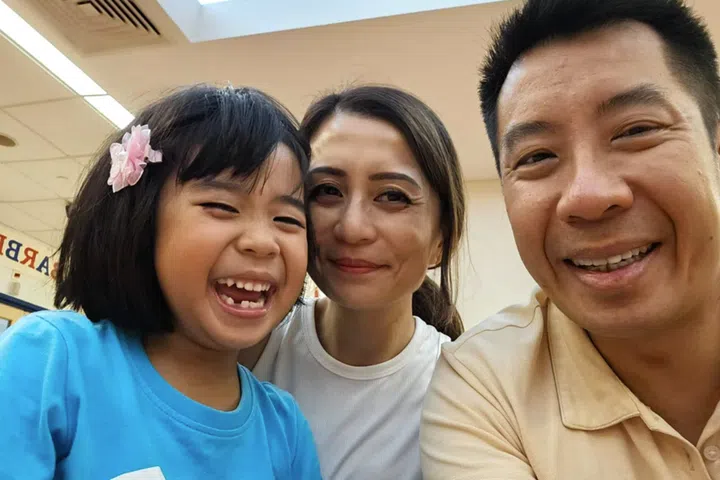
KIND lead Enrica Tan, who was one of Natasha’s doctors, calls the programme a “landmark step” for Singapore.
Previously, children with rare brain tumours had to travel overseas to take part in clinical trials like Natasha did, but KIND aims to bring more early-phase trials to Singapore, the first step in testing new medicines developed in the laboratory, Tan says. Brain tumours are the leading cause of cancer-related death in children globally, she adds.
Set to start operations in the first half of 2027, KIND was developed in 2026 by the brain tumour programme led by Tan at KKH Children’s Blood and Cancer Centre.
In the future, patients in Singapore could gain access to new clinical trials and therapies, such as those spearheaded by global research networks like Pediatric Neuro-Oncology Consortium (PNOC). This consortium, which serves children and young adults with brain tumours, works with more than 40 children’s hospitals worldwide.
“Singapore is leading the charge for the PNOC outreach within Asia,” says Sabine Mueller, co-founder and project lead of PNOC.
She is a professor of neurology, neurosurgery and paediatrics at the University of California, San Francisco (UCSF), which operates a network of hospitals. Natasha participated in a clinical trial at UCSF Medical Center under Mueller’s care between July 2024 and January 2025.
Tan credits Natasha’s parents with planting the idea for the KIND programme. She says: “It began with Linda and Johnson persistently asking why clinical trials conducted by PNOC could not be made available in Singapore.”
The question resonated with the clinicians, Tan says. Momentum grew as a handful of families with DIPG patients, including the other DIPG Alliance co-founders, lent their voices to the cause.
Tan says: “It was this confluence of advocacy – from determined parents and supportive clinicians – that set the KIND programme in motion.”
While a cure remains elusive, she points to “meaningful scientific progress” such as the discovery of a specific mutation in the tumour, known as H3K27M, around 2012. This milestone transformed DIPG “from a poorly understood disease into one with a possible molecular target”, Tan says.
“The medical consensus is that DIPG remains essentially incurable with current standard treatments... But the overall mood in the DIPG research community has shifted from near-total pessimism to cautious but genuine optimism.”
Agency is a myth
From the beginning of their family’s ordeal, Ong decided to “use every skill” she had to keep her daughter alive.
She read countless research papers on DIPG and other diffuse midline gliomas, a rare class of cancerous brain tumours, citing clinical trials by date, place and outcome. She spoke to experts she knew or introduced herself to contacts who were strangers who might be in a position to help. She wrote to more than 30 hospitals across the world to pursue treatment options for Natasha.
Only a few got back to her.
Clinical trials for DIPG are scarce, in part because of the small patient population.
International trial patients also face considerable practical and financial burdens. While trial sponsors typically cover the cost of the experimental drug, foreigners have to pay for necessities like medical tests and hospital stays, which might otherwise be covered by domestic insurance. Ong and Loo spent about $300,000 on medical, travel and other expenses.
Natasha’s first course of treatment was radiation therapy carried out in Singapore between April and May 2024. It is the standard of care for DIPG, temporarily relieving symptoms. Surgery is ruled out because the tumour weaves through healthy brain tissue in the brainstem and attempting its removal would almost certainly result in death.
The child’s face was held in place with a mask to target the site of the tumour during radiation therapy, and she had to be alone in the room for the treatment.
Natasha, whom her family called Baby, was frightened at first, but she was encouraged and supported by the nurses and the child life therapist, who helps children deal with the stress of medical procedures.
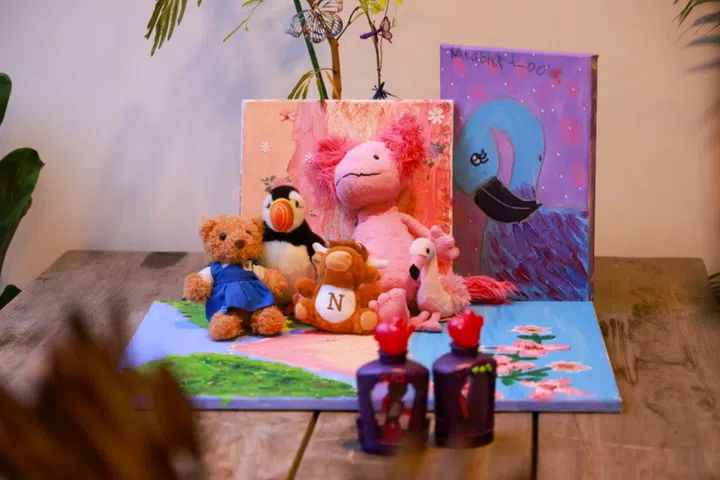
Flashing her ready grin and comforted by Alice, her axolotl plush toy, Natasha endured 30 radiation therapy sessions over six weeks. After the high steroid doses made her face swell and her weight balloon, she developed hydrocephalus – the build-up of cerebrospinal fluid – which can put pressure on the brain and harm brain tissue. Draining the fluid away was the first of several emergency procedures.
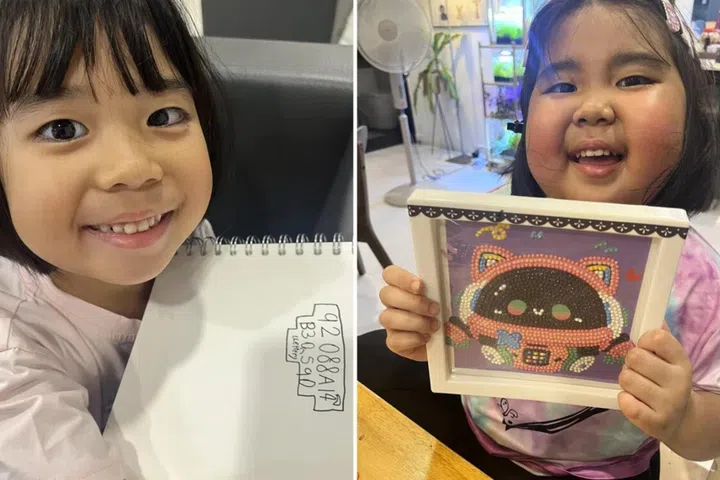
By June 2024, Natasha could no longer walk or draw. She used to draw cartoons of girls in school uniforms because she longed to go back to school.
“Baby was a trouper. She went along with all the treatments because she wanted to get better,” says Ong.
Her parents took her to San Francisco to try an oral drug, ONC201, in a PNOC clinical trial, making four trips there between July 2024 and January 2025.
In November 2024, Ong and Loo travelled to California with Natasha and her brother. The brief escape of their Disneyland visit was bittersweet.
When the ONC201 drug no longer worked, Ong and Loo took Natasha to try CAR-T cell therapy at Shanghai Children’s Medical Center. In this emerging therapy, immune cells are removed from the bloodstream and modified to attack a particular protein in the cancer before they are infused back into the patient.
From April to July 2025, Natasha spent the first half of her time at the CAR-T therapy unit and the other half in the intensive care unit (ICU) when her condition deteriorated.
During the day, a sea of anxious adults camped outside the ICU with portable safari chairs and suitcases in tow, waiting, like Ong and Loo, to hear about their loved ones, whom they could see for only 30 minutes a day. When they arrived home, Natasha was taken by ambulance to KKH.
Ong and Loo had a backup plan at every stage. They applied their cognitive skills as former students, combined with a lawyerly attitude of believing they could influence the outcome of a problem in one way or another, Loo says.
He says: “You believe you have agency in life, that if you study hard, be good and do good, you will be rewarded. It’s part of the Singapore story. But this entire journey has taught us that that may not be the case.”
Their daughter was growing up even while the illness was stealing her life away.
When she could no longer speak by the middle of 2024, she used an iPad to type and communicate until her strength ran out. She told the child life therapist about Henry, Lyra and the other creepy-crawlies – a praying mantis and spiders – she kept as pets.
At six, she would squeal in laughter as she repeated the same jokes: “Why did the boy throw the butter out of the window? Because he wanted to see the butterfly!”
After she turned seven at the end of 2024, she started “learning sass”, her father says. When Loo dropped his mobile phone and had to have it replaced, Natasha quipped, through her iPad, that he should have been watching his children rather than scrolling on his phone.
But the anger of a suffering child is seldom talked about, notes Ong.
Natasha’s frustration was channelled into a new preference for horror as she watched the Five Nights At Freddy’s media franchise on repeat. She shared her thoughts and anguish privately with her mum before bedtime.
Up till Aug 25, 2025, the day before her death, the couple found the words of Natasha’s KKH doctors – that she was not going to make it out of the ICU – difficult to accept, Loo says. “We still kept hope that she could turn a corner.”
They had been fitting out a new room at their house for Natasha, putting in medical equipment, a hospital bed and cheerful wallpaper with parrots on it.
Natasha died at 2.16am the next day, a single tear falling from her left eye. She had been born at 2.14am.
‘It cannot end like this’
Loo says there were other “absurdist” mirror moments, juxtaposing beauty and tragedy.
“When she was going into the ICU at Shanghai, there were fireworks outside for a celebration. We were there when her birth certificate was issued and also when her death certificate was signed. We have experienced the joys of being a parent and the unimaginable grief of losing a child,” he says.
Husband and wife were filled with pain and rage.
“We both decided it cannot end like this,” Loo says.
Less than two weeks after Natasha died, they started discussing plans with their doctors, friends and other contacts for a charitable project to fight paediatric brain cancer. DIPG Alliance will benefit other children, they say.
“All we have are her clothes, her shoes and memories, photos and videos of her. I think the fear that every parent has is that you forget anything. You don’t want to stop feeling the pain because it’s part of the fact that she existed and you love her. We don’t want the grief to end, actually,” Ong says.
“The long-term goal is to find a cure. I don’t know if we will get there in our lifetimes, but we have to try. I hope that day will come, and that Natasha was part of the fight that led to this cure, that she was one of the many brave and selfless kids who made it happen.”
Loo adds: “DIPG has a survival rate of 0 per cent. The only way is up.”
This article was originally published on The Straits Times.