Her 5yo Has A Genetic Condition So Rare, There’s No Name For It
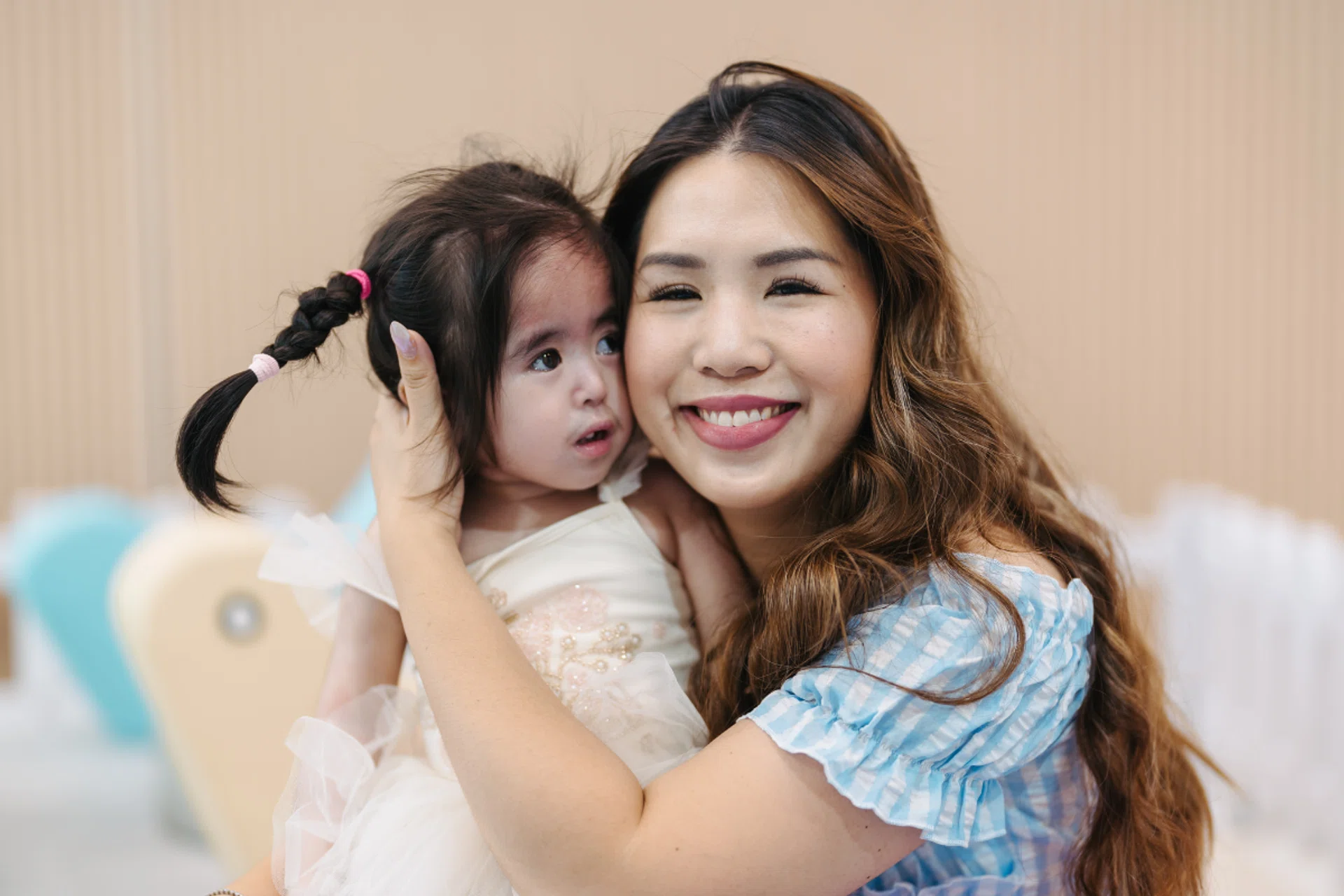
“We tell our children that Mei Mei is special. She won’t be able to do many of the things they do, or that most children her age can.”
By Michelle Lee -
Share this article
While most mothers spend their pregnancy and labour focused on the baby they are about to meet, mum-of-five Chantal Choo, 36, was preoccupied with worry for her other child.
Just floors away in the same hospital, her daughter Camila, now five, lay in a high dependency ward battling meningitis, hooked up to machines after weeks of complications. She tells The Weekly about navigating the realities of caring for a child with special needs.
A routine scan that changed everything
After three sons, Chantal was thrilled to learn she was finally expecting a baby girl. This was in 2021.
But during a detailed scan at Mount Elizabeth Hospital between 16 and 20 weeks into her pregnancy, she sensed something was off. The appointment felt noticeably longer than her previous scans.
“Our gynae was very calm, but I could feel that something wasn’t right,” she recalls.
The doctor eventually detected an anomaly in the baby’s heart and referred her and her husband, Jonathan, 37, for a second opinion with a senior professor at NUH, who then sent them to a heart specialist for further evaluation.
“That’s when we found out Camila’s heart was functioning differently from most people’s,” says Chantal. “She has a small hole in her heart, but it’s not something that prevents a person from living a normal life.” With that, the couple decided to go on with the pregnancy.
But that was not the full picture.
They also diagnosed the baby with Intrauterine growth restriction (IUGR), also called fetal growth restriction, which occurs when a baby in the womb grows more slowly than expected.
A smooth birth, followed by weeks of hospitalisation
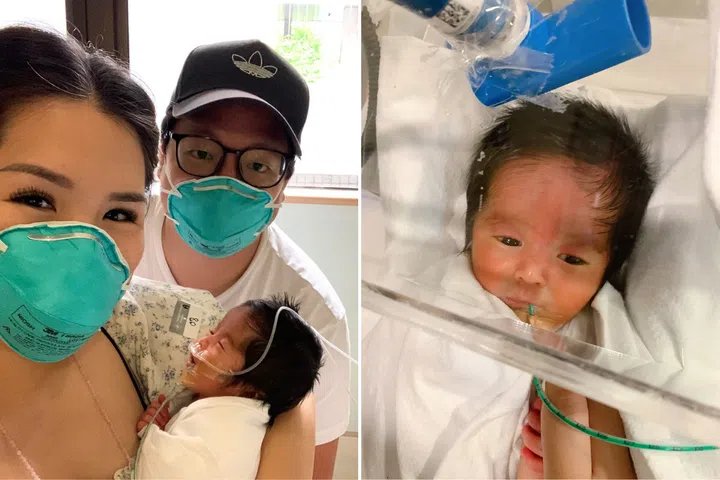
Despite concerns about Camilla’s heart and her IUGR diagnosis, Chantalle’s pregnancy was otherwise smooth. And although she measured small throughout, Camilla was born at around 38 to 39 weeks, weighing 2.5kg — smaller than her older siblings, who were all around 3kg, but not alarmingly so.
Still, from the moment she was born, something felt different.
“Her eyes were wide open, and she was a super hairy baby,” Chantal recalls. “After three deliveries, all my other babies came out with their eyes closed.”
Soon after, Chantal struggled to breastfeed her newborn. Even with hand-expressed milk and syringe feeding, Camila could only take in very small amounts.
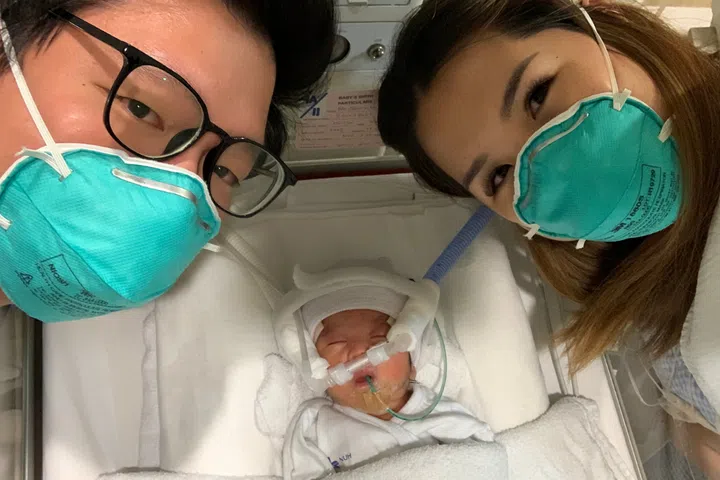
Subsequently, nurses took Camila away for further checks. Hours later, Chantal was told that her daughter had been admitted to the Neonatal Intensive Care Unit (NICU).
“When we finally saw her six to eight hours later, she already had a feeding tube, a drip and oxygen support. It was a shock to us.”
Doctors later discovered that Camilla’s oxygen levels had dropped to a dangerously low 40 per cent. They also noticed she had a single transverse palmar crease — a single line across the palm that can sometimes be associated with genetic conditions.
Camilla remained in hospital for the next two months, moving between the NICU and high dependency ward before she was finally well enough to go home.
A one-in-a-million condition
Chantal tells us that according to the geneticist, Camila’s condition is so rare that there’s no official name for it. She could only say that Camilla has a duplication as well as a deletion of a particular chromosome.
“The doctors say it’s a one-in-a-million condition, and it’s not very well-documented. All we know is what we found out or learnt along the way. Bruises or cuts won’t affect her very badly, but she is very immunocompromised. So each time any of us falls sick, she has to be isolated.”
“We did find someone in a Facebook group — a lady in Singapore — whose child has the same chromosome deletion. But while her child can eat on her own and even walk assisted, Camilla is far from that. So while it’s a similar chromosome condition, it presents itself differently in every individual.”
A meningitis diagnosis no one saw coming
Shortly after her first birthday, Camila fell very ill with meningitis, leading to a three-month stay in the hospital. What started as a cough and flu from her brothers eventually developed into a bacterial infection that entered her bloodstream and travelled to her brain.
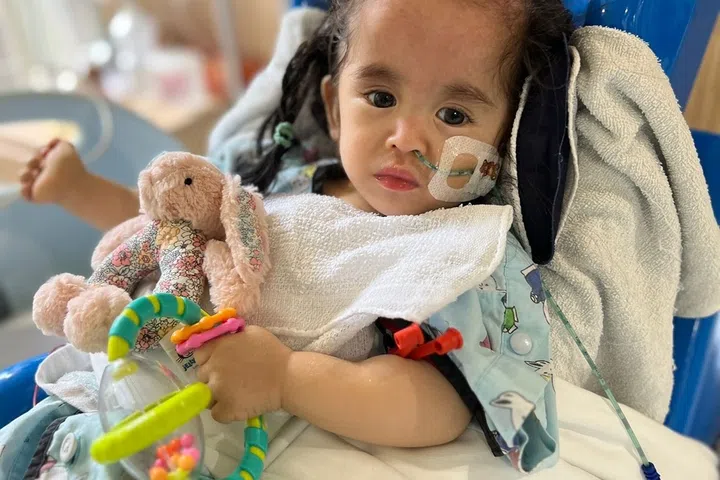
“Children actually get vaccinated for meningitis, but she’d caught a strain that is so rare, and that she wasn’t vaccinated for,” Chantal says.
It was also during this time that Chantal was seven to eight months pregnant with her fifth child. “She was in the high dependency ward, and I was with her for three months until I had to give birth.”
It was hard for Chantal to be excited about the new baby.

“I also knew that once the baby arrived, I would no longer be able to accompany her in the hospital, so I also hoped that the baby would stay in for as long as possible.”
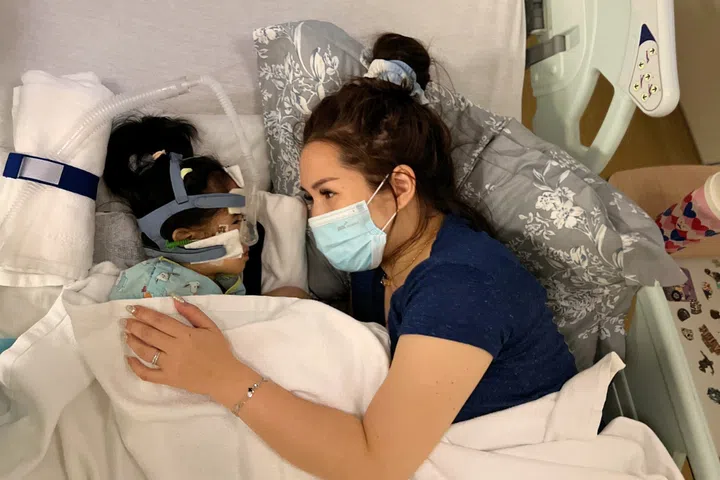
Chantal’s delivery was scheduled at the same hospital, just two floors down from where Camila was warded. The couple had made plans for this since their daughter had been hospitalised for months by then. Still, Chantal felt a pang of sadness at having to leave.
“I knew after delivery, it would be hard for me to see her as I would be breastfeeding every 2-3 hours, and I was supposed to be doing confinement.”
At the time, Camila’s condition also seemed to have stabilised, or so they thought. She had been on strong antibiotics for an extended period, and a spinal tap showed no more bacteria in her cerebrospinal fluid (CSF). The couple believed they were in the green.
After Chantal gave birth to their fifth child, Cruz, Jonathan stayed with Camila in the hospital. But he soon realised that something seemed off with her vision.
Another blow
She was eventually discharged, but just one or two days after going home, the pair felt something was wrong.
“It felt like she couldn’t see us. She wasn’t looking at us; it seemed like she was looking past us instead,” Chantal recounted.
A CT scan later revealed swelling in her brain caused by excess fluid buildup from the meningitis infection, which had likely affected her vision. Camilla had to undergo another procedure to insert a shunt to drain the fluid.
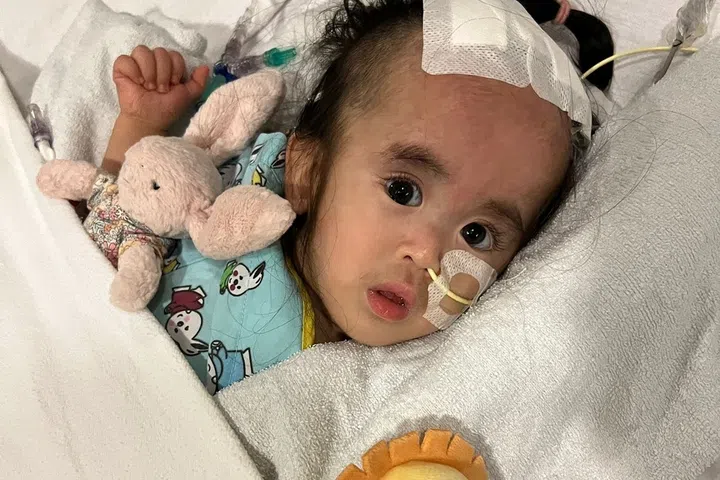
“The hardest part was seeing her go through so much in such a short period of time,” Chantal shared.
“When we first brought her to the hospital, she would fight and kick when doctors or nurses tried to draw blood.”
She didn’t laugh for three years
After undergoing not one but two brain procedures, Camila barely showed any emotion for a long time. Even after she was discharged from the hospital and began physiotherapy and early intervention, Chantal says it was difficult to tell what her daughter was feeling.
“She would cry if she was hungry or in pain, but you couldn’t tell if she was happy. No matter what we did — even if we tickled her — we just couldn’t get her to smile.”
It was nearly three years later before Camila finally laughed again.
The couple had waited and prayed for this moment.
“I think her brain just needed time to heal. It took almost three years for those connections to come back,” Chantal said. “My husband, our caregivers, and I really dedicated ourselves to giving her the best physiotherapy and early intervention support we could, and I believe that helped with her progress.”
A close-knit support system
When speaking about the support she received from her family, Chantal became emotional.
With her own parents living overseas, much of the support came from her in-laws. Fighting back tears, she recalls how her husband’s extended family stepped in to help after learning about Camila’s condition.
“My mother-in-law’s sister, and all the aunties and uncles, pooled funds together to help with Camilla’s situation, despite us telling them that we could manage, especially with the subsidies at a public hospital. It’s very touching, and I just felt so bad. We really didn’t expect them to come together to help us in that situation.”
These days, Chantal and her husband, who both work full-time — she is the owner and co-founder of a kids’ art centre while he is an accountant — also rely on their helper to care for Camila.
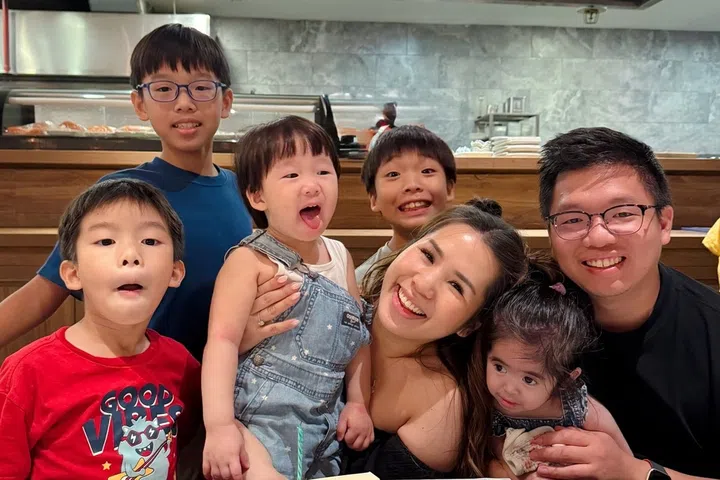
As for their other sons — Jayden, 12, Jensen, 11, Jacob, seven, and Cruz, three — Chantal says they are very doting brothers who “sayang her and treat her like a baby.”
“We just tell them that Mei Mei is special. She won’t be able to do many of the things they do, or that most children her age can,” she added.
Facing the future
Speaking about the future, Chantal admits that one of her biggest fears is what will happen to Camila when she and her husband are no longer around.
“Everyone tells us, ‘If you raise your other children right, don’t worry, they will look after Mei Mei. They all love her so much’, and things like that. But I feel like it’s not really their responsibility to care for their sister. Because it’s not their child, it’s my child.”
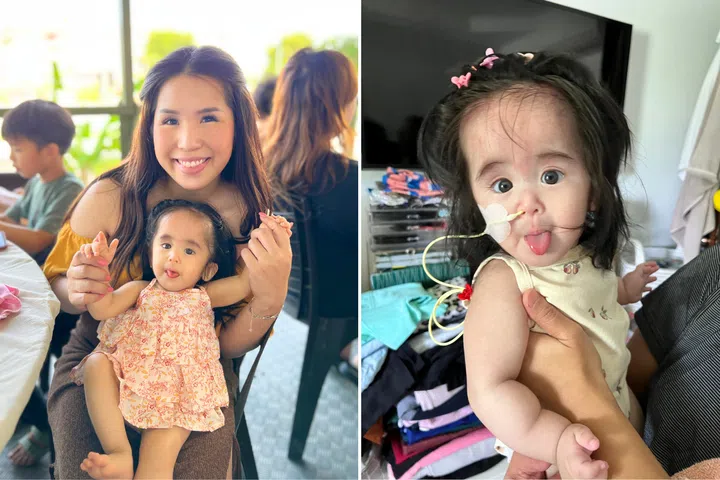
“It’s still a long time away. But if ever possible, I would like to have the option of having her and me go together. I’ve heard of cases where caretakers abuse people with such conditions because they are non-verbal. Nobody knows what happens behind closed doors.”
“Or if I can just live 10 seconds more than her, then I can go in peace,” Chantalle adds tearfully. “My other kids, they’ll probably grow up, they’ll work, they’ll get married, they’ll lead their lives.”
“But for Camilla, she’s really not an independent child, and she needs a caretaker for life. So if I can, I’ll just want to go after her.”
For now, Chantal says Camila is in a good place. “She seems to be thriving again, so fingers crossed that she continues to do well.”