Mum-of-3 June Yong Shares How She Tailored PSLE Plans For Her Kids
Three children, three different strategies
By Estelle Low -

Share this article
In the tumultuous year of the PSLE, it can feel as though you’re navigating a ship through a perfect storm. It’s the first national exam in your child’s life. And for many, it also coincides with the arrival of the other P word: puberty.
Speaking at The Straits Times PSLE Stress Management Workshop, June Yong, a counselling associate and family life specialist from Focus on the Family Singapore, joked: “It makes you want to ask, ‘Why do they put the PSLE together with this thing called puberty?’ It’s like a whole blur of emotions that year.”
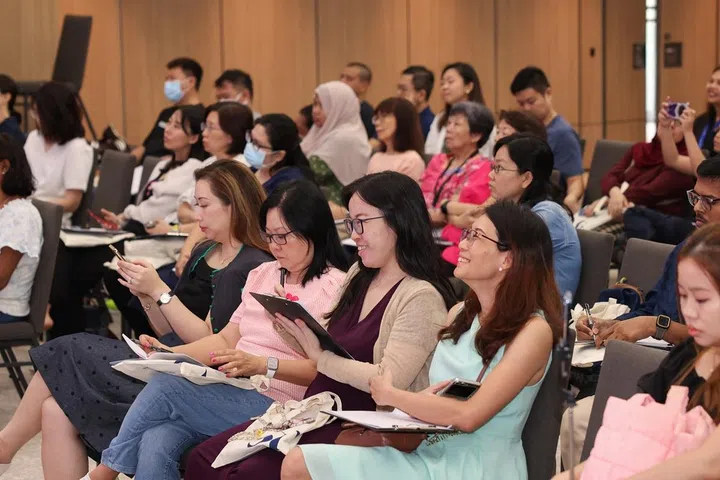
Held on January 17 at the SPH Auditorium, the workshop marked the first event under The Straits Times’ PSLE Companion series ($29.90 per month, over 24 months) — a parent-focused initiative offering expert-led workshops, weekly articles, past-year PSLE content and unlimited access to ST’s content for 24 months.
For parents, this double whammy of PSLE pressure and puberty pains can feel overwhelming. But if anyone has survived to tell the tale, it’s June — a mother of three children aged 17, 15 and 13, who has recently “graduated from the PSLE system”.
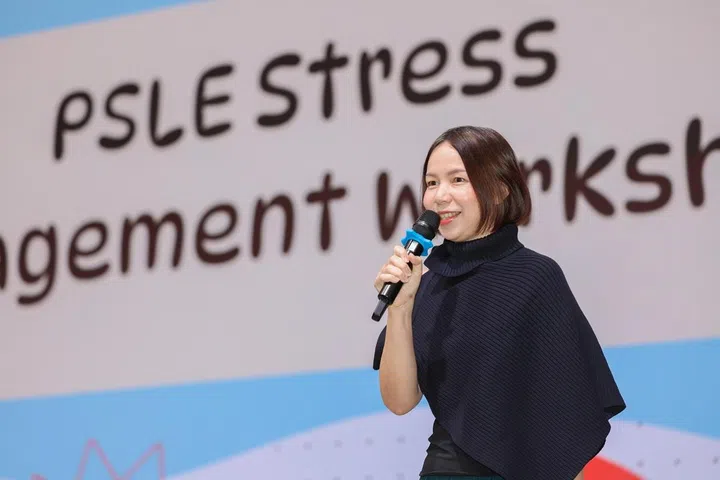
Her biggest takeaway? “Every child is unique and different. Each one needs their own strategies to drive.”
Here’s how she tailored her support for each of her children.
1. For the child who’s anxious and perfectionistic
June’s eldest daughter had always excelled at math — until things became more challenging in Primary 5. Her anxiety “skyrocketed”, leading to emotional breakdowns because she felt that “something was wrong” with her.
For this child, the PSLE felt like a “giant in the room”. The pressure manifested as intense procrastination, where anxiety made it difficult for her to even begin a task.
Strategy: Right-size the stress and start small
Affirm their worth: June repeatedly reminded her daughter that her identity and value were not tied to academic results. Phrases like “Your identity is secure, no matter the grade. You are loved by us,” and “Exams measure knowledge at one point in time, not your value as a person,” became anchors during moments of distress.
Tackle anxiety-driven procrastination:
- The five-minute rule: Commit to just five minutes of work, because “starting is the hardest part”. This helped when her daughter would “just stare at the blank piece of paper and start crying” over a Chinese composition.
- Eat the frog: Complete the hardest or most dreaded task first.
Provide a calming presence: Sometimes, all her daughter needed was for June to sit quietly beside her for a few minutes, to help her regulate and feel calm enough to continue.
2. For the child who values control
June’s second child was highly strung and motivated by affirmation and autonomy. He liked having control over what he did, and when he did it. Recognising this early on, June began giving him age-appropriate ownership over his schoolwork from Primary 2.
Strategy: Step back and regulate yourself first
Avoid power struggles: Knowing her son’s temperament, June and her husband made a conscious choice to step back and let him take ownership of his work.
Affirm independence: Instead of directing, they asked open-ended questions and affirmed his agency: “You’ve shown that you can take charge of your work. What’s your plan for today?”, “That’s just my suggestion. You can go with what you think is best.” Over time, this helped him develop internal motivation, and he eventually decided that he wanted to work towards getting into his preferred school.
Model self-regulation: June shared candidly that for her husband who is “high on control”, his “main job that year was to self-regulate”. When emotions ran high, he would step out of the room to cool down. It was a powerful reminder that in high-stress situations, adults must regulate themselves first.
3. For the child who’s easily distracted
June’s youngest child was easily distracted and less academically inclined than his siblings. He also has dysgraphia, a learning disability that affects handwriting and spatial organisation. He loves sports, and recently discovered his passion for cooking.
Strategy: Affirm strengths and build structure
Set realistic expectations: The family accepted his academic differences and adjusted their expectations accordingly. June believes this helped him manage his own expectations without feeling inferior.
Create consistent routines: Knowing that sustained focus was difficult, they worked in short blocks — 20 minutes of work followed by a break. They also used alarms to signal the end of playtime and the start of work.
Affirm character, not just effort: June made it a point to regularly affirm his strengths, using statements like: “You are resilient. I see you trying and persevering even when the task is hard.” As she shared, finding the “key” to each child and calling out their strengths matters — because “when their identity is secure, the achievements and grades will follow”.
At the end of the day, June reminded parents that there is no magic formula for the PSLE journey. Every child needs a different kind of support to feel confident, capable and loved.

You are your child’s most important resource — and that, in itself, is a far greater achievement than any grade.
Upcoming events under the ST PSLE Companion package
*These events are for eligible subscribers only — subscribe here*
PSLE Prep Forum
Deepen your understanding of the PSLE journey and get expert insights on how to support your child’s preparation — including how PSLE papers are set and marked, how the scoring system works, and practical tips on PSLE mathematics.
Date: April 4, 2026 (Saturday)
Time: TBC
Venue: SPH Auditorium (physical) or online (Zoom webinar)
Speakers: Mr Ong Kong Hong (divisional director of curriculum planning and development, Ministry of Education), Dr Yeap Ban Har (mathematics expert and director of curriculum and professional development, Pathlight School), Sandra Davie (senior education correspondent, The Straits Times)
What Can You Do In The Final Stretch Of PSLE Revision?
Pick up practical strategies to guide your child in the last two months before PSLE — including time management, pacing during exams, mental wellness, and techniques to manage anxiety and boost confidence.
Date: July 11, 2026 (Saturday)
Time: TBC
Venue: SPH Auditorium (physical) or online (Zoom webinar)
Speakers: TBC
How To Pick The Right Secondary School For Your Child
Hear from school principals and education experts on choosing a secondary school pathway — including Full Subject-Based Banding (FSBB), the Integrated Programme (IP), and key factors to consider based on a child’s strengths, interests, and learning needs.
Date: October 31, 2026 (Saturday)
Time: TBC
Venue: SPH Auditorium (physical) or online (Zoom webinar)
Speakers: TBC
Subscribe to the ST PSLE Companion package ($29.90 per month, over 24 months) for access to these events.