I Couldn’t Even Turn A Doorknob After Having My Baby
Of all the things I prepared for as a new mum, losing mobility in my wrist wasn’t one of them
By Estelle Low -
When I was 27 and expecting my first child, I thought I had done what I could to prepare my body for childbirth and the early postpartum period.
I attended childbirth education and regular prenatal yoga classes, where I learnt about breathing, getting into comfortable positions as my belly grew, managing labour contractions, and handling my baby in those first couple of months. I moved and walked as much as I could to stay active and keep water retention at bay.
Then, about eight months into my pregnancy, my body started protesting.
I developed pelvic pain that made getting out of bed difficult every morning. Getting to the bathroom meant rolling slowly onto one side, pushing myself up and waddling there in small steps.
Around the same time came a dull – sometimes sharp – pain in my left wrist whenever I made twisting or flicking movements.
When I brought this up to my OBGYN, she shared that wrist pain wasn’t uncommon, especially in the third trimester, due to fluid retention and hormonal changes. At the time, I understood it as another pregnancy-related discomfort that would likely settle after delivery.
So when my baby arrived, I expected the pain to go away.
Instead, it got worse.
Simple everyday movements became unexpectedly difficult.
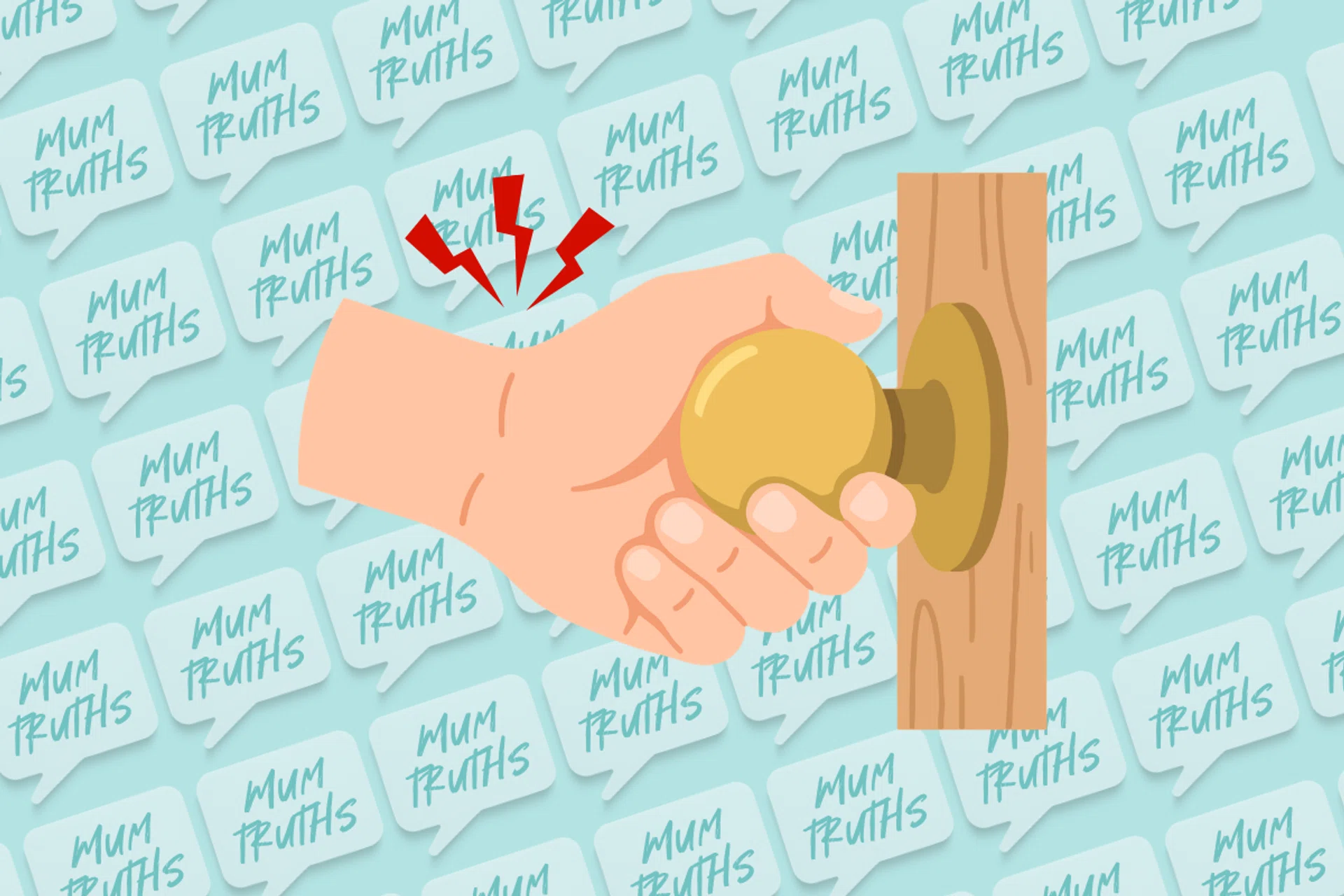
Turning a doorknob hurt. Twisting open my confinement tingkat container became a challenge. Having to ask for help with such basic tasks was extremely humbling.
These sound like small things. But when you’ve just had a baby, you’re physically recovering, sleep-deprived and trying to care for a tiny human who suddenly depends on you for everything. Losing the ability to do basic things for yourself can feel disproportionately devastating.
I felt helpless. Pitiful, even.
I didn’t know then that there was a name for what I was experiencing: De Quervain’s tenosynovitis, commonly known as “Mummy’s Thumb”.
And I certainly didn’t know that it could begin during pregnancy.
According to Dr Lai Jen Ming, senior consultant hand surgeon at The Orthopaedic Practice and Surgery, De Quervain’s is the second most common hand and wrist condition seen in pregnancy, after carpal tunnel syndrome.
De Quervain’s and carpal tunnel are not the same thing
Carpal tunnel syndrome and De Quervain’s are two of the most common hand and wrist conditions during pregnancy and postpartum, but they generally feel very different, explains Dr Lai.
Carpal tunnel involves compression of a nerve and typically causes numbness or tingling over the thumb, index, middle and ring fingers, often at night or on waking.
De Quervain’s, on the other hand, tends to cause pain on the thumb side of the wrist in certain positions, without the numbness associated with carpal tunnel.
Mums are also at greater risk than dads, Dr Lai says. Besides the physical demands of caring for a baby, pregnancy brings physiological changes including fluid retention and changes to collagen fibres associated with the hormone relaxin.
Had I known about Mummy’s Thumb earlier, I would have paid more attention to those first twinges of pain. Instead, I assumed it was something I just had to put up with.
Dr Lai says Mummy’s Thumb often begins as an ache or a sharp pain when the wrist is placed in a particular position. That early discomfort should be treated as a warning that something needs to change before it gets worse.
His advice when you first feel pain or a twinge in your wrist?
“Don’t persist and push through the pain!”
Stop and look at your posture and how you are using your wrist instead.
I did pretty much the opposite.
Who teaches mums to protect their own bodies?
Looking back, one thing strikes me: mums spend much of pregnancy and postpartum learning how to care for their newborns – how to feed, hold, carry and settle them.
But who teaches us how to protect our own bodies while doing all of that?
That was sorely missing from my motherhood prep.
Dr Lai explains that because newborns have poor head control, parents often support them with the wrist bent and tilted towards the little finger, while the thumb is extended.
We can remain in that awkward position for a surprisingly long time, sometimes half an hour or more if we’re trying desperately not to wake a sleeping baby.
Ideally, parents should try to keep the wrist in a neutral position and the thumb comfortable from the beginning.
Breastfeeding positions matter too. Dr Lai says the football or rugby hold can be strenuous on the wrist, while laid-back or side-lying positions take more of the baby’s weight off the wrist and thumb.
There are also things mums-to-be can do before baby arrives, to reduce their risk of Mummy’s Thumb.
As pregnancy progresses, Dr Lai recommends adjusting the way you carry things – using the forearm rather than relying heavily on the hands, for example – and using simple assistive tools to reduce repetitive pinching and gripping.
Setting up your home with ergonomics in mind can help too: placing changing mats, cots and baby baths at comfortable heights, and using breastfeeding and back-support pillows, appropriate car seats and strollers to reduce loading on the wrists.
I waited three months before asking for help
I eventually sought professional help, three months into postpartum.
By then, the pain had become significant, and wasn’t showing signs of easing.
A hand therapist advised me to wear a wrist guard to prevent sudden or unexpected movements that could trigger the pain. I was also taught mobility and strengthening exercises using hand putty.
It took a couple more months before my wrist finally felt normal again.
Fortunately, Dr Lai says delaying treatment doesn’t usually cause permanent loss of function or make Mummy’s Thumb harder to recover from.
But there is a good reason to seek help early: you spend less time living in pain.
That sounds obvious when I read it now. But it didn’t dawn on me when I was freshly postpartum.
When you’re surviving on broken sleep, feeding schedules and baby duties, while simultaneously trying to recover from pregnancy and childbirth, your own wrist pain can very easily slide towards the bottom of your priorities.
Dr Lai’s advice is not to wait until things become unbearable. Once wrist or thumb pain becomes persistent, seek professional help early. A GP, hand therapist or hand surgeon can all help manage it. In Singapore, he notes, hand therapists are commonly occupational therapists, although physiotherapists can also specialise in hand therapy.
Good news: surgery usually isn’t the first step
Mummy’s Thumb is most commonly managed through activity modification and splinting or bracing, followed by a steroid injection where appropriate, says Dr Lai.
Hand therapy can also help identify movements that may be contributing to the problem, provide appropriate splinting and guide mobility and strengthening exercises.
Surgery is further down the line. Dr Lai says he typically considers it if the condition returns after one steroid injection, and estimates that around one in 10 patients with Mummy’s Thumb ultimately proceeds to surgery.
What I wish I had known earlier
More than a decade on, Mummy’s Thumb feels like a relatively small chapter in my motherhood journey.
But it taught me a lasting lesson.
Before having a baby, I thought of prenatal and postnatal care in terms of the obvious things: pregnancy check-ups, childbirth, feeding, sleep and recovery.
I didn’t think about my hands or wrists. Or the dozens of physical demands that caring for a newborn would suddenly place on a body still recovering from pregnancy and childbirth.
More importantly, I hadn’t yet learnt how easy it is as a mum to dismiss your own discomfort because somebody else’s needs seem more urgent.
I wish I had known that pain didn’t have to be tolerated simply because I had a baby to look after.
And that taking care of myself wasn’t separate from taking care of my baby.
It was part of it.
Estelle Low (@estellelow) is the editor-in-chief of The Singapore Women’s Weekly, and the host of Too Tired Mums. She loves her two primary school kids unconditionally, but hates how parenting is a severely undervalued job.