Your Child Won’t Eat? An Expert Reveals What Parents Get Wrong About Picky Eating
Hands up if you’re bargaining with your child to eat more or try new foods
By Michelle Lee -
Share this article
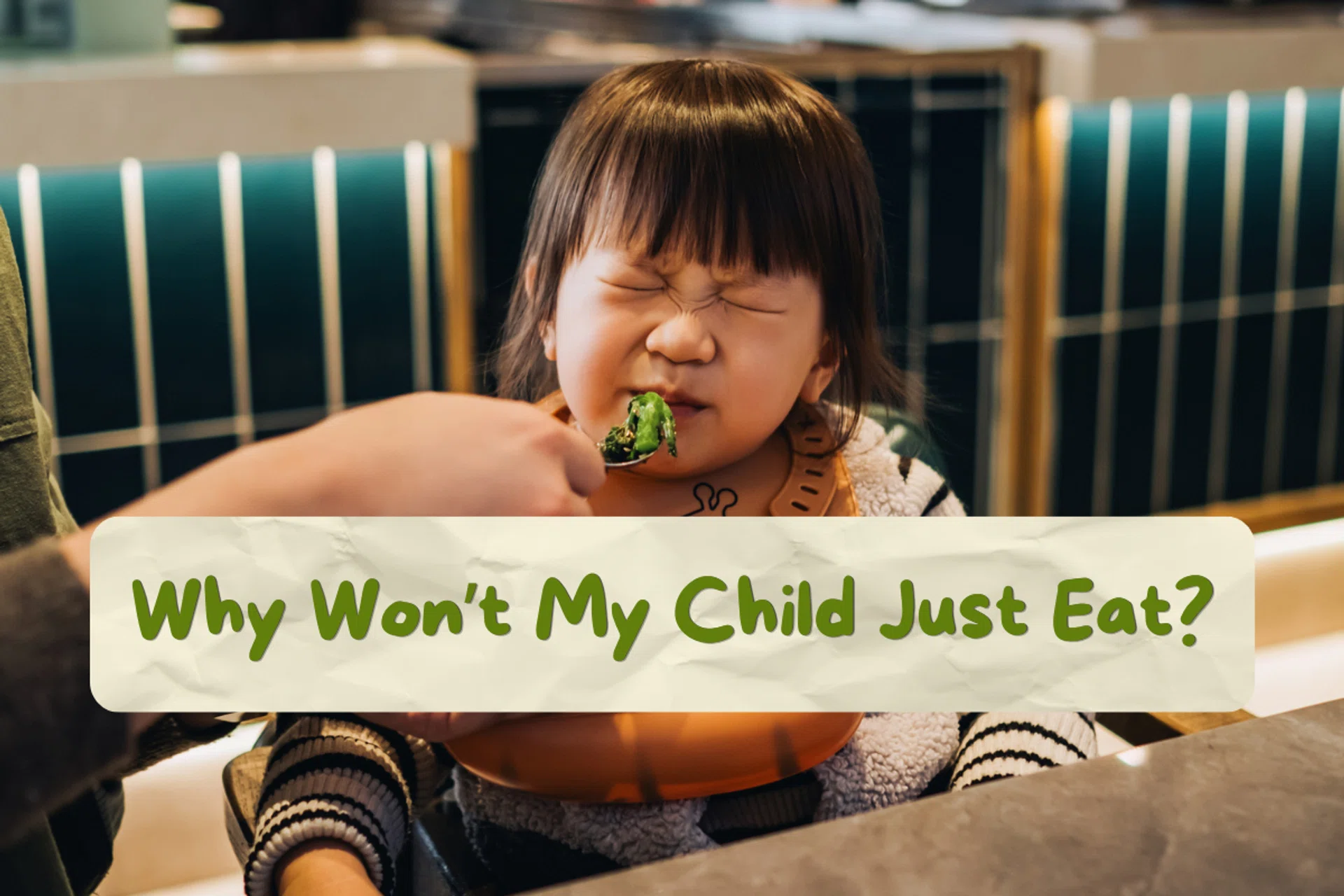
If you’re a parent, you have likely come across one or all of these scenarios: Your child takes a few bites of their meal and promptly announces that they’re done, refuses to eat a food that’s presented a different way — like a sunny-side-up compared to an omelette or hard-boiled egg — or stubbornly survives on the same few foods.
Well, you’re not alone. “Picky eating is actually very common,” says registered dietitian and founder of Aptima Nutrition, Jaclyn Reutens, who’s a mum of two. “It affects 30 to 50 per cent of toddlers, and even pre-school children.”
“Common traits of picky eating include refusing certain foods, eating a very limited variety of foods, or just repeatedly eating only the same foods. Or they develop sensitivity towards appearances, tastes, and texture.”
Nina Yusman, global lead for health strategy & PR for Zespri International and also a mum of two, knows it well. She shares, “I couldn’t believe my ears when my daughter came back from school one day and said: 'I’m not going to have plain water.’ I later found out she was drinking from a plastic bottle, and it’s the plasticky taste that made her not want to drink.”

During a Too Tired Mums live chat at the SPH Health & Wellness Bazaar held at Suntec City on Aug 30, 2026, SWW editor-in-chief Estelle Low sat down with the two to unpack the mysteries of kids’ picky eating behaviours and how parents can tackle it without caving in to cajoling, bargaining or worse, threats.
First things first: Don’t turn the dining table into a battleground
“As kids grow up, they develop something called developmental independence”, says Jaclyn. In other words, the ability to say ‘no’. And to flex that newfound independene, one of the easiest things they can say no to, is food.
They may or may not mean it — they could be more comfortable with familiar foods, or be afraid to try or accept something new.
What should you do? Keep calm and carry on
When your child sees that you’re not fussing or reacting negatively, the whole atmosphere tends to calm down. “We don’t want mealtimes to become a battleground — something most of us have experienced at some point,” says Jaclyn.
“It also means that the next time your child encounters that food, they’re less likely to associate it with a negative memory.”
“They might think, ‘The last time I tried it, my mummy scolded me because I didn’t finish it,’ and not want to eat it at all. But if there were no negative reactions, they’re more likely to try it again.”
It’s a shared responsibility

But you don’t have to make it your sole responsibility to make sure kiddo is eating. In fact, Jaclyn points to a concept that she uses with parents: the division of responsibilities.
“Parents are in charge of what foods their children are eating, where (be it at the dining table at home or a restaurant) and when (is it part of a planned meal or snack?).
As for the child, the responsibility lies with them to decide if they want to eat it, and how much. “So yes, you may spend half the day preparing something delicious, but if your child decides not to eat it, that’s your child’s responsibility and you just have to stay calm.”
“Start this at an early age, and it gets easier as they grow up. But it’s never too late.”
One difficult meal doesn’t define your child’s overall diet

It can be understandably frustrating when your child refuses their meal. But this is when parents should look at the bigger picture, says Jaclyn.
When your child says ‘I’m done eating’, take a step back.
What did they eat an hour or two hours ago?
Did they have a snack because they were hungry?
Or are they tired? What did they do for the entire day?
They might not be hungry now, but they could be an hour later.
But for busy working parents, keeping track of their child’s day can be challenging. Jaclyn says that this is where communication comes in.
“If your child is in childcare, the centre can update you. Or if they’re with their grandparents, they can let you know. Sometimes, no news is good news. Your child might simply not want to eat. Just remain calm and don’t force them, because they may eat a little later.”
Nina agrees. “On days when my daughter has her CCAs, she eats a lot. But on days when she’s more relaxed, I can see the difference in her food intake. For parents, it’s about looking at what their children have been through during the day, rather than focusing solely on mealtimes and turning them into a contentious part of the day.”
The bottom line?
Zoom out and look at a pattern over time, not just one meal or one day.
That said, if their energy levels appear consistently low or if they fall off the growth percentile, that’s cause for concern.
“Seeing a pediatrician is very important, so go for the regular checkups. Especially if your child displays signs of difficulty chewing and swallowing, or abdominal bloating or pain, this is when to seek professional help,” Jaclyn advises.
Make ‘nutrient density’ your new food mantra
Eating better is also about what you add to your and your child’s plate. A recent Zespri-commissioned survey found that while 75% of Singaporeans associate eating better with cutting down on sugar, salt or oil, only 37% associate it with getting more vitamins and minerals.
That’s where nutrient density comes in. It refers to the amount of beneficial nutrients a food provides relative to its calories. Nutrient-dense foods are rich in vitamins, minerals and dietary fibre while being relatively low in calories. Conversely, foods with “empty calories” are high in calories but offer little nutritional value, such as chips and sweets.
For fresh produce, the more colours, the better. Jaclyn explains: “The colours in the fruits are the plant’s phytochemicals, or the pigments that give fruits their nutritional value. Nutrients found in plants and vegetables include antioxidants, anthocyanins, and carotenoids.”
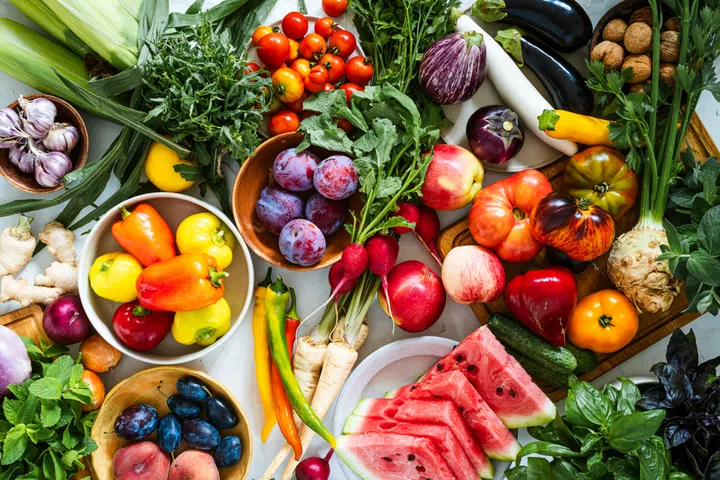
“Think dark leafy vegetables like spinach and broccoli, and other cruciferous vegetables. Try to include a variety of fruits and vegetables in your child’s diet, so they have a wide range of nutrients and nutrient-dense foods. This way, every bite counts.”
Nutrient-dense fruits include bananas, apples, grapes, berries, and kiwifruit.
“The kiwifruit is a nutrient powerhouse,” says Nina. “Many people know that it’s high in vitamin C, but it’s also packed with nutrients your body needs.”
“The green kiwifruit is rich in fibre, so it’s great for children experiencing digestive problems. Folate is essential for making DNA and supporting healthy cell division. And it also contains vitamin E and potassium, which support energy and metabolism — all in one small but potent package.”
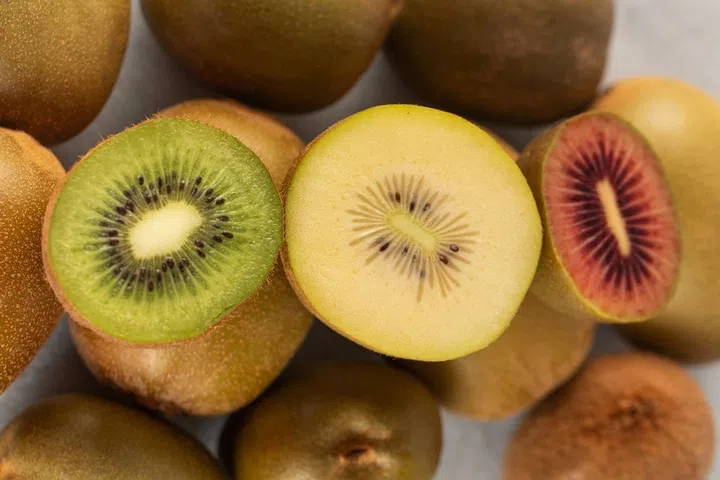
Jaclyn adds: “What I like is that it comes in different colours. Gold, which is high in carotenoids; red kiwifruit that is high in anthocyanins; and green kiwifruit, which is high in chlorophyll that supports the synergistic effects of other antioxidants.”
It’s all about exposure (without forcing them)
Your child doesn’t need to eat the food for exposure to count. Simply seeing it on the plate, touching it, smelling it or putting it in their mouth to feel its texture all count. “You’d be surprised how many kids don’t even know what chye sim or a carrot is,” Jaclyn adds.
“I encourage parents to combine carbs, vegetables and meat on the plate, but vary the vegetables each day. If your child says, ‘Eww, what’s that?’, that’s okay. They don’t have to eat it — just encourage them to touch it, smell it and, eventually, try it.”
And don’t underestimate the appearance of veggies on their plate.
Jaclyn recalls parents whose child refused vegetables despite having them served at every meal. “Then, one day, they forgot to include vegetables, and the child actually asked about them,” she says. “Gradually, the child started eating veggies.”
“A pile of greens can be daunting, so start with a few pieces and encourage them to try them. Children thrive on positive reinforcement from their parents.”
Parenting hack: Have a stash of emergency nutritious foods
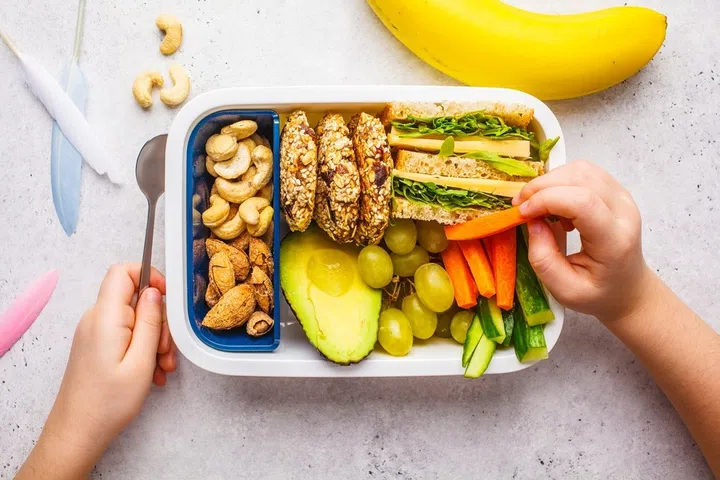
For Jaclyn, eggs and rice have always been a staple since her kids were young. She also stocks up on peanut butter, milk, yoghurt, wholemeal bread and crackers, and easy-to-eat fruits like bananas, apples, berries and mandarins.
“All parents should have an emergency pack that they can quickly whip out and feed to their younger kids in a few minutes,” she advises.
And portion out their food
Learning what an appropriate portion looks like is an important part of developing healthy eating habits.
For young ones under the age of six, Jaclyn recommends that parents portion out their kids’ food so they know what a standard serving looks like. Extra food can be placed in the centre of the table for them to take more if they’re still hungry, but the first plate should be portioned by the parent.
Nina agrees, pointing out that consistency between home and school can help reinforce these habits.
“In school, they learn about food portions, so there should be that same consistency at home. That way, they know what they’ve learnt applies to mealtimes beyond school, too.”
Parents should set a good example
Kids often take their cues from their parents, including how they react to food. So if there’s a vegetable you dislike, try not to write it off in front of your child before they’ve even tried it. Even if it’s not your favourite, letting them try it gives them the chance to decide for themselves.
“I might not prepare it at home, but when we’re eating out and there’s a garnish I don’t like, I try to control my expression,” Nina laughs. “And I tell my kids to try it.”
That doesn’t mean parents have to pretend to love every food, either.
As Estelle puts it: “We should be honest with our children. It’s okay not to like every food out there, but there’s a bare minimum we all need to meet — like being able to eat or accept 80% of the fruits and vegetables out there.”