Tips To Prep Your Child For Primary 1, From Veteran Parents
Use these tips to get your child mentally, physically and emotionally ready for primary school life
By Gwyneth Goh -
Share this article
Starting primary school can be a daunting affair for both your child and you.
Is she going to be okay? Will he know how to get his own food? Will he make friends? Is she going to be safe? How can I help?
These are just some of the concerns you may be starting to have. Your kid probably isn’t aware of the extent of the transition, so it’s up to you to help prime them for their big switch to big kid life. To help you with this, we asked parents who’ve been through that mill and lived to share pearls of wisdom that will give you and your little one a head start on this journey.
Tip #1: Sleeping early is half the battle won
“My one major tip is very straightforward: Sleep early, by 8.30pm! The last thing you want in the morning is to be trying to wake a tired child and getting them dressed and ready for the day… Having to drag your zombie kid to school is a real nightmare. It’s also obviously not good for their physical and mental development to be sleep-deprived, so this is key. Getting them to bed early on school nights and having enough sleep is half the battle won.
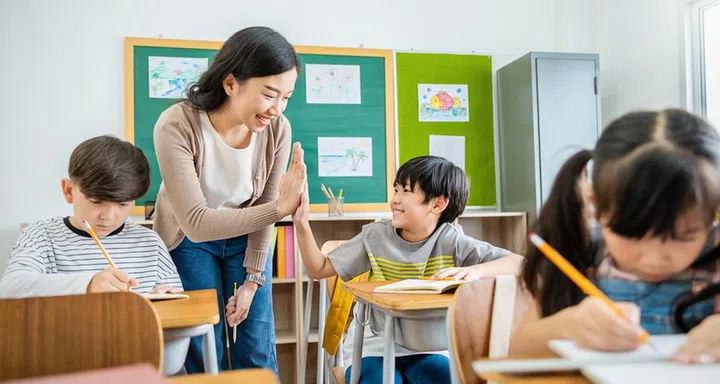
For me, having a parents’ support group like a WhatsApp class chat has also been a huge help, so find one and join it as quickly as possible, or create one yourself if necessary.
This is because some blur parents (like me) will miss out on important dates and homework, and there are usually other super keen parents who will be so kind to remind everyone the day before of what’s needed — this has been extremely helpful for me.”
- Rena T., 44, executive, mum of two children aged 8 and 11
Tip #2: Teach your child how to ask for help
“I felt it was important that my boys learnt how to ask for help — whether it’s because they’re in trouble or simply unsure about something, so we let them practise asking for utensils or sauces at restaurants, asking passers-by for directions… The point is to get them comfortable asking a stranger for help.
They also learnt how to tell the time, starting with full hours and progressing to half-hours, 15-minute blocks and finally minutes. This is an excellent chance to count by fives and learn multiplication at the same time! Then they learnt the number bonds that make up $1, e.g. 80c and 20c, 70c and 30c, etc. These skills would help them at recess time.
We also started practising daily check-ins at meals or bedtime, where we would listen without judgement while the kids shared about their day. Listening without judgement is important especially when they recount the bad things their friends or they do — how you react will determine how much they tell you in the future.

Finally, keep an open mind and open heart because everyone's primary school experience is different—what might be of concern for one child is hardly an issue for another. Always be supportive, try to celebrate their wins and support them, especially when they fall short. Be kind to yourself too, this is your first time parenting a primary school kid so just go with the flow and don’t be too hard on yourself or your child. If mistakes are made, learn from them and move on.”
- Denise T., 38, early childhood practitioner, mum of two children aged 7 and 12
Tip #3: Iron out the kinks (as much as possible)
“Some of the things I did were to take my girls to their future primary school for the open house and connect them with neighbours from the same school where possible. We took them to buy new stationery, white shoes and school supplies, and got them excited by packing their school bags together.
Labels are a must — so pre-buy lots of name labels for labelling everything, especially water bottles which they tend to lose. Chinese name labels are helpful for Chinese textbooks, and we also got them practising writing their full and Chinese names early in preparation for school.
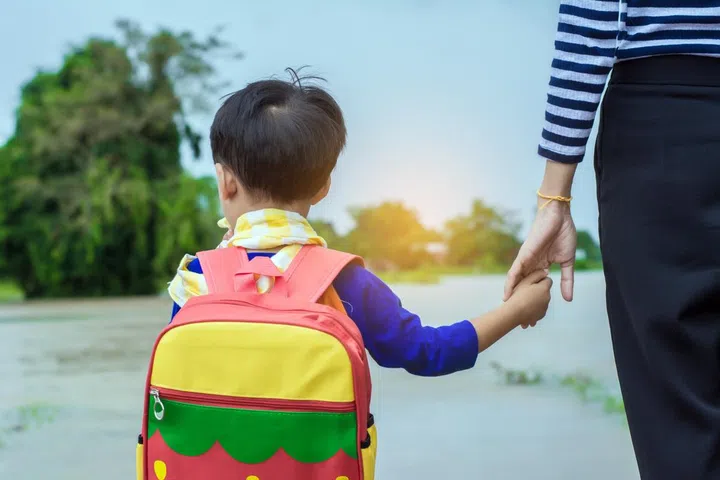
Other logistical kinks included working out systems for drop-offs and pickups, especially if you have more than one kid. If your child will be taking public transport, you’d need to get them a concession card first because their new card doesn’t get distributed until later in the year.
Also, because my daughter has allergies, I needed to connect with the teachers early and brief them on medication and emergency protocol (i.e. using the EpiPen) as well as check out which foods she can safely eat in the canteen.
On the socio-emotional front, we talked to them a lot about making friends, how to say hello and introduce themselves, etc. Reading books about this really helped!”
- Eeleen L., 40, homemaker, mum of five children aged 0, 4, 7, 10 and 12
Tip #4: Do dry runs
"I felt it was important to help them develop confidence about their upcoming transition to primary school, so I brought my kids to their new schools in advance for a walk-through, to prepare them for what it would be like.
Another helpful thing we did was try to find them friends before school started, i.e. by asking around to see if we knew anyone with kids starting P1 at the same school. It really helps to have an existing friend in unfamiliar surroundings, even if they’re not in P1. We were fortunate one of our close friends’ kids was in P2 at the same school, so my son already had a good friend on day one."
- Shaan T., 44, lawyer, mum of two children aged 9 and 11
Tip #5: Train your child to manage money
“I always heard stories of how some P1 kids wouldn’t eat during recess because they didn’t know how to buy food, or how they’d pay with a $5 note and run off without taking change. So, I was very intentional about training my kids for this. I drew up signboards and simple menus and played a game with them where I would pretend to be the canteen vendor and they would come order food from me, pay with real cash and collect the correct change.
Some days, their dad would pretend to operate another stall so they could choose which stall they wanted to order food from. It was great fun, and our game really worked because my boy was the fastest P1 kid to order and pay for his chicken rice!
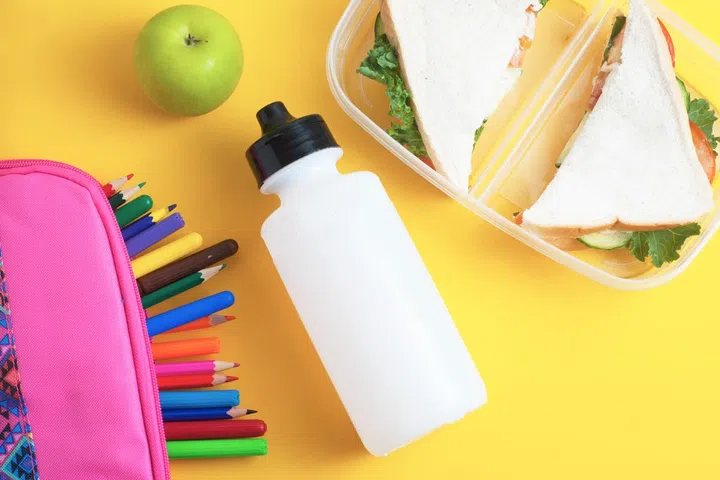
Teaching them how to look after their belongings was another big one — reminding them to bring back their water bottles and lunch boxes after recess, teaching them to always put their wallets back in the same spot, and showing them how to organise their school bags, etc.
My friend, who is a P1 teacher, suggested finding time with your child, gathering all their school belongings and labelling them (with name and class labels) together with your child so they can better recognise their own labels and belongings.
She also shared that you can help your kids manage new school anxiety if you share stories of your own childhood and pictures of yourself in school at their age. It can really help your child to know that Mummy and Daddy were once young and went through the same experiences!”
- Julian Lim, 44, sales director, mum of two children aged 12 and 13
Tip #6: Build social skills
“I wanted to make sure my kids were prepared emotionally and socially for their big new school experience, so we consistently set up playdates and other social activities in group settings so as to help them develop their social skills.”
I sought out other alumni parents whose children were starting school at the same time and organised playdates. I also had them practising simple social skills when we were out at the playground, such as smiling, waving, saying hello and introducing themselves to strangers.
Another thing that might be helpful is starting or finding a Whatsapp group for your child’s school intake. I managed to join one for my son when he was in K2, and we had a whole year to prep together in the discussion and forum for his upcoming enrollment and orientation. This Whatsapp group can also be a great place to initiate a playdate!”
– Vivienne Eio, business owner, mum of three kids aged 4, 8 and 12
Tip #7: Teach them safety and key practical skills
“I tend to worry about my girls when I’m not with them, so I wanted to make sure they were able to take good care of themselves when entering primary school.
This meant we started having them perform basic tasks like dressing and undressing themselves, wearing their own shoes, cleaning up after meals or after they’d made a mess playing, flushing and wiping themselves independently after using the bathroom, blowing and wiping their own noses, even carrying a tray with their own meals on it and returning dishes to the sink afterwards.
Safety was the more important unspoken issue, so I started talking to them about safety in the hope of cultivating greater situational awareness.
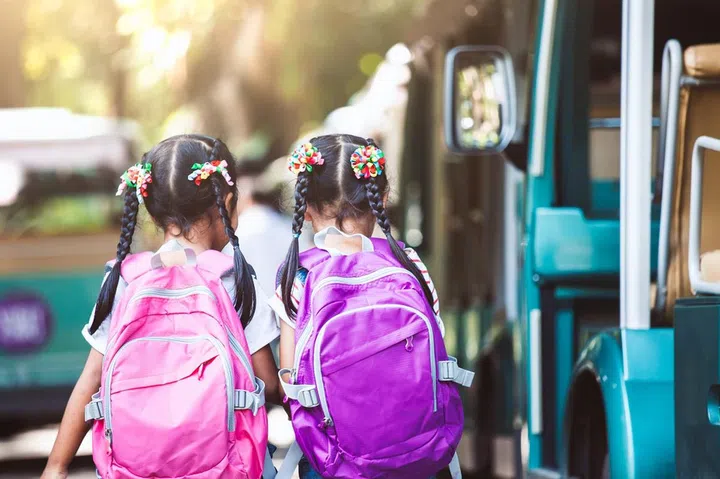
Credit: 123rf
From “don’t follow strangers” and “don’t accept any food from a stranger” to how to cross the road, I tried to go over all possible hazards with them. What should they do if a teacher or fellow student does something which makes them feel uncomfortable? What should they do if someone bullies them or if they see someone else being bullied? What should they do if a fight or a fire breaks out? We discussed as many potential scenarios as possible and made sure they knew how to respond, even if only in theory.
– Lyn C., 37, analyst, mum of two kids aged 8 and 10
Tip #8: Mentally prepare them
“This is a huge one for me. After all is said and done, and the stationery and uniforms have been prepped and pressed, I believe some talking through and psyching up is crucial.
While we intentionally try to frame primary school as an exciting time for our sons to make new friends and learn new things, we also give them a lot of space and time to just explore their feelings about the transition.
Some questions we ask to get the conversation going include, “How do you feel about school?” “What are you looking forward to?” Mechanically, we also discuss things like buying food and money and savings, but those usually come later.
– Mun, works in operations, dad of three kids aged 3, 6 and 9
This article was first published on October 16, 2023. It was updated on September 11, 2024.