The Sengkang Green Primary Bullying Case Has Unearthed Deep-Seated Issues
Responding to the recent events at Sengkang Green Primary School, a former teacher argues that it’s time we address the root of the problem.
By Vanessa Lim -
Share this article
My eyes were wide as I listened to the recording from the Sengkang Green Primary School bullying incident.
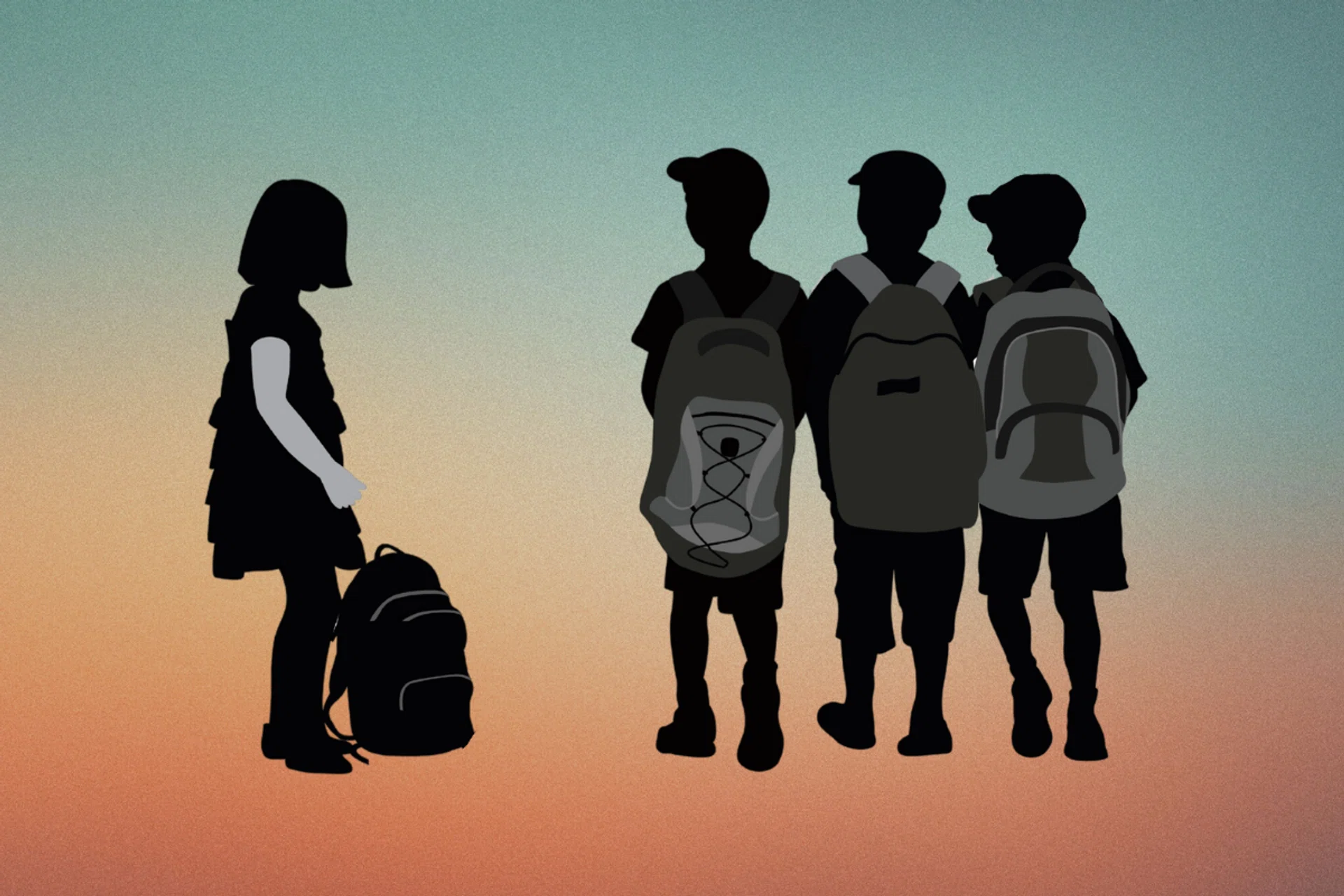
Like many parents of young children, I was shocked to hear the vulgarities and death threats uttered by that youthful voice — a voice belonging to a nine-year-old boy. The Primary 3 student at Sengkang Green Primary School, together with two other male students, was involved in a case of bullying against a female classmate, resulting in her refusal to attend school. When the female student’s mother lodged a complaint with the school, the boy retaliated by calling up the parent and leaving death threats over voicemail.
The Ministry of Education (MOE) has since released a timeline of events, including the list of actions the school had taken to “restore the friendship and help the children learn and grow”; the disciplinary actions taken against the boys — the caning of one of the boys who swung a bag at the victim and the suspension of all three bullies; as well as the implementation of a safety plan to keep the girl safe from further harassment.
The Ministry also states that after a four-hour meeting with multiple parties, there is now an “enhanced safety plan” to further ensure the safety of the female student, and that her family is no longer requesting for their daughter to be transferred out of Sengkang Green Primary School.
The Internet is, of course, still abuzz with heated debates surrounding this episode. Some say that the victim’s mother was somewhat disingenuous about the facts of the case, others suggest that the authority’s handling of the matter lacked empathy for the victim. But maybe beyond who is right and who is wrong, the big question ought to be: What in the world went wrong?
As a mother of a young boy, my first instinct after hearing the recording was that of fear and anger. The boy coolly used phrases like “dissect her” and “end her life in school”, words that are very triggering for parents, especially in light of the tragedy at River Valley High where a Secondary 1 boy was slashed to death by an axe-wielding Secondary 4 senior in 2021.
But as a former educator who’s taught at secondary school level for seven years, I also feel sorry for the boys. While many details surrounding the contentious interactions between the four students remain unclear, and will likely stay unknown, I think a suitable spotlight needs to be shone on the behaviours that we do know about and can address unequivocally — what would lead a nine-year-old child to issue death threats so casually and with such a malevolent choice of words?
From my experience with schoolchildren, I know that they don’t learn to be so unflinchingly bold and pugnacious without repeated exposure to such behaviours. When a child so casually spews profanities, they’ve probably heard them often enough — from TV shows or even the adults around them — to be able to repeat them with such fluency and confidence.
James Abraham, a psychologist who has worked extensively with children, agrees. “While working in primary schools, I’ve heard of incidents similar to this one, or sometimes even worse,” says James, who is also the founder of MindRight Asia, a mental health clinic. “The bully is likely a victim of bullying… This Sengkang Green Primary School student is still very much a child, and the language, attitude and threats would’ve all been learned from somewhere.”
The uneasy root of the problem
This is why I feel that calling for the perpetrator of the threatening phone call to be caned or punished more severely — as some of the social media mob have demanded — isn’t going to solve the root of the problem.
What, then, can or should be done to address the behaviour of this misguided boy?
It all goes back to the parents, says James. “My professional opinion would be to speak with the parents of the child and help the parents develop better tools for managing [the child’s] life, his circumstances, or whatever it is they need help with,” he says. “Taking action against the child, regardless of severity, isn’t going to do any good.”

During my teaching years, there have been cases where I’ve come up against a wall in the form of a defensive or even verbally combative parent. When I witness how these parents are responding to what was intended to be a constructive discussion about helping their children, I can’t help but make assumptions about where the offending kid learned such behaviour in the first place.
When is it bullying and when is it not?
So in this case, could the students’ teacher have done more to prevent this bullying from escalating to such a point? Yes and no.
“Students use the word ‘bullying’ quite interchangeably [with other terms], especially at the lower primary level when they don’t have a good understanding of what the word actually means,” says Angela (not her real name), a primary school teacher with over 10 years of experience. Younger students can sometimes complain of “bullying” to the teacher when a classmate does something disagreeable, such as disturbing them during lessons or grabbing their things.
“Of course, we will investigate and find out from all parties involved what exactly happened… [but often] they’re just playing around,” Angela adds. It makes sense that facing a constant daily assault of little voices crying, “Teacher! He bully me!” might numb you to the point that when a genuine bully strikes, it takes you longer than usual to recognise the red flag for what it is.
“Also, quite often those who are really being bullied keep quiet, or it’s their friends who tell the teachers,” she says.
So while I do think the teacher could and should have done more — especially when the girl had repeatedly requested for her seat to be changed, even writing it in her worksheet — I can’t exactly blame him either.
The real problem is systemic
Teachers often have classes of 30 to 40 kids, and a full workload that demands every bit of their attention. They’re setting assignments, marking workbooks, attending professional development meetings, overseeing form classes, organising events, giving remedial lessons, taking care of a CCA, and often sit on committees.
Although student wellbeing should be a teacher’s top priority, it sits alongside many, many other responsibilities that constantly require an educator’s time and attention. Realistically, it is very hard to check every item on a teacher’s list without burning out at some point.
I’ve seen colleagues spend an entire afternoon counselling a student, and then going home to mark papers till well after midnight.
We can’t let anyone down, or tell our department, “Sorry, couldn’t finish marking because yesterday I was counselling a student”. We just reshuffle the load and let it eat into our personal time and energy because that’s what the job asks of us.
So instead of laying blame on this teacher, that principal, or faulting this parent and that student, maybe it’s time to look at the system and acknowledge that, even with the best of intentions, it hasn’t evolved to manage the scale, scope and mode of school bullying that we know today.
There are structures in place — schools have student management or discipline committees, and one or two counsellors. For some classes, there are Allied Educators (AEDs) who help with classes that need more attention. But knowing what we know now about the severity of the bullying problem in schools, is it still enough?
The authority figures charged with managing behavioural issues, discipline masters, and school counsellors need to establish a close rapport to really make a difference in the students’ lives. It takes time and energy to nurture this level of trust, which can only be achieved with daily interaction.
It falls back on teachers
In other words, the teachers who are in the classroom on a daily basis are best placed to really speak with and understand the kids, and to help them on a meaningful and consistent level. But again, they do not have the bandwidth to prioritise something as important as this, while doing a day job that often keeps them working into the night.
In the ideal classroom, there would be more than one teacher assigned to a group of 30 students. “If a situation arises, like a child suddenly can’t stop crying, it’s very hard to stop the lesson and attend to the child immediately,” says Angela. “I do try to give time to resolve [the problem] there and then, but it is at the expense of the rest of the children in class. At the same time I can’t exactly tell the child to stop crying and go back to their seat.”
It’s a delicate balance that requires quick judgement of the situation, empathy, and control of the class all at once — something that’s hard to achieve unless you have another educator present who can take charge of the lesson while you attend to the student.
To resolve the issue properly, the teacher often has to seek out the affected student and speak to them during recess, after school, or during non-core subject lessons. “There is no allocated time for these things,” says Angela. “It’s only the year heads [who don’t have such a heavy workload] who have the time to speak to these students, so we do try to call them in for help.”
These conversations also need to be held quickly, within a few hours, before the students forget what happened or get their stories mixed up, as is often the case with young children. But often, in the chaos of the school day, it doesn’t always get done despite the teacher’s best efforts.
One small suggestion
For a start, the system needs to allocate time in the teachers’ timetable for student wellbeing in order to address such cases in a timely manner. If student wellbeing is the top priority, it should share equal space with remedials, CCAs, and committee duties, or even precede them in order of importance. It’s about time we made space for this very important elephant in the room.
If this means we’ll have to reduce some parts of the curriculum, we need to accept that it is the trade-off that this problem needs. And this trade-off has to be part of the system, not something that each school can calibrate on its own based on its academic priorities. The Ministry should take a good look at areas of academic rigour and determine where we can make space for the non-academic parts of education that are equally important.
This might also mean looking hard at changes like reducing class size so that the teacher-to-student ratio is better optimised — making student management easier and more effective.
So let’s not call for punitive measures any longer. This is not for the public to punish, even if your immediate reaction is, understandably, that of anger and fear. We’re quick to bang out an incensed comment on social media. But what this case has highlighted is a much deeper systemic flaw that has been present for years — the lack of sustainable support for student wellbeing at the ground level to handle such cases, and the people they involve, with the care and attention that they need.
Opinions expressed here are the writer’s own.