9 Ways To Help Your Child Handle PSLE Stress (That You May Not Be Doing Yet)
Here’s how to help your child manage the stress that comes with exams, especially high-stakes ones like the PSLE
Share this article
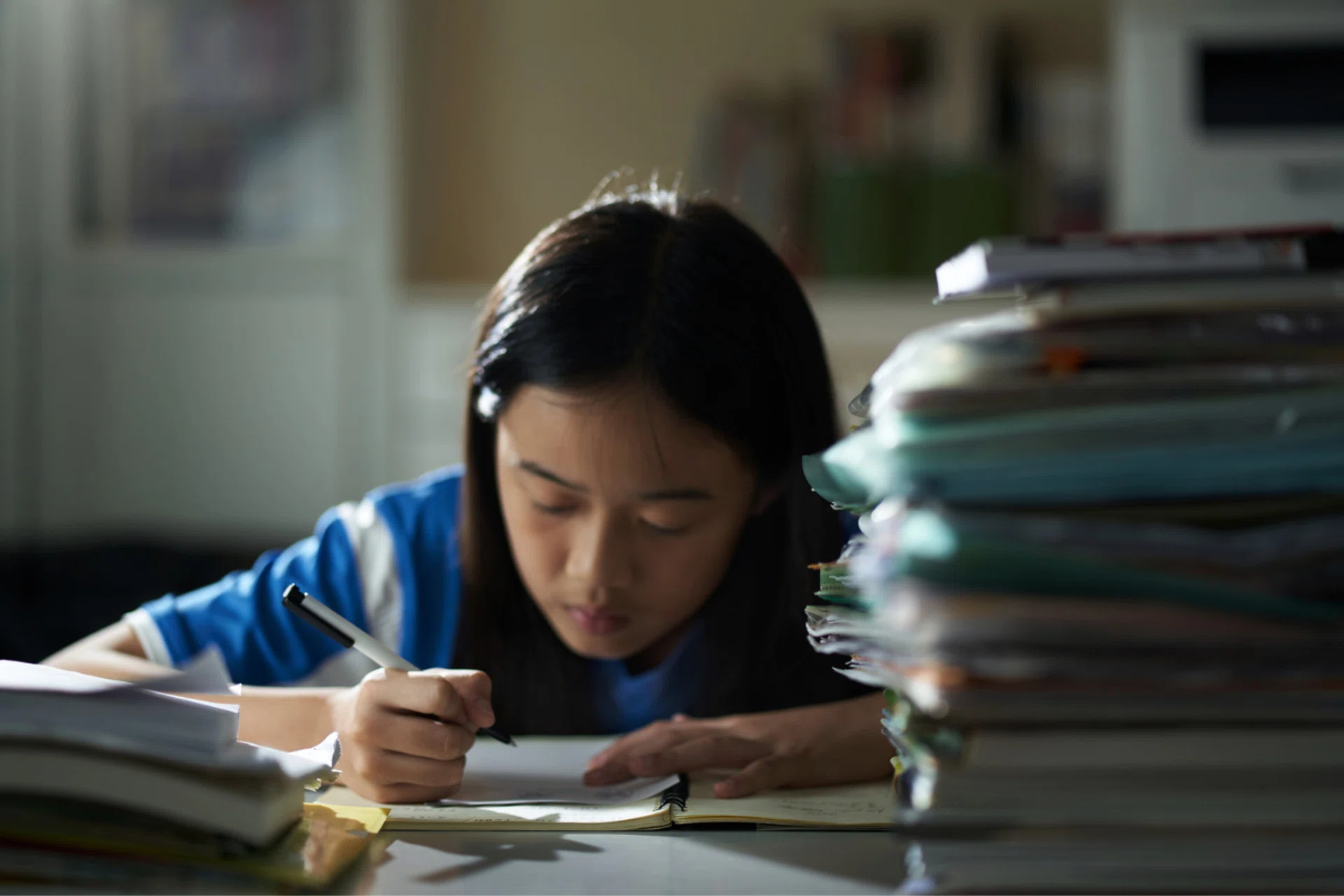
The Primary School Leaving Examination (PSLE) continues to be a high-stakes exam, even with scoring system changes that took place in 2021.
The Ministry of Education has, in recent years, taken steps to reduce the overemphasis on academic marks by not naming the top scorers of national examinations and investing more in programmes to nurture students' strengths in other areas, such as sports or music.
Despite this, many children are often referred to specialists following their exams due to anxiety, depression and sometimes even self-harm. Here’s how to help your child manage the stress that comes along with exam season.
Encouraging them to do something they love
Get them to do an activity to take their mind off their studies for a bit, or develop hobbies that don’t relate to their studies. This also includes activities that aren’t related to their co-curriculars or enrichment lessons — you want them to associate the hobby with freedom and exploration, not stress.
Outdoor physical activities like cycling are best, as nature has been proven to decrease stress in both adults and children. However, if your child really needs some downtime indoors, get them to read a fiction book of their choice or play board games with them.
Helping your child see progress, not just pressure

Remind your child to accept their limitations. “Not everyone can get straight A’s, so tell your child that they can only do their best. Remind yourself, and them, that nobody is perfect,” says Helen Marjan, CEO and director of studies at Lorna Whiston Schools.
If your child seems fearful of failure, get him to practise positive visualisation by closing their eyes and recalling an occasion when they felt confident and in control. Then get them to imagine a successful outcome for their exams by transferring those feelings. They don’t have to imagine a row of straight A’s — they can simply visualise feeling reassured and confident that they’ve done their best after the exams.
Listening without prejudice
Encourage your child to ask questions and to express their concerns and fears. When they express doubt, take some time to validate their feelings — don’t rush in with solutions or anecdotes immediately. They are now at an age where they can be guided to a solution themselves. After they are done sharing, ask them what they think they can do to change the situation, and what kind of support they’d like from you.
“Allow your child to make choices and have some control in their life. The more people feel they have control over a situation, the better their stress response will be,” Helen advises.
Planning a family outing each week
If your child’s in a rut, get them out of it by planning a family outing — even if it’s for a couple of hours to a favourite restaurant or a new water park during exam week. Being exposed to novel environments and situations helps them to get out of their head and do a mental reset.
Making sure they get eight or nine hours of sleep a night

Bedtime should be consistent, with no exceptions. “A lack of sleep can lead to decreased attentiveness, poorer short-term memory, inconsistent performance and delayed response time. Make sure that there’s enough time for your children to unwind before they sleep,” Helen says.
To achieve this, practise good sleep hygiene with them: no devices one hour before bed, dim lights in the room, and a consistent bedtime routine can go a long way in getting a solid night’s rest.
Boosting your child’s nutritional intake
Provide them with healthy meals and snacks to raise their energy levels.
“Too much sugar will turn them hyperactive while too little sugar makes them tired and irritable. Replace biscuits and cakes with a fruit bowl and make sure they eat lots of vegetables. Don’t buy sugary drinks – encourage them to drink lots of water instead,” Helen advises.
Limit their intake of fast food and encourage them to eat more oats, brown rice and bread, whole wheat pasta as well as seeds and nuts.
These, along with oily fish such as mackerel, sardines, tuna and salmon, are all good sources of essential fats, necessary for developing a healthy brain. Supplements like essence of chicken, Omega-3 fish oil, vitamin B-complex, and multivitamins are also popular among parents looking to support their child’s energy, focus, and overall well-being during exam periods.
In the 24 to 48 hours before the exam, avoid giving your child any food that might upset his stomach or cause blood sugar spikes. Encourage him to have a small healthy snack every 2-3 hours instead to keep up his energy.
Ensuring a calming environment
Having separate areas for work, play and sleep helps your child to compartmentalise these activities and provides a cue for transiting between them. If it’s not possible to have his desk outside his bedroom — as is the case for many Singapore homes — encourage him to put his books away whenever he’s done studying, as a signal to his brain to switch off from the stress. Even a short and simple routine of tidying his books, switching off the task light, washing his hands, and doing basic stretches can help tremendously.
Likewise, when he’s getting ready to study, he should have a simple routine to get started, such as preparing a glass of water, lining up his books and switching on the task light.
Cramming in knowledge just before the exam
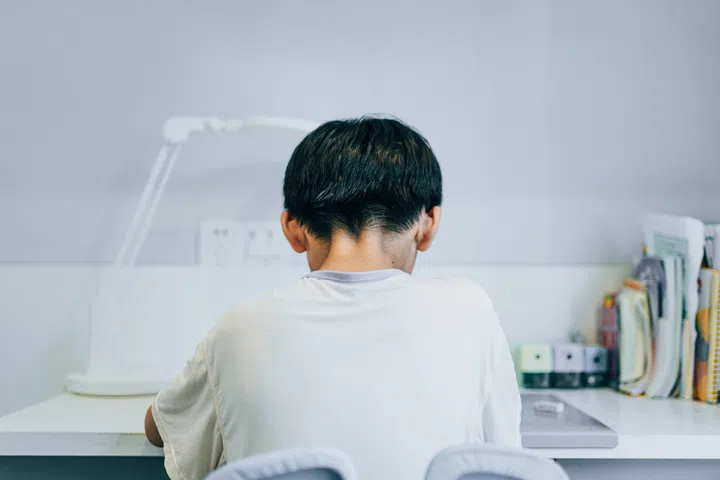
It’s a mistake to try and stuff your child’s brain with knowledge the day before the exam, as it will just lead to stress. Instead, dedicate just thirty minutes to one hour for a revision overview, then pick three to four important topics that may need going over once again.
How your child absorbs information depends on their learning style. Visual learners may prefer colour-coded mind maps for concepts, while auditory learners may benefit more from reciting the main points out loud or using a memorable acronym. Kinesthetic learners may learn better by pacing up and down while reading.
Make sure all this is done before dinner so your child can spend the evening relaxing. This helps to ensure that they go to bed ready for rest instead of having a head buzzing with keywords and concepts.
This is also a good opportunity to remind your child that the morning of the exam itself should be used for preparing themselves mentally with the meditation and visualisation techniques they prepared earlier, instead of trying to memorise even more, so they can enter the exam venue with a calm mind.
This article was originally published on Sep 18, 2023 and updated on Aug 4, 2026.