How We Broke Our 3yo’s Screen Addiction
Screens were our toddler’s babysitter — until speech delay, aggression and guilt forced us to rethink what we thought was normal “modern parenting”
By Jyn Teo -

Share this article
Like most dual-income households without domestic help, screens very quickly became our son’s babysitter out of necessity and convenience.
Before the age of two, he was introduced to a mix of cartoons on YouTube and Netflix. It seemed harmless at the time. These educational videos could jumpstart his vocabulary, I thought.
The screen became a high-tech pacifier. Our toddler didn’t discriminate between a smartphone, television or projector; he just wanted to be plugged in. Without firm boundaries, his consumption crept up. A half hour in the morning, another half hour over lunch and before his nap… these little chunks added up to two hours each day on weekends.
According to the latest guidelines from the Ministry of Health, children between 18 months and six years should be limited to less than one hour of screen time daily. We were well past that threshold. Not to mention, Prime Minister Lawrence Wong’s reminder on screen time limits during the National Day Rally 2025 speech added to my mum guilt.
Soon enough, there were demands for the screen at all hours. From Peppa Pig to Paw Patrol, our toddler watched every episode from every series on repeat.
Screen addiction made him aggressive, especially when we told him it was time to turn off the TV. He would hit us and throw his toys and cushions around the home.
Mealtimes were our biggest casualty. I had made the conscious decision to prioritise a full stomach over a screen-free table. As a result, my son became a “zombie eater” — his eyes so glued to the show that the concept of eating independently was completely lost to him.
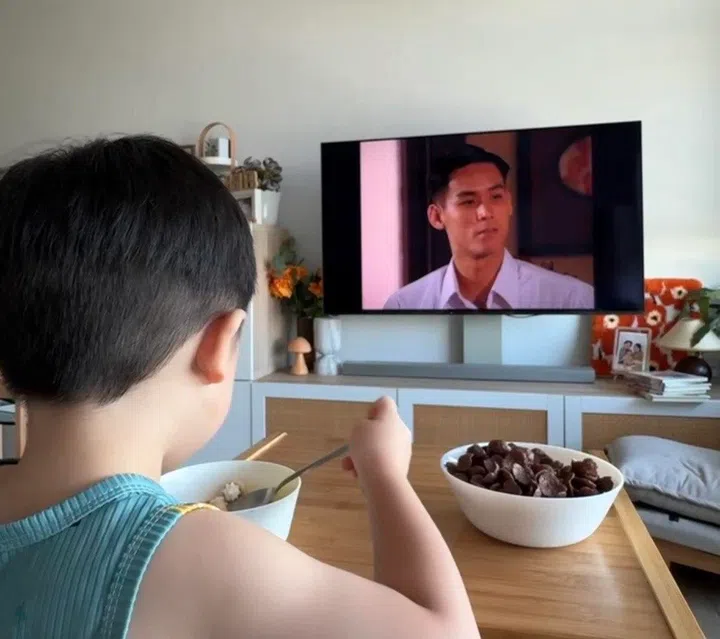

After all, everywhere we went, from restaurants to bus stops, we saw a sea of screens. No one wants to be the parent with the “loud child” in public. Even adults are inseparable from their own devices.
The day the TV “broke down”
The turning point came when we took our son to the doctor for a routine check-up. He was diagnosed with a speech delay, and we were referred for early intervention. At two years old then, he was still not verbal and was unwilling to use speech to communicate, relying mostly on pointing and actions.
While his preschool teachers tried to reassure us that every child develops at their own pace and the doctor did not ask about screen use, I had read enough to know that his screen addiction was playing a role (or at least not helpful) in this situation.
Things had to change. After more than a year of excessive screen time, my husband and I decided to go cold turkey. We told our son our television broke down and someone had to come fix it.
Thankfully, he did not react badly to the news. We kept him engaged with new toys and activities. Not a bad start to our screen detox attempt.
Becoming screen-free
With the screen gone, we had to find new ways to fill the silence. We stopped using the TV as a convenient distraction and began integrating our son into the rhythm of our daily lives, inviting him to help with chores we used to do while he was occupied by a screen.
Instead of letting an algorithm entertain him, we implemented a reward system to foster positive habits. From tidying up his toys to folding his own clothes, our son began earning stickers on his reward chart that he could redeem for new books or physical toys.
Our weekends have become a healthy mix of playgrounds, nature walks and playdates with a community of like-minded parents. On days when we are home, the house is undeniably livelier, and much messier. Our living room is now a rotating gallery of toy cars and prehistoric dinosaur battles. This “beautiful mess” is evidence of a curious mind at work.

Walking the talk
The struggle wasn’t just his; it was also ours. My husband and I soon realised that we couldn’t hold our son to a standard we weren’t willing to meet ourselves.
When he reached out for us, we wanted him to find our undivided attention rather than a disengaged parent.
Cutting down phone use in front of my child is still a work in progress for now. I’ll still use my phone for work needs or when I have to reply to a message. Since he is turning four, he understands when I explain that I can only attend to him after my work is done.
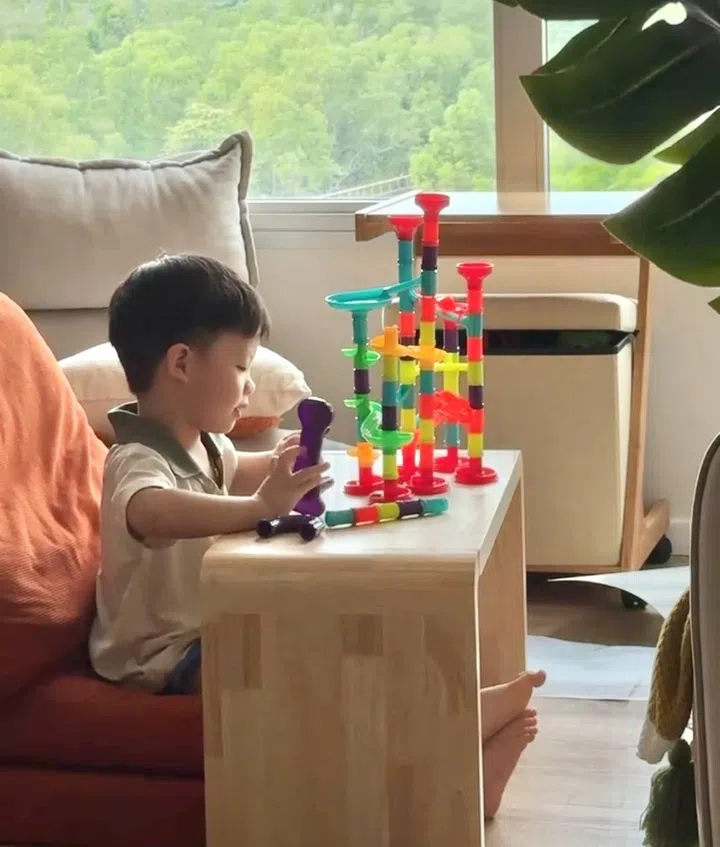
We leave out books and toys for him so he can access them easily and play independently. When we are tired, sticker books are great at keeping him engaged.
From no-screen to low-screen
Rather than being anti-tech, we have transitioned to purposeful screen use after over a month of complete “detox” (zero screen). Devices are now reserved for task-oriented moments, such as referencing complex building guides for our magnet tile set or mastering the choreography to a song he picked up from school.
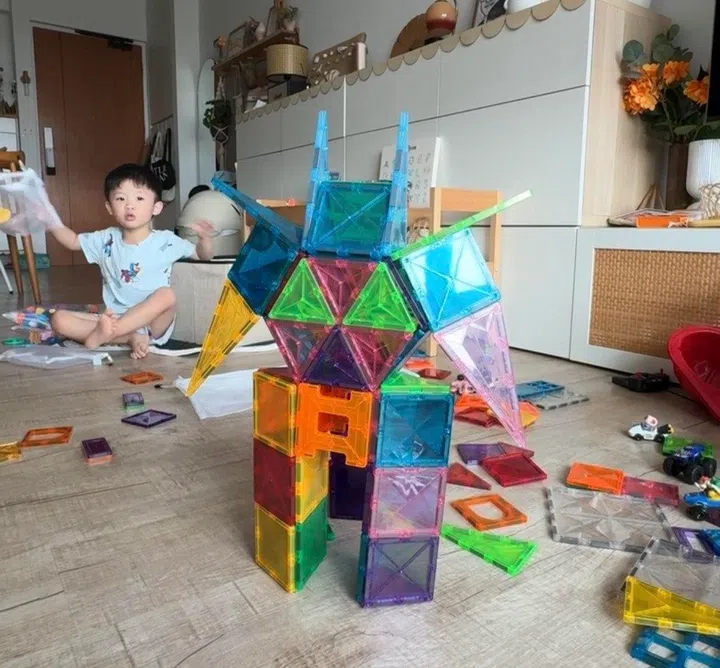
Surrounding ourselves with a village of like-minded parents (their kids attend the same preschool as ours) who share our “low-screen” philosophy has been our greatest asset, allowing us to brainstorm better ways to parent without needing to rely on a remote control.
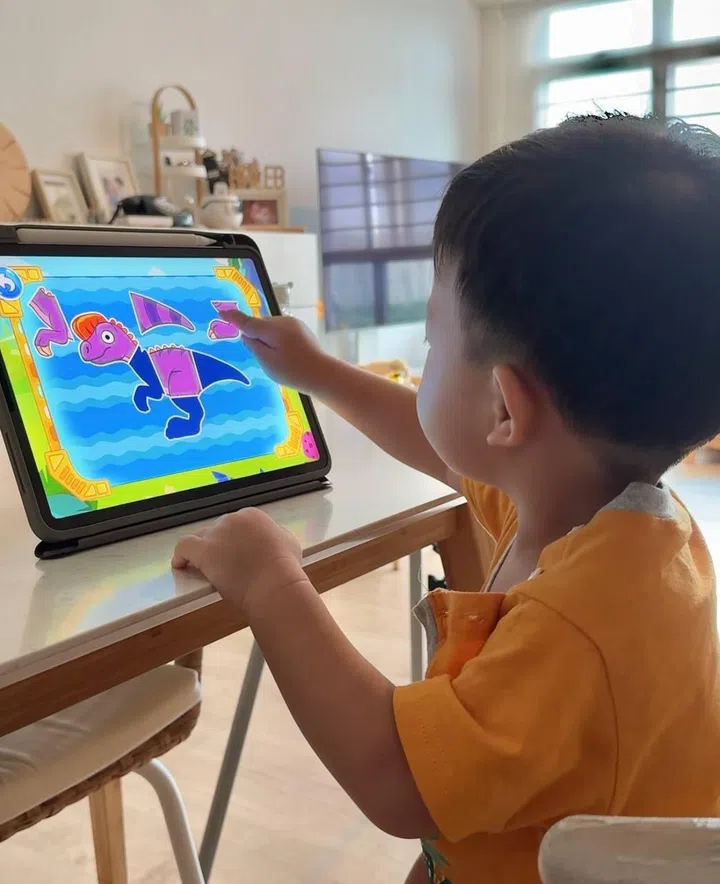
I bought an educational game application on our iPad that I allow our son to access on request. Our tablet, which we keep out of view most of the time, is configured to automatically disable the app after 10 minutes.
During mealtimes at home, we would chat about our day instead of turning to the screen. Outside, my husband and I take turns to eat; I’ll ensure my son finishes his food before he goes for playground time with his dad. The win for me: I get to enjoy my meal in peace.
Weaning off the digital pacifier
Looking back, our relatively smooth experience with the “terrible twos” was an illusion. We weren’t lucky; we were simply using digital distraction to suppress every emotional outburst, trading long-term emotional growth for short-term quiet.
Our screen detox exercise has been a revelation. What we anticipated would be a grueling battle turned out to be a journey towards a better version of ourselves. Tantrums and emotional volatility have softened into patience and independence. My son’s verbal skills have improved, even though he might just be a late bloomer.

Ultimately, we are building a family defined by connection rather than consumption.
Jyn Teo is a content producer at Home & Decor, living at an intersection of her soft girl dreams and boy mum reality. While she aspires to a life of slow mornings and aesthetic tranquility, she spends her weekends racing monster trucks and fixing transformer robots with her preschooler. Her new peak in motherhood: transporting her toddler via bicycle without falling over.