6 Life Lessons About Positive Thinking To Learn From Kit Chan
Homegrown singer Kit Chan, has been through many ups and downs. She shared some words of wisdom in a recent podcast interview
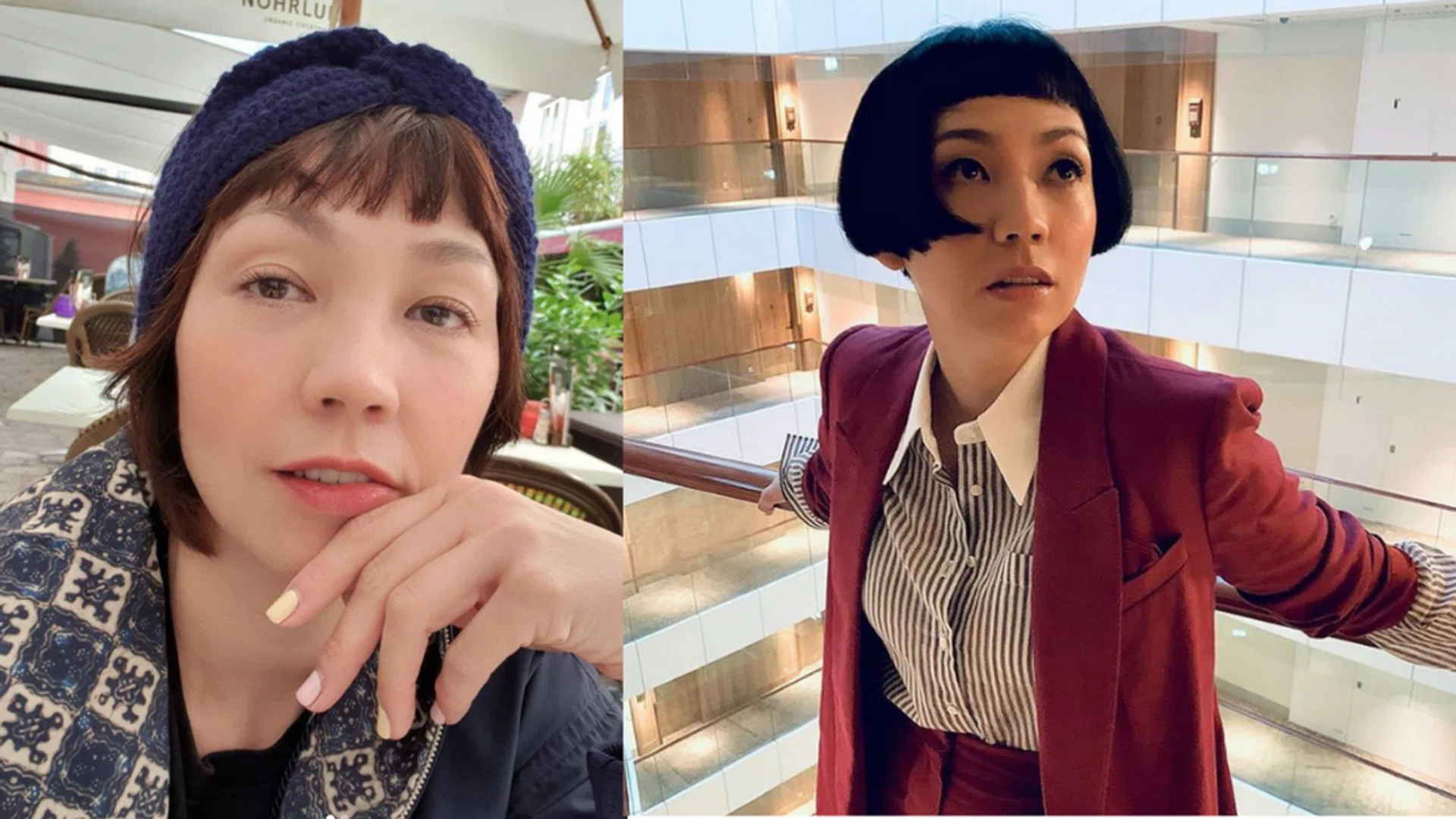
Acclaimed singer Kit Chan is no stranger to many of us — especially those who grew up in the 90s. The homegrown singer made her debut in 1993, releasing her first Chinese single titled ‘Quarrelled’.
From ‘Like You’ to ‘A Time For Everything’, Kit’s long list of songs have touched the hearts of many fans in Singapore and around the world. That’s not all. She’s also played lead roles in musicals such as Snow Wolf Lakealongside Jacky Cheung in 1997 and Forbidden City: Portrait of an Empress in 2002. In 1999, she received the Her World Young Woman Achiever award.
A mega star in Singapore, Kit has been in showbiz for close to 30 years. Notably, she took the plunge and left the entertainment scene at the peak of her career to continue her studies in 2014. Following that, she pursued a public relations consultancy role full-time for six years, even without any prior marketing experience.
In her recent podcast interview on local podcast programme, the LITO Podcast, Kit revealed more interesting insights about her life.
Lesson 1: People might not know the real you — and it doesn't matter
“I wish I didn’t come across as so scary and stern,” says Kit during the podcast interview. In fact, the singer once had somebody jokingly tell her that she looked so fierce in the Forbidden City: Portrait of an Empress poster that it could even be used to scare children.
Still, Kit says that this I-mean-business ‘persona’ has its benefits. For example, it helps to keep the “unnecessary or kaypoh people away”. “If you are meant to know me like if we are working together, you’ll get to know the real me,” she adds.
Remember the time when your parents weren’t too keen on whichever career you had in mind when you were a teen? That happened to Kit, too.
According to her, she used to be a rebellious kid whose inner voice was “louder than anything my mum could say.” So when she told her family she wanted to pursue a singing career, her mum wasn’t pleased and didn’t speak to Kit for three days.
Back then, during the early 90s, her mum thought that Kit wouldn’t earn enough money and starve, and she could have picked another profession. Plus, coming from a “rather traditional [thinking] family”, her parents felt that being a singer was an “improper” job. Even some of her friends told her to “stop dreaming.”
But Kit listened to her inner voice, and three years after becoming a singer, her mum finally turned supportive. The change in attitude wasn’t because of Kit’s rise to fame. Instead, it was her devotion and dedication that moved her mum.
“She told me she’s never seen me so serious in anything,” Kit recounts. “I was serious because I really cared about what I did. And I became more obedient than before. If I didn’t become a singer, I’d probably fall into smoking and drinking. But because I care a lot about my voice, I would do anything to make sure I’m healthy.”
Lesson 3: Recognise your burnouts, and don’t be afraid of changes
As Kit entered her 30s, she realised because she dropped out of school to become a singer who’s blessed with early success, she was in a “golden cage”.
“While I was gaining more and more confidence on stage, I had less and less confidence as a person in real life,” she says.
As an artiste, Kit is often accompanied by her team wherever she goes and whatever she does. “I just couldn’t do anything on my own,” she shares. “That really bothered me and this fear of not being able to navigate the world just got bigger and bigger.”
Spurred by intense workload (Kit was producing one to two music albums yearly since her debut in 1993) and a sense of being unable to function alone, Kit decided it was time to leave. She remembered her friends were worried about her sudden switch, telling her: “You’re a star, you can’t go out there. You’re going to ‘drown!’”
Nonetheless, Kit left the music scene when her contract with her then-record company ended in 2004. She returned to Lasalle to complete her degree, and got her first taste of the corporate world, joining public relations firm Hill+Knowlton Strategies Singapore.
When they decided to engage Kit for a business pitch, her superiors at Hill+Knowlton were unsure of how much to pay her. So Kit offered to work for them for free for the pitch. “For people who’re looking to change careers, you cannot be too calculative,” she shares. “I think when there’s an opportunity, just go for it.”
In the end, her bosses hired Kit after winning the pitch. But joining the corporate world isn’t a walk in the park, especially when you’re a mega star without much related working experience. But Kit wasn’t going to give up.
“If you’re going to step out of your comfort zone, you have to know it’s not just you. Other people are also not comfortable,” she notes. “If you want to be a changemaker, the onus is on you to take care of everybody’s insecurities and expectations. I always overdeliver and don’t get personal. If people don’t believe you, it’s natural.”
In life, it’s impossible to have everybody like you. While there may be a lot of people whom you get along well with, there are also those who will pick on you. It can be a stressful affair but for Kit, she doesn’t believe in pleasing people, and she sees no need in it.
She says: “I don’t care whether people like me or not but I do care how people feel, meaning you cannot be dismissive or disrespectful of people. I care very much of that.”
Nine years ago, Kit’s mum slipped and fell, and had to undergo an operation and several tests. She was diagnosed with osteoporosis, a medical condition where the bones become brittle and fragile, increasing the risk of fractures.
It was an especially hard time for her mum, both physically and mentally. And Kit saw a silver lining in it. Adopting the caregiving role, Kit got closer to her mum and the rest of her family.
“I call it a blessing because sometimes, you don’t have the chance to take care of them,” she said in an interview with Her World. “So I think that when you are able to, whether in terms of resources or timing, that you can look back and say, ‘I’ve done this for my parents.’”
Text: Hayden Ng/HerWorld