How Kong Man Jing (Aka Biogirl MJ) Is Inspiring Singapore’s Youths To Protect Our Planet
Getting youth to feel concerned about environmental conservation can be hard, but with just a camera and a deep love for nature, Her World Young Woman Achiever 2026 Kong Man Jing has managed to inspire a generation of young Singaporeans to care
By Shazrina Shamsudin -

Share this article
Mention Antarctica and most people would picture a pristine, untouched landscape of ice and snow. But when Kong Man Jing stepped off the boat and onto Antarctic land for the first time, the ground beneath her wasn’t ice at all. It was bare and gravelly, with patches of moss and grass already creeping across it.
“I was in shock,” she recalls of her expedition in 2023. “There was no ice. It was brown.”
It was a small detail, but it told her something bigger. Later, looking back at her own cruise ship from a small boat out on the water, the scale of what she was witnessing really hit her. “That’s when it dawned on me,” she says. “If this melts, that’s a lot of water.”
That trip is the reason Man Jing, better known to over 750,000 followers as Biogirl MJ, talks about climate change the way she does.
Schools now use her videos in classrooms. Government agencies like NParks and Singapore Food Agency have turned to her to translate their work for the public.
“So many kids are so excited to learn and watch from us,” she says. “It would be very sad if we didn’t do this for the long run.” This is the kind of impact that’s hard to fake and even harder to measure, and it’s exactly why the 32-year-old is this year’s Her World Young Woman Achiever.

Making Singapore look twice
Singapore moves fast, and it’s easy for its wilderness to slip into the background of daily life. But Man Jing’s entire body of work on her content channel, Just Keep Thinking, is built on drawing that wilderness back into focus. She’s been an active voice in raising awareness around Maju Forest, and after groups of people were found actively foraging marine life at Changi Beach, she vocalised the need for NParks to reinstate its volunteer patrol programme to deter such incidents.
For Man Jing, her approach has never been to preach to people who already care. “Many environmentalists are preaching to the choir,” she says. “That’s not helping to increase the number of people who care.”

It’s why the opening of her videos always sound so refreshing. “It has to be quirky, relatable, something shocking. That’s where you get the eyeballs, from people who won’t even search for nature stuff in the first place.”

When she was invited to attend the International Union for Conservation of Nature (IUCN) Wildlife Trade Conference, a highly technical gathering on the conservation status of species worldwide, she used that opportunity to make content on social media on platforms like Instagram, Tiktok and Facebook, presenting the information in a way the public could actually absorb and enjoy.
Then, at 28th United Nations Climate Change Conference (COP) in Dubai, she went further. As Singapore’s appointed climate youth leader, she briefed delegates and ran youth events late into the night. On representing Singapore at such a large-scale event, Man Jing says: “We know we are small, we have very few resources, but a lot of countries respect Singapore because we are that hard-working country that delivers without fail.”
Esther An, chief sustainability officer at City Developments Limited and one of Man Jing’s closest partners, has watched that effort up close. “She really works very hard with her dedication, commitment and grit. She is going to be a very impactful climate leader, not just for five or 10 years; it will go beyond that,” she notes.
But the clearest evidence of her impact isn’t a metric. It’s a 15-year-old girl named Naomi.
Six years ago, at the age of nine, Naomi first came across a Just Keep Thinking video about sea cucumbers. She recalls: “I didn’t know they existed, so I was very curious. I started learning more and more about marine wildlife from that video, and it kind of got me into my love for science.”
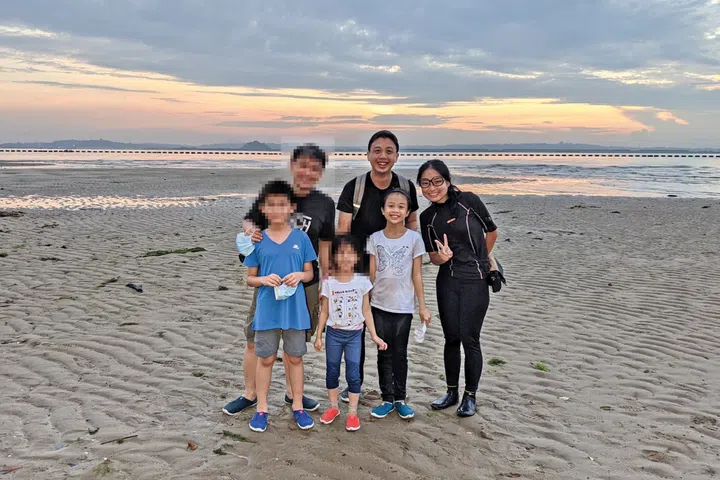
During the pandemic, Naomi started her own small, unofficial nature club in primary school. It wasn’t a big group, just five of her friends who occasionally met over Zoom, watching videos about science, and learning things school never taught them. “For us, science wasn’t just a school subject. It was something we could explore on our own,” she shares.
And for Man Jing, Naomi’s club was a turning point of her own. “That’s when I realised I’m more of a role model, and I can inspire people to take action. I did not expect that,” she admits.
The range of influence doesn’t end there. Naomi’s parents too, admitted to a new-found appreciation for nature, spurred in part by watching Man Jing’s videos. It may seem like a small story to some, but it points to something larger: a generational reversal rarely seen in Singapore, where it’s the children pulling their parents towards environmental awareness.
Similarly, Gloria Goh, a geography undergraduate at NUS, first came across Just Keep Thinking while doomscrolling during the pandemic. “I felt like a little kid learning about my world again,” she says. “That’s what made me stop and watch.” Unlike Naomi, Gloria’s love for nature predated the channel, shaped by childhood trips to the park with her parents.
What Man Jing’s videos gave her instead was something more specific. It was proof that science communication could be a real path, not just a hobby. Gloria admits: “It showed me there’s still so much life within our city, and that made me want to cherish our environment more.”
Eventually, she started her own platform, an Instagram account she named Just Keep Goh-ing – a not-so-subtle nod both to her surname and Man Jing’s channel.
“Without Man Jing, it would have taken me a lot longer to realise there was a path in science communication in the first place,” shares Gloria.
From tuition teacher to Biogirl MJ
Looking back, Man Jing did not expect to be this passionate about wildlife. She grew up, by her own admission, wanting to be a doctor, mugging for grades because her parents had never had the chance to study. “They didn’t have education, so they had that regret, and they made sure I knew how important it was,” she says. For her, ironically, physics and chemistry were her strongest subjects. Biology, oddly enough, was never her best, but just her favourite.
The version of Man Jing before Biogirl MJ was also quieter than most people would expect. Bright and chirpy through her early teens, she withdrew into herself during junior college, a period she now calls, simply, “my depression years”, shaped by stress and difficulties at home. “That’s why my friends in JC got such a shock later,” she says. “They knew me as the quiet girl.”
The shift happened almost by accident, on a three-day environmental camp during her JC years that she’d signed up for without much thought. It was there, wading through Singapore’s shores for the first time, that something clicked.
She remembers the moment so clearly that years later, once Just Keep Thinking existed, she tracked down the camp guides who had led that trip, just to thank them in person. “It took me some time to hunt them down,” she says. “But I wanted to say: You planted that seed.”
And that seed? Well, it carried her into environmental biology at university, and from there into a job that, on paper, had nothing to do with wildlife content: teaching primary school science at a tuition centre.
But even there, the instincts that would define Just Keep Thinking were already showing. She was put in charge of curriculum, and began quietly swopping out the textbook’s overseas examples for local ones so it would resonate more with the students. For instance, raccoons and skunks became sunbirds and otters. She says: “Once I change the curriculum, it affects everyone in that particular cohort. It was like sneaking in my own environmental agenda, but it works, because they can actually see it for themselves in Singapore.”
That wasn’t all. Man Jing’s care extended beyond the syllabus. She threw herself into her students’ lives, checking in on the ones going through hard times at home.
“One of them said she only wanted to attend my class,” Man Jing recalls. “She stayed for another semester. That made me really happy.”
But the actual beginning of Just Keep Thinking was far less deliberate than any of that. In 2019, on a trip to Cebu, she picked up a piece of dead coral on the beach and began explaining it to a GoPro that her now-husband, Raye Ng, was holding. Neither of them thought much of it at the time.
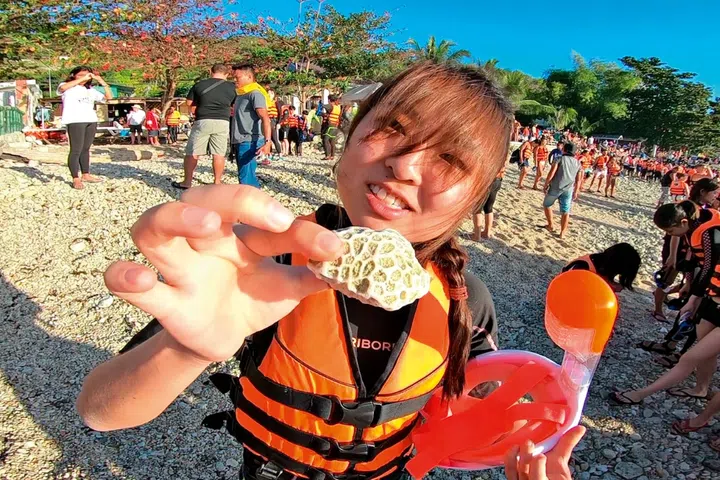
“I remember not taking it very seriously. We thought, yeah, we can try, we’ll do it once or twice, then brush it off like all our other vlogs. I didn’t have any experience in social media or videography,” she says.
So, for the first year, it stayed exactly that: a side hobby squeezed into weekends around her full-time teaching job. Their first videos, posted with zero followers, quietly picked up fourteen thousand views. It’s a small number by today’s standards, but back then, it told her something she hadn’t expected. “There is a demand for educational content online… If it’s done right, if people don’t see it as a boring lecture, but something they actually enjoy,” states Man Jing.
The real test came with the decision to leave teaching altogether, in the uncertainty of the Covid years, with no guarantee that any of it would hold. “I wasn’t super scared, but I was worried that if it didn’t work out, I’d be left without any income in the middle of the worst retrenchment period in years,” she shares. She gave herself six months to a year to see if it could sustain her. And around the six-month mark, paid projects began trickling in.
The growth since has been difficult to fully measure, and she’s honest about that. Online sentiment and view counts only tell her so much. But what convinces her that the work is landing are the numbers behind her workshops. Since 2019, she has hosted over 600 events, and that includes public nature excursions, school assemblies, corporate content creation masterclasses, and community pop-up programmes across Singapore. More than 80 per cent of attendees say they found her through the channel, and she gets a steady stream of messages from strangers explaining, unprompted, how a video changed the way they see the country they live in.
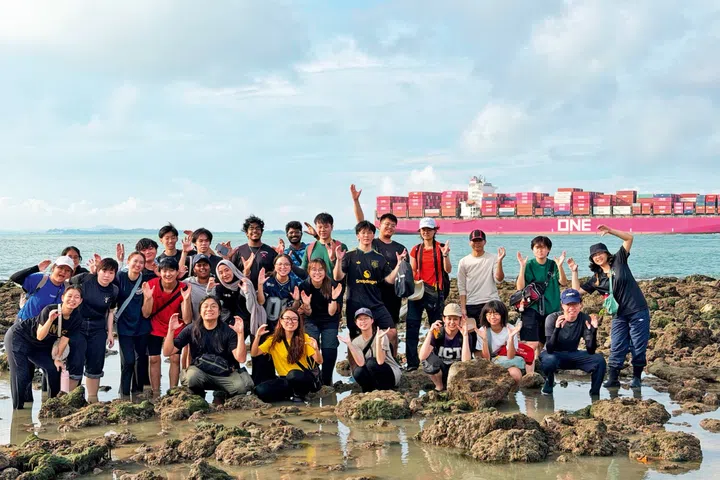
What began as two people and a GoPro on a beach in Cebu is now a team of thirty, translating Singapore’s coastlines, forests, and climate policy into something people actually want to watch.
Scaling up
Then came her next chapter: a decommissioned MRT carriage that nobody quite knew what to do with.
Man Jing first crossed paths with Esther An, one of Singapore’s most prominent thought leaders on sustainability, in 2022 through CDL’s Generation Challenge. It was a youth climate competition with a rare prize attached: a fully sponsored trip to Antarctica. Man Jing had done the math beforehand and knew there was no world in which she was paying her own way. “It’s like four kidneys’ worth,” she jokes. “I was like, nope, I’m not paying that. I’ll win it, or I’ll get sponsored instead.”
Esther, for her part, remembers being struck by Man Jing. Sitting on the judging panel, she was taken aback by a follower count that, at the time, dwarfed her own. “I was like, wow, as an influencer myself, I only have thirty thousand followers, and she already has 175,000,” Esther recalls. “You can’t expect people to sit and listen to me preach. She has that unique character, very likeable, very creative.”
Esther explains that what sets Man Jing apart from other voices in the space is her ability to unpack complex subjects, climate science, biodiversity, into something easy and fun to follow, no matter the audience’s age. “She has a unique connection with children,” she says.
However, she is quick to push back on the word mentor. In her telling, the relationship was never a straightforward matter of someone senior guiding someone junior. Man Jing, insists Esther, arrived fully formed.
“She’s brilliant. She’s very bright and independent,” Esther says. “All she really needed was someone to listen to her, and maybe a role model who had started the journey very early on.”
What Esther could offer instead was scale, and a willingness to hand over the keys without much of a plan. That instinct produced the Ecotrain, now one of the more visible fixtures of CDL’s sustainability push. Here, you will find a retrofitted, decommissioned MRT carriage that has been turned into a colourful, hands-on learning space for children.
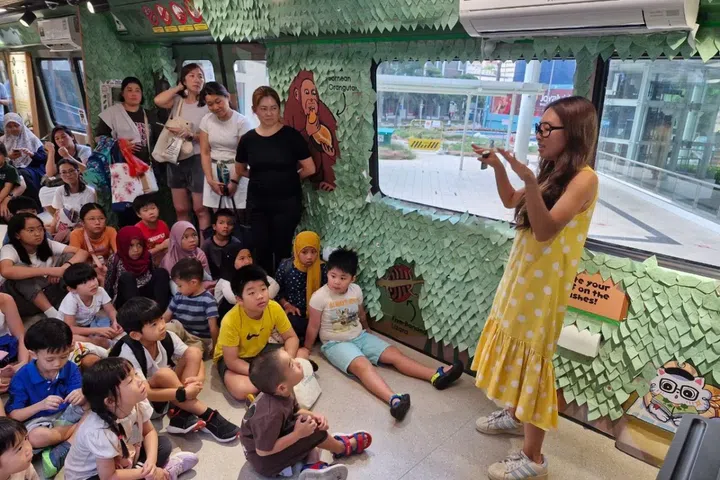
The idea was born, almost casually, during the Antarctica trip itself. “I shared with her, hey, we actually acquired a decommissioned train carriage. I have no idea how we’re going to use it,” Esther says. “She’s so good with education for young children, so I asked, why don’t you run it for us? It’s a synergy. We’re corporate, we have the platform, and she specialises in climate and biodiversity education for children.”
Since its opening in March 2025, the Ecotrain has reached more than a hundred thousand children, and through them, their parents, teachers and grandparents. Its first exhibit was themed around rainforests. Its current one, on melting ice and sinking cities, traces a line directly back to the Antarctic ice that Man Jing once stood on and is still worried about.
Passing the torch
When asked what Just Keep Thinking has become, Man Jing still sounds faintly startled by her own answer: a company of 30 people. An organisational chart she jokes she never expected to be drawing up herself. Appraisals, pay structures, job titles she had to invent because nothing quite fit.
“I really can’t believe I’m doing this,” she says, half in jest. “You cannot just wing it anymore.”
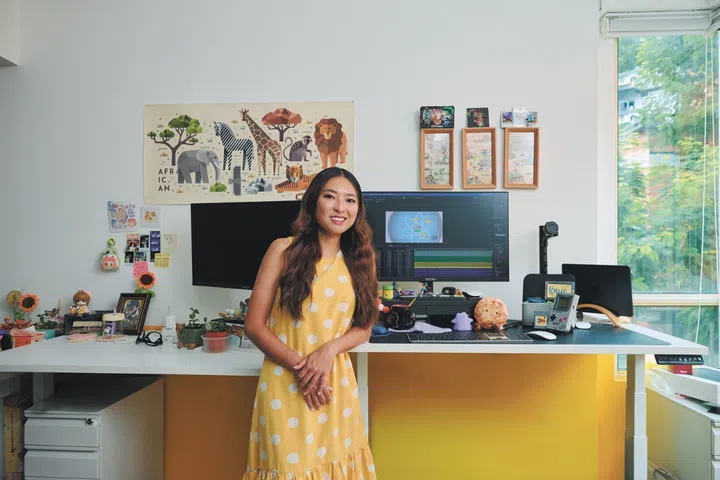
But her ambitions ahead are less about scale, and more about depth. She talks about wanting a proper studio space one day, somewhere permanent enough that a green screen doesn’t need to be dragged out and packed away between shoots. She’s also quietly started funding youth-led environmental initiatives, mostly younger peers she’s known personally for years, giving around $1,000 each. It’s a small amount, she says, but she hopes it can still help within what she’s able to give.
“I never really thought about putting a proper structure to it,” she admits. “I just know that they’re doing good work, and I know it’s hard to fund. So I told them, tell me which event you need help with, and I’ll come in [with support or funds].”
For Man Jing, she knows what role she still wants Just Keep Thinking to play, and she isn’t trying to turn every viewer into an environmentalist. She says: “If you leave knowing that nature is important, that you care about it, that you know what to do and what not to do, that’s already a big win.”
Increasingly, that mission is extending past her own channel, towards the people her channel helped shape. She now leads Singapore’s youth delegation to COP, mentoring a new wave of young people through the same kind of high-stakes, high-pressure rooms she once walked into for the first time herself.
The mission isn’t to save the planet alone, but to raise the people who will.
PHOTOGRAPHY Angela Guo
ART DIRECTION Adeline Eng & Ray Ticsay
STYLING Felix Woei
HAIR Aung Apichai
MAKEUP Benedict Choo
This article was originally published on Her World.