Retrenched Twice While Caring For Kids And Her Ailing Dad: This Mum Still Found Her Way Back Into Tech
Through Workforce Singapore’s attach-and-train programme and career coaching, she rebuilt her career even when caregiving didn’t stop
By The Weekly -
Share this article
In just two days, her life changed. She received news that her father had been diagnosed with bladder cancer. The next day, she was retrenched, ending five years at a software firm.
For programme manager Kasthuri Gengadaren, 50, it was a double blow that came in the middle of last year, but an unexpected thought quickly followed: at least she could be there for her dad.
“I saw it as a blessing in disguise,” she says. “If I were working, I wouldn’t have been able to spend that time with him.”
What followed were six months of juggling both ends of her family life. Kasthuri, who has two daughters, aged 14 and 20, was keeping the household together, travelling back and forth for her father’s chemotherapy appointments in Kuala Lumpur, and squeezing in job applications whenever she could.
Even dinner decisions – the daily mental load most mums carry – landed on her.
Yet, if you met Kasthuri today – happy and confident in her new role at Microsoft, which she started last December – you wouldn’t have guessed how much she’s gone through. This wasn’t her first career restart. It was her second.
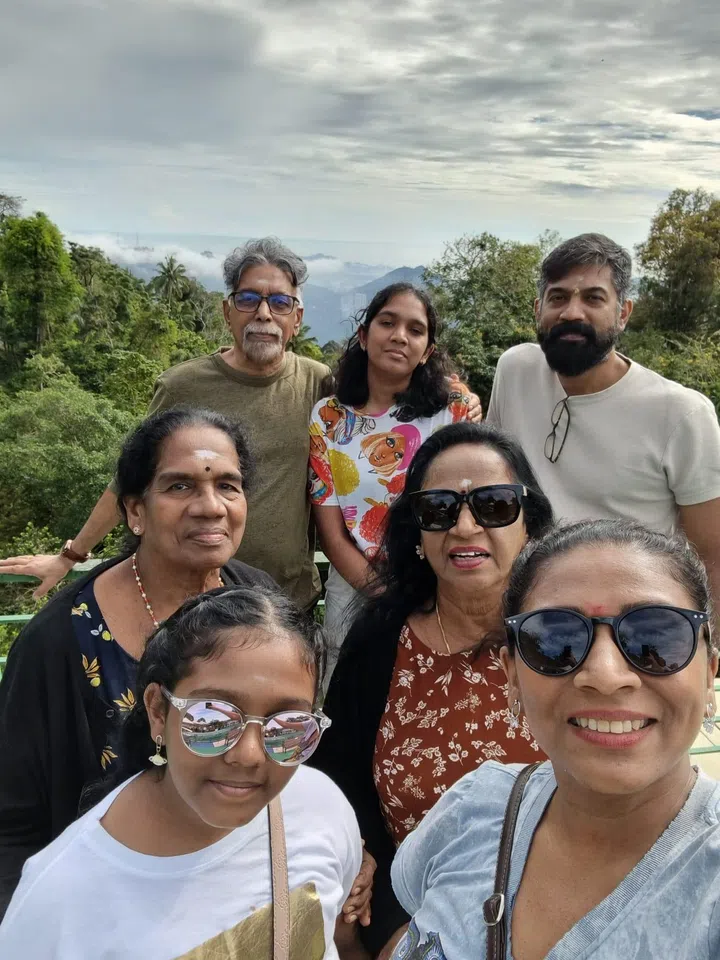
Kasthuri (bottom right) spent months travelling between Singapore and Kuala Lumpur to accompany her father (top left) during his cancer treatment last year. His recent scans have since come back clear.
Kasthuri first stepped away from work in 2005 when her eldest daughter was an infant. After returning from maternity leave, she was pumping milk at work, rushing home at lunchtime to nurse and still taking night calls.
“It was really difficult,” she recalls. So when her company offered voluntary retrenchment, she raised her hand. What she expected to be a short pause stretched into 15 years.
During that time, she did freelance technical writing, completed a fashion diploma in 2015 out of interest and even started an Indo-Western sari business with a partner in India. But full-time work still felt distant.
“During the 15-year break, my professional circle was very small – one or two people,” she says.

Fifteen years as a stay-at-home mum made for a close bond with her two daughters, aged 14 and 20, says Kasthuri.
She does not regret being present for her daughters, but when her younger daughter turned eight, both girls urged her to return to work. She began applying for roles – and one company that reached out was Anaplan, where she would go on to spend the next five years.
Through the hiring manager, she learnt about the Workforce Singapore (WSG)’s Career Conversion Programme (CCP) that helps mid-career returners reskill into job roles with good long-term prospects. By participating, she would be part of Anaplan’s Technical Analyst Mid-Career Switch programme.
“I told the hiring manager that I’ve been out of tech for 15 years. I don’t know how I’m going to do this,” she recalls. “But he looked at my background and said I could do it. If he had not pushed me, I wouldn’t have taken up the job.”
A structured route back
Many women returning after a long break underestimate their professional value and limit their options as a result, says a WSG career coach.
“Some also rely heavily on online applications, while overlooking structured pathways such as mid-career programmes, internships or contract roles that can help them rebuild confidence, credibility and recent experience,” the coach adds.
How to get back into the job market after a long career gap
Returning after a long break can feel like stepping into a new world – roles evolve, hiring moves faster and confidence can take time to rebuild. Workforce Singapore (WSG) suggests these entry points:
- Explore structured routes: If you want a clearer way back in – or need to pivot fields – consider WSG’s Career Conversion Programmes and the Mid-Career Pathways Programme (if you’re aged 40 and above).
- Show up where employers are: Online applications matter, but in-person touchpoints can speed things up. Look out for WSG career fairs and Careers Connect On-the-Go (CCOTG), where you can speak to a Career Ambassador and attend interviews in your neighbourhood.
- Find a community that keeps you moving: Tap networks to find leads and catch up, such as NTUC’s C U Back at Work and the Women Supporting Women Mentorship Programme, as well as Mums@Work Singapore for peer support.
You don’t have to be on this journey alone – tap WSG’s herCareer initiative for help and get your foot in the door today.
For Kasthuri, the CCP gave her a clear route back. She was placed on a nine-month attach-and-train programme, which helped her return with support and structure, rather than having to figure it out alone.
“The HR manager gave me a template to report to WSG what I’d learnt each month,” she says. Her manager signed off on the progress, turning what could have felt overwhelming into a step-by-step plan.
Kasthuri cleared three levels of certification in five months – a process that usually takes far longer. Her progress was noticed, and she was offered a permanent role before the programme ended.
Over the years that followed, she also found a community she did not have during her long break.
She became a global leader of Anaplan’s women’s network, and later volunteered with Lean In Women in Tech, Singapore, where she met other women leaders, and set up a lot of events for leadership, career growth and confidence building.
The experience, she says, reminded her that even after time away, there is space to grow and contribute. So, even though Kasthuri was back to square one after being retrenched from the firm, she handled it differently.
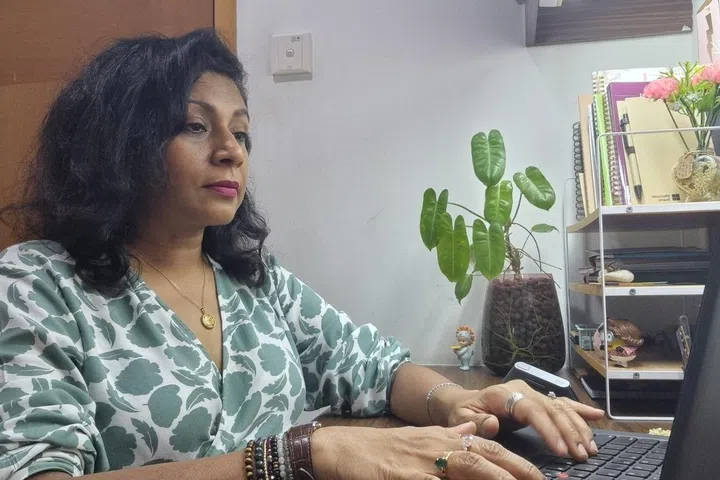
Kasthuri says what helped with her career restarts was structure and the willingness to ask for support at home so she could keep going.
She treated the search like a project – writing down tasks, setting KPIs and giving herself a six-month deadline. “During the [previous] 15-year break, time just went on,” she reflects. “This time, I was very organised.”
She had also applied for WSG’s career matching services and was assigned a consultant from WSG’s partner, AngusKnight Singapore, who helped refine her resume, screen roles and make referrals.
This included translating her previous experience, including those acquired during her 15-year career, into the skills employers wanted.

During her career break, Kasthuri made frequent trips to India (pictured) to meet suppliers and workers for her Indo-Western sari venture, which she started with a business partner.
Says the WSG career coach: “Working with a career coach helps you confidently present yourself to employers and position your career break as a period of skills development rather than professional stagnation.”
Kasthuri also pushed herself to network. The Microsoft opportunity came from an event she almost skipped, exhausted from juggling the household and caregiving. But she went – and was offered an interview on the spot. She started a contract role with the firm, around the same time her father finished chemotherapy.
“Even though the Microsoft role didn’t come directly through WSG, having that support helped,” she says, adding that she saw the strategic value of the role.
WSG career coaches emphasise this point: “Job searching can feel isolating. Having professional support provides not just practical help with resumes and applications, but accountability during a vulnerable period.”
Boundaries, support and the long game

Today, Kasthuri is an adoption program manager for the public sector at Microsoft, a role she landed after a chance networking conversation opened the door to an interview.
Even after returning to work, Kasthuri is still living the reality many mothers in the sandwiched generation know well – raising children while caring for ageing parents. She has learnt to set boundaries, though they are tested often, and says support at home makes a real difference.
“If your spouse drops everything to you 100 per cent, it’s going to be impossible,” she says. “My husband and I balance it. If I have an important meeting or event, he takes over.”
For women considering a return to the workforce, Kasthuri’s advice is simple but hard-won: Keep your skills warm during breaks, build relationships, and show up – even when you don’t feel like it or you don’t think it’s worth the effort. Most of all, do not try to do it alone.
“It kind of felt very lonely to look for a job by yourself,” she says. “When you have people whose whole job is to help you, why not take it?”
Career breaks, she adds, do not have to be career enders.
“I wish I had come [back] sooner,” she admits. “But you know, it doesn’t matter, right? One year or ten years – if you have the motivation for it, why not? There’s always space for you. You just have to find your space.”