She Has Been Knocking On Doors To Help Others For Over 30 Years
“This is our way of actively looking for opportunities to help. Every time we lend a hand, it’s also a chance for us to find meaning in our own lives,” says active volunteer Fion Phua
By The Singapore Women's Weekly -
Share this article
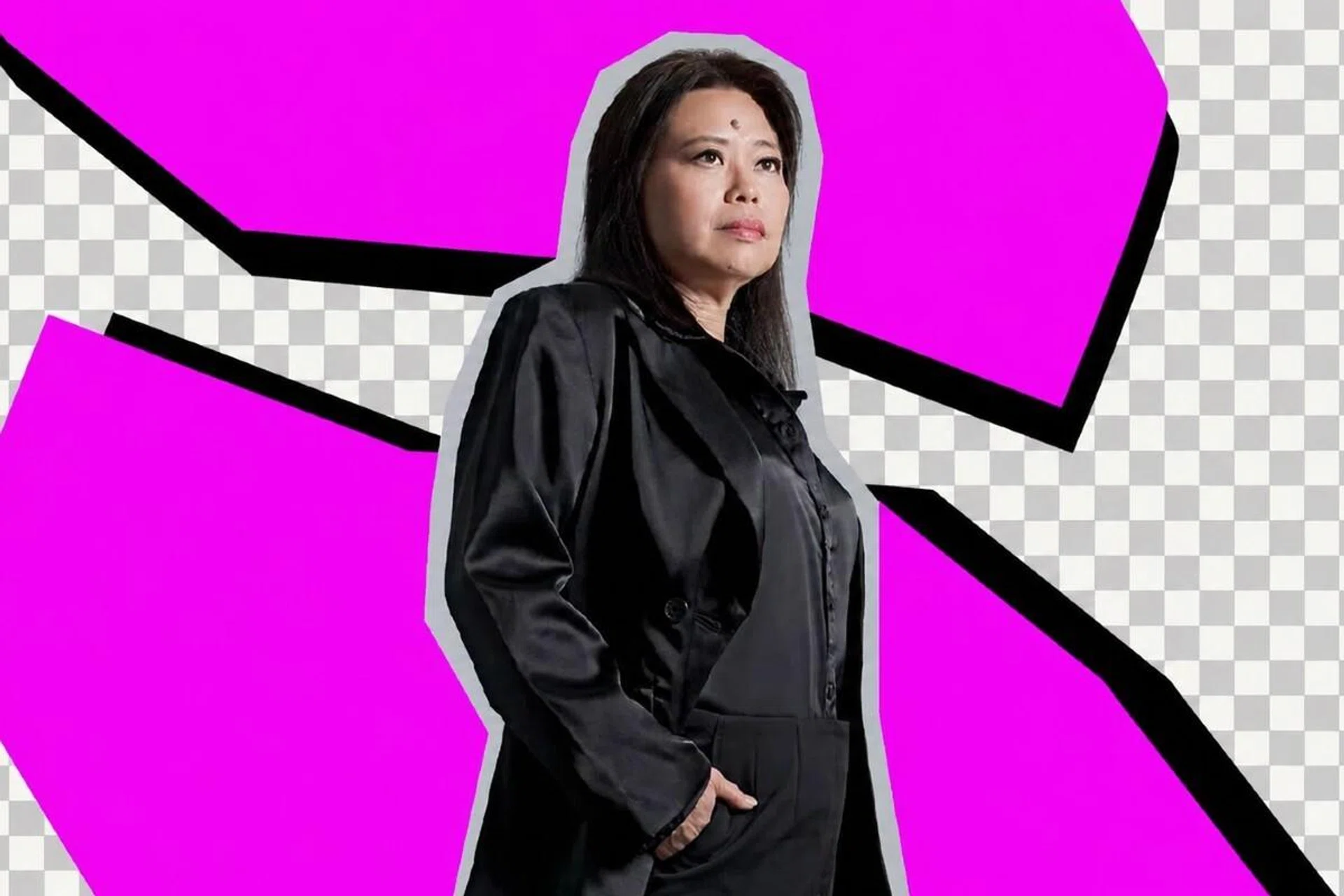
Long before founding her charity initiative Keeping Hope Alive more than two decades ago, this Singaporean had already made helping others a part of her weekly routine.
For over 30 years, rain or shine, Fion Phua has spent her Sundays walking through rental flat neighbourhoods, knocking on doors and checking in on low-income families who need support.
The charity’s founder was recognised in 2015 for her efforts with the Singapore Woman Award. Yet, her volunteer work is only one aspect of her life. By profession, she is a successful entrepreneur who brokers memberships for private clubs, including golf clubs—a career that has led some to describe her as a modern-day heroine.

How do we create a more caring and inclusive Singapore?
It doesn’t need to be a grand gesture – simple acts of kindness form a good starting point, says Fion Phua, founder of charity Keeping Hope Alive. Here she also explains what the Ministry of Social and Family Development’s initiative titled “Better Starts with Us” means to her.
To me, “Better Starts with Us” means not waiting for someone else to take the first step. Change begins when ordinary people choose to care, notice and act. Every act of kindness, whether volunteering, sharing resources or simply listening, contributes to a stronger and more compassionate community. Better outcomes for society start when each of us takes responsibility and builds trust around us.
Watch this video to learn what drives Fion’s mission.
How do you feel about being called a modern-day heroine?
It’s flattering, but honestly, I don’t think I’m special.
I’ve always thought of myself as someone who’s a little nosy and likes talking to people. That’s probably why I enjoy going door to door and checking in on how people are doing.
I started working straight after secondary school when I was 16. Not long after, I married my husband in what you’d probably call a whirlwind romance. Then came buying a home and figuring out how to handle all the responsibilities that came with adulthood.
Growing up that way taught me how to read people and situations quickly. Maybe that’s part of why people see me the way they do.
Was that what first drew you to volunteer work?
When I was about 21, I decided to donate all my childhood dolls to the Red Cross Home for the Disabled. It felt symbolic, like I was saying goodbye to a younger version of myself.
When I got there, I discovered that many of the children had special needs. For safety reasons, the dolls’ eyes, noses and accessories had been removed so the children wouldn’t accidentally swallow them. The dolls looked completely different from what I enjoyed playing with.
Seeing that really affected me. My husband and I decided to start volunteering there. We were young and didn’t have much money for dates anyway, so volunteering became something we did together.
What led you to start Keeping Hope Alive?
As I spent more time volunteering, I began to realise how much a person’s family environment and childhood experiences can shape their future.
Many of the challenges these children faced could be traced back to problems at home. If we wanted to make a lasting difference, we needed to address the root causes rather than just the symptoms.
That eventually led me to start Keeping Hope Alive. Since then, we’ve spent our Sunday mornings visiting low-income families living in rental flats and offering help wherever we can.
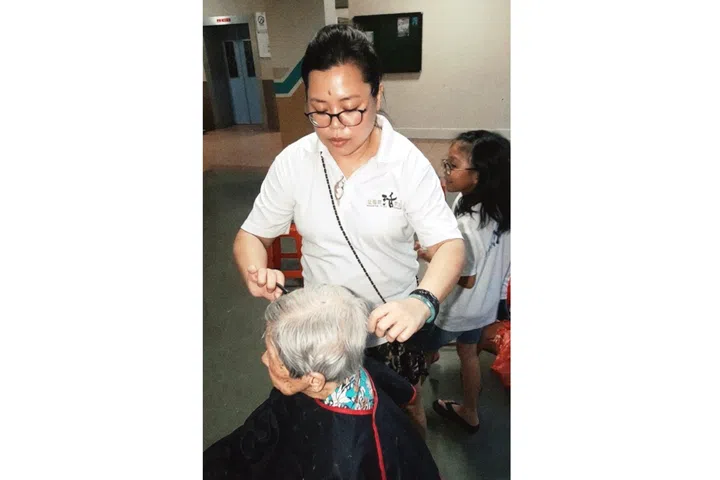
Every three months, Fion helps to trim the hair of the elderly who live in rental flats across the island.
While financial difficulties have always existed, the challenges today are often more complex. Many families are not only struggling with money, but also with social isolation, mental health issues, family breakdowns, caregiving responsibilities and difficulties navigating support systems.
The cost of living has increased, and many families are living from month to month despite working hard. We also see more elderly living alone and individuals who fall through the cracks because their situations do not fit neatly into existing categories of assistance.
Many people think hardship is only about not having enough money. However, some of the less visible struggles include loneliness, social isolation, poor mental health, hoarding conditions, elderly persons living without support, rough sleepers, people waiting for housing and individuals who are unable to seek help because of disabilities or cognitive challenges. These struggles are often hidden behind closed doors and may not be obvious to the public.
Why go door to door?
Because it’s often the fastest way to understand what’s really happening. The sooner you identify a problem, the sooner you can do something about it before it spirals into something bigger.
But there’s another reason too. Knocking on doors reminds us that helping others isn’t something that should happen only when opportunities come our way. We should actively seek those opportunities out.
And honestly, I’m grateful to the people who open their doors to us. They allow us to be part of their lives, and that’s incredibly meaningful.
What are some experiences you’ll never forget?
There have been many. I’ve had to deal with unattended deaths. I’ve cleaned toilets that were overflowing with human waste. I’ve cared for a child who had blinded himself.
But one experience has stayed with me more than any other.
I met a group of children who were so hungry they were drinking tap water just to fill their stomachs.
Their father was raising them on his own. He worked during the day and cleaned cinemas at night. At one point he was detained by the police and didn’t come home for several days.
When I visited, the children had almost nothing to eat.
At the time, I was surviving on odd jobs myself and didn’t have spare money to help. Out of desperation, I took the children to a nearby funeral wake so they could eat. I also took a carton of bottled water and a few packets of cigarettes, then exchanged the cigarettes at a neighbourhood shop for instant noodles so they would have food until their father returned.
I know that wasn’t the right thing to do. But that experience taught me something important: helping others isn’t about how much money you have. Sometimes it’s simply about being willing to act.
What has kept you going all these years?
The truth is, I never imagined I’d be the kind of person who could deal with a dead body or clean a toilet covered in human waste.
But when you’ve knocked on a door and come face to face with someone’s reality, it’s very difficult to walk away.
I remember cleaning one particularly filthy toilet. For years afterwards, I couldn’t even look at satay sauce because it reminded me of what I’d seen. To this day, I still don’t eat it.
But then there are moments like seeing children survive on tap water.
People who were once complete strangers somehow become people you care deeply about within days. You support each other, learn about each other’s lives and build a genuine connection.
That sense of human connection is what keeps me going. Today, Keeping Hope Alive continues to focus on supporting residents in HDB rental communities through practical, ground-up assistance. We work closely with volunteers to identify needs and connect people with resources and support.
Is there a philosophy that guides your work?
I’ve always believed in helping people through a crisis, rather than creating long-term dependency. That’s why I’ve never focused heavily on fundraising.
Often, the most meaningful help is practical help – cleaning a fan, checking whether an elderly person’s medication has expired, carrying something heavy, or simply being there when someone needs support.
What is your hope for Keeping Hope Alive?
I see the world as having both light and darkness. Some people live lives filled with hope, opportunities and support. Others feel as though they’re living in the shadows.
Through Keeping Hope Alive, I hope we can bring a little more light into those darker places. Moving forward, we hope to build more community partnerships and create more platforms that keep hope alive, ensuring that vulnerable individuals remain connected, supported, and seen. Our goal is simple: to restore dignity, strengthen community bonds, and ensure that no one feels forgotten.
It may take years. But I’ll keep knocking on doors.
This article was first published in Nuyou on 13 March 2023 and updated on 18 June 2026. It is in support of the Better Starts with Us campaign, which aims to encourage Singaporeans to build a more caring and connected society together. Learn more at go.gov.sg/BetterStartsWithUs.
In partnership with the Ministry of Social and Family Development