Why (And How) You Can Squat To Support Breast Cancer Awareness This Month
Three breast surgeons have come together to launch a social media campaign highlighting the importance of early breast cancer detection
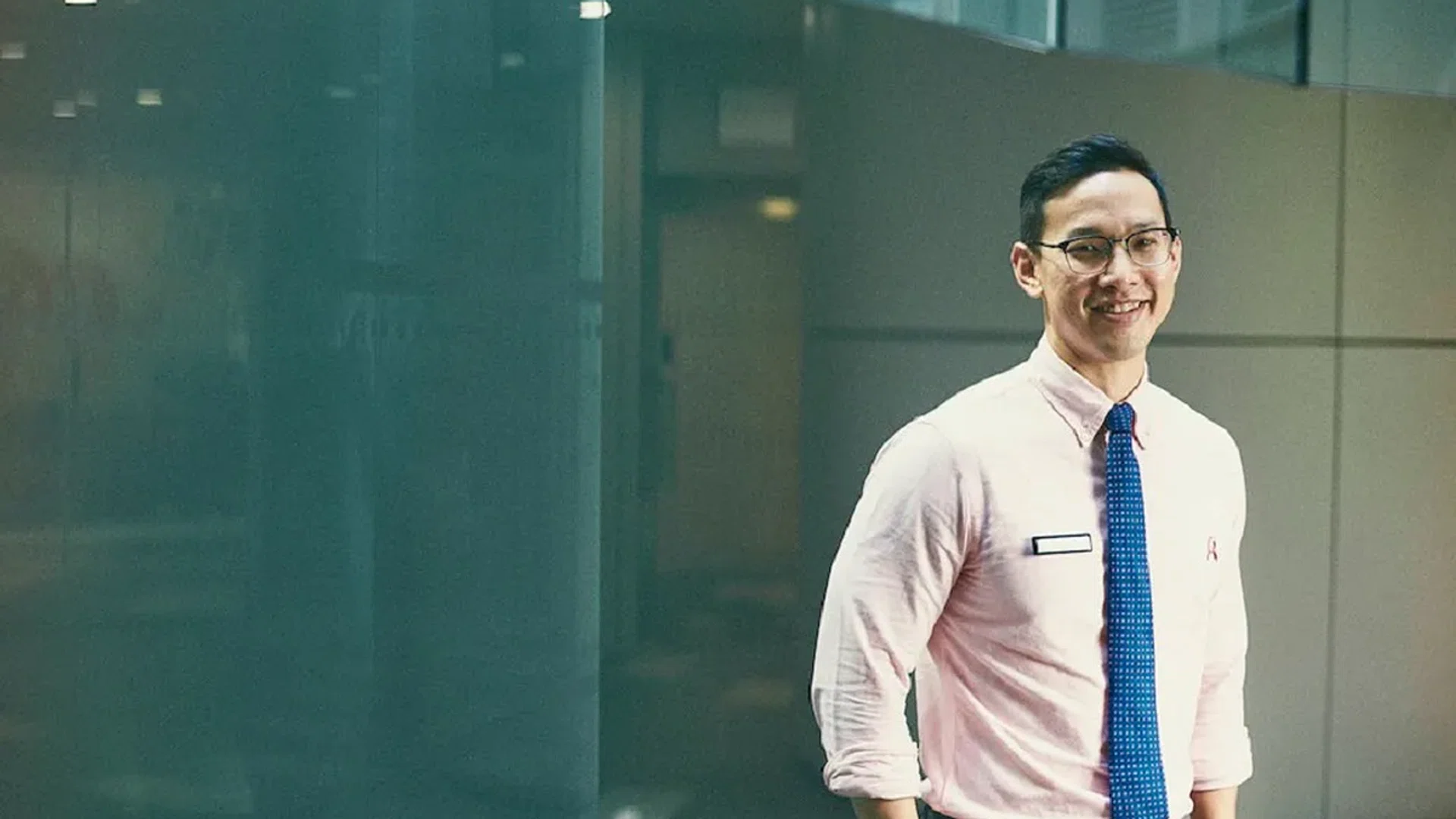
They may be surgeons by day, but Dr Ang Wei-Wen, Dr Marc Ong and Dr Serene Tang have been huddling after hours to champion a cause that they have made their calling: drumming up awareness about early breast cancer detection.
Called #Squat2Support, the doctors have launched a social media campaign for Breast Cancer Awareness Month that encourages participants to perform 40-second squats while leaning back-to-back with a partner.
“We wanted it to be fun and interactive, and doing a squat back-to-back actually requires a lot of coordination. This campaign highlights that breast cancer itself is not a solo journey – you always need somebody’s support. [Breast cancer] affects not only the patient, but also their family members and loved ones,” says Dr Ang Wei-Wen, an associate consultant at Tan Tock Seng Hospital’s Breast & Endocrine Surgery department.
While the trio are based in different public hospitals – Dr Ong is a consultant at Khoo Teck Puat and specialises in breast, hernia, and trauma and emergency surgery, and Dr Tang is a consultant in general and breast surgery at Woodlands Health – they felt that a combined National Healthcare Group initiative would serve a bigger impact for the cause.
“Every year, we organise a public forum and we always try to choose a theme for the event. This year, we are hoping to create something that we could do together as a national healthcare group. Marc, Serene and I thought, well, we are young and fairly creative, so let’s plan something,” shares Dr Ang.
But why 40 seconds? The significance of the number ties in with Singapore’s national breast cancer screening programme, which advises women to start their mammograms at the age of 40.
“We tried [the squat] a few times, and realised that when you do the activity for 40 seconds, it really is very challenging and your mind is very focused on the number. The whole idea of #Squat2Support is that you always need somebody to have your back. And you can’t do this activity unless both sides apply the same amount of pressure on each other,” he explains.
“It’s also to honour the people who’ve actually gone through breast cancer surgery, and also to recognise those who have supported them through this journey. They not only have to go through the physical aspects of surgery and treatment, but also the mental hurdles involved.”
There is no shortage of literature on why early breast cancer detection is important for women aged 40 and above, and yet, there is still some resistance when it comes to getting a regular mammogram done.
The Ministry of Health (MOH) reported in 2020 that although screening rates for breast cancer is up at 38.7 per cent (from 30.9 per cent) in 2019, the statistics are about 50 per cent for women with tertiary level of education, and 28 per cent for women with primary level of education.
One reason why more women aren’t doing regular breast examinations could be the fact that a lot of them are the main breadwinners of their families.
“They are usually in the 40 to 60 age bracket – they have young children, and perhaps other dependents. So, their health becomes a second priority. Sometimes, we [doctors] meet patients who will share that they’ve noticed something unusual (such as a lump), but because it did not cause them any pain or discomfort, they’ve decided to ignore it.
“Some even feel that if they go and get it investigated and then are diagnosed with breast cancer, they’ll be a burden to their families,” shares Dr Ang.
Once, he came across a teacher who would only schedule her reviews after her classes at 4.30pm. Dr Ang eventually picked up something abnormal during her screenings, but the teacher decided to put her biopsy on hold because it was during the preliminary examinations.
“She told me her main priority was her students, and she wanted them to do well. If she takes time off, it will be a replacement teacher that takes over, and she doesn’t want their results to be affected – this was even after we informed her that it could potentially be cancer.”
He continues: “On some levels, while we are always emphasising the importance of early breast cancer detection and treatment, some people have different priorities, like their children’s education or the welfare of their family members. Personal health may actually not be a close second – it could be maybe a third or fourth priority already.”
Aside from being caregivers, another common factor lies simply in the fact that many are not aware that breast cancer is by far the most prevalent type of cancer amongst women.
“I wouldn’t really say there is a lack of knowledge [about breast cancer], but they may not be aware that it is truly very common. If anything, it’s going to be almost 30-plus percent of all cancers diagnosed in women. Doing a mammogram or a regular breast examination is actually a very effective way of picking up the majority of these cases,” he says.
Like anyone who turns to googling any ailment or disease, they’ll find that misformation is aplenty online. Breast cancer myths are one example – there exists a notion that if one finds a painless lump in their breast area, it “cannot be cancer” because it has not caused any noticeable “problems”.
Says Dr Ang: “They are not wrong in a sense that [the lump] could completely be normal, but at the same time, it could also be a very slow growing tumour. I would say that by far, the majority of cancers aren’t even going to cause you any problems. And when it does, it’s going to be something that’s much more advanced – like it has either spread to the skin or elsewhere on the body. By then, treatment is sometimes a lot more challenging compared to the cancer being treated at an earlier stage,”
Addressing the fear of a positive cancer diagnosis, Dr Ang points out that the overall survival rate for many cancers – especially when they are picked up at an early stage – has increased today. This is partly due to advances in surgical techniques and adjuvant treatments. “Cancer survivors can have almost the same life expectancy as a normal person,” he adds.
On a more lighthearted note, Dr Ang has also encountered patients who have even roped their partners in with their regular self-checks. Chuckling with amusement, he recounts the time when an elderly patient consulted him about an anomaly from her breast cancer screening. She had never done a mammogram before, and had decided to do one on the advice of her polyclinic doctor.
“I asked her, why haven’t you done a screening before? She told me because her husband’s very ‘active’, he helps her to check [her breasts] all the time. “That being said, we have patients who have actually come to us because their partners have felt something abnormal. We encourage everybody to do regular breast examinations, and if you are comfortable with your partner doing it for you, then by all means, go ahead,” he says.
Visit this website for more information about Squat2Support, or to contribute to Tan Tock Seng Hospital’s Breast Cancer Research fund.
Text: Chelsia Tan/HerWorld