Creative Steph Er On Mental Health For Herself, Her Daughter And Raising Awareness About Child Abuse
Raising awareness for the topic is on the agenda for this creative and podcast host

Share this article
We’re no stranger to the energetic multi-hyphenate Steph Er, who has done pretty much everything under the sun, from running the now-defunct Sugarfin cafe to helming her own creative agency Cream Pie – all while hosting her podcast series Arch Conversation. Started in 2020, the latter sees her having an open discussion with guests on just about any relatable topics under the sun.
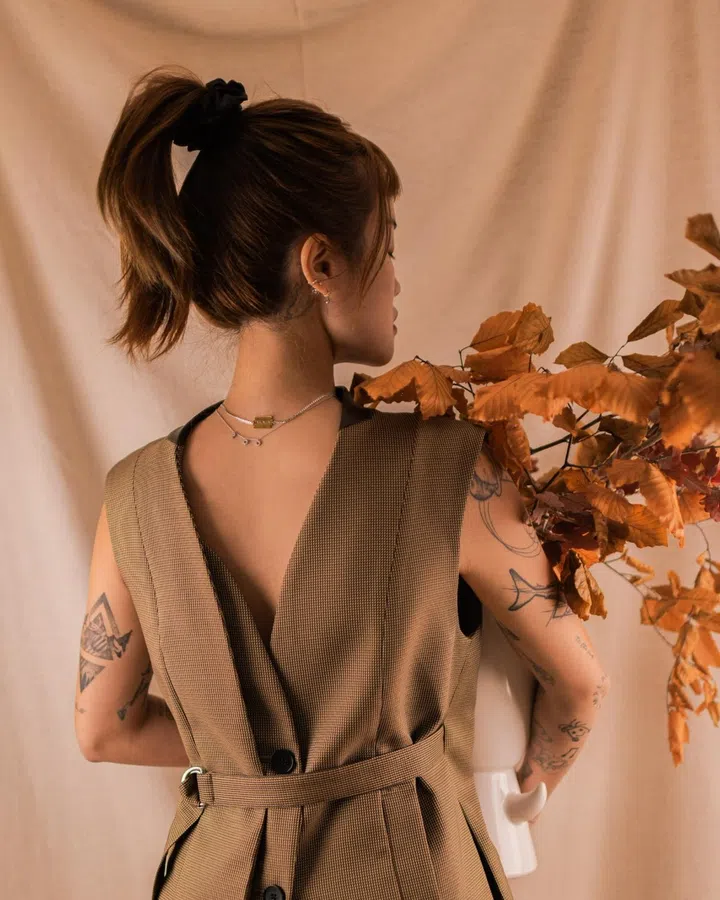
Credit: Courtesy of Steph Er
Er recently added another project under her belt: a partnership with homegrown jewellery brand ByCanary for a capsule collection titled Razor Sharp. Comprising a necklace and a pair of earrings, each piece is centred around a perfectly cut razor blade and is inspired by her belief in staying sharp and always staying on one’s toes.
“Considering how we live and work today, every job requires us to hold more than one role, and life expects you to always be on your toes,” says Er. “The Razor Sharp collection represents that: An individual who’s ready for anything work or life throws at you.”
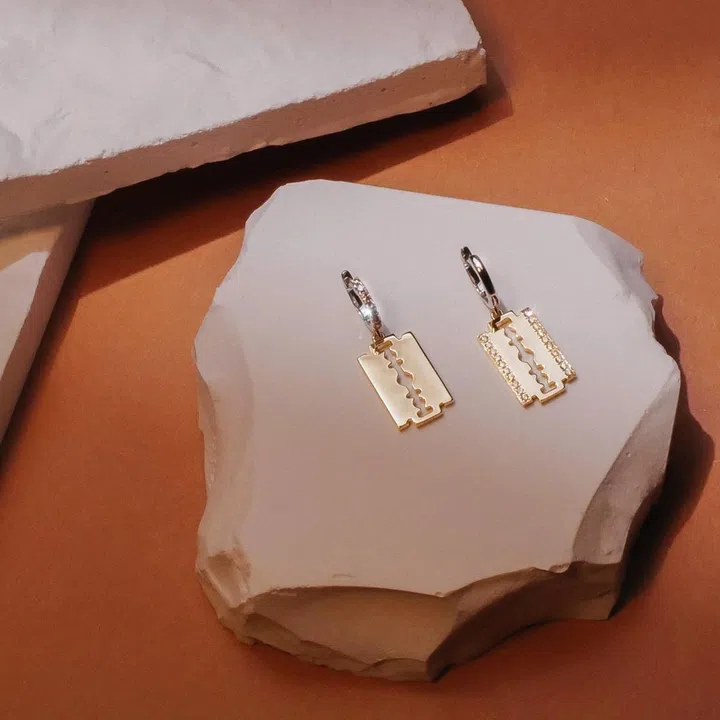
Credit: ByCanary
Pieces in the collection are available in both white and yellow gold, bespoke with diamonds. Additionally, the earrings are each unique and tailored to the wearer’s fancy and can be engraved with the wearer’s initials.
Beyond the stylish designs, Steph is also championing a dear social cause with the project: 10 per cent of Razor Sharp’s proceeds will go to Big Love Child Protection Specialist Centre, a non-profit that helps families with child protection concerns. She explores these issues in the latest edition of Arch Conversation, which sees her diving deep into the theme of growing up, and features both children and professionals sharing their views on the struggles children face.
We sat down with Er for a chat on child safety, mental health, and the importance of tough conversations. Spoiler alert: read on for a special guest appearance by Ara, Er’s cheerful seven-year-old daughter.
“Every designer that ByCanary works with can pick a charity of their choice to donate 10 per cent of proceeds to. I did my research and chose Big Love as there aren’t many organisations for child abuse.
In Singapore, child protection agencies can only try to rehabilitate the parents and their children to help them live together harmoniously. In some extreme cases, it will not be enough to do the job. That’s when the state steps in and places the child in a foster home. Big Love is one such intermediary before state intervention. The proceeds from the sale will go to counselling and therapy for the children, such as art therapy.
Child abuse is swept under the rug, for obvious reasons, but it’s something that we need to talk about, so that the community is aware and we know how to help someone who has been through abuse. I want people to spread the message to their kids and their kids’ friends. I told my daughter about the child protection hotline and to call in if she thinks that anything is wrong.
I thought about Covid-19 and how we were all stuck in our homes. For children who are abused, there is no escape and home becomes a jail. I was really concerned about that, which is also why I want to raise awareness on child abuse.”
“I’m not an expert, but schools look out for obvious signs like marks. But emotional abuse has no marks, so they observe the children’s behaviour. Schools also have their own staff who will contact the child protection centres if anything is wrong.
But I don’t think it’s just waiting for the signs to show up. When I was a kid, I was told not to talk about child abuse because it’s shameful, and it’s wrong to air your dirty linen in public. As a child you don’t think too much and you just follow instructions. We [need] open conversations on child abuse and not just say, ‘Eh don’t get so serious.’ People tend to do that when you talk about something important, [but] why can’t we just have these open conversations?
It’s not just about obvious telltale signs of abuse. Parents should talk to their children about this and let their children tell their friends. It takes a community. All of us need to play a part in helping the children. Cause I feel like every trauma that you go through as a kid, there is PTSD. I’ve seen it in my friends, I’ve seen it in myself. It causes deep emotional scars.”
“It’s not just about obvious telltale signs of abuse. Parents should talk to their children about this and let their children tell their friends. It takes a community.”
- Steph Er
“It’s very important to have open conversations with your child about your feelings, what you are going through, and your stress. If you’re honest and open, your kid will then have honest and open conversations with you about their feelings. Far too often, when I was younger, I didn’t talk about my pain, and as you grow older, [the pain] becomes scars. But if children talk about it, then we can resolve it. Ara talks to me about it all the time, so we can repair together. That’s why for parents, if your kid is sad or angry, don’t just say, ‘Stop crying, stop.’ You know what I mean?
Being a parent is very tiring, right? Even if I’m busy now, and I say, ‘Ara, stop,’ I’ll check in later and ask, ‘Hey, what was that about? Did you have to be angry or show your temper in that way?’ These conversations are very important and need to be revisited all the time. It’s not like, ‘Oh, I did it once. I did my job. Her mental health is fine.'”
Ara [to Steph]: “I know how to explain! You can focus on different things at different times. So for example, on the timeline: first you play with me and then you go to work, and then after you come back, you do your other stuff, you eat and then you come back to me. Then you work a little while, and eat a little bit more like that.”
Steph: “Yeah, so basically I schedule rest into my day. Now, everyone likes to talk about how busy they are. It’s almost as if going on a holiday is shunned upon. You should be taking breaks and if you want to take two days off, five days off, even a month-long sabbatical? If you can afford it, you should!”
Ara: “She can’t stop to do nothing.”
Steph: “Not all the time, you know! I think there’s no excuse [not to rest]. The human brain is so capable, it’s just what we tell ourselves that we can and cannot do.”
Steph: “Ara joins the podcast a lot – she watches us behind the scenes while we film. I think that’s very important. Your child needs to know what you do for work. When I was growing up, my dad, I always thought work was stealing my dad away from me. With Ara, I make sure that she sees what I do all the time. I bring her to job sites, meetings and everything that I do.”
Ara: “Also your office.”
Steph: “Yeah, she knows exactly what I do, so when I say I’m working, she knows I’m very serious.”
Ara: “Like interior designing?”
Steph: “Yeah.”
Steph: “I only have one daughter, some people have three kids. It’s really hard to juggle their time and I get that. I’m not saying that my way or the highway, right? But you have to take the time and make the time.”
Text: Cherry Tan/Female