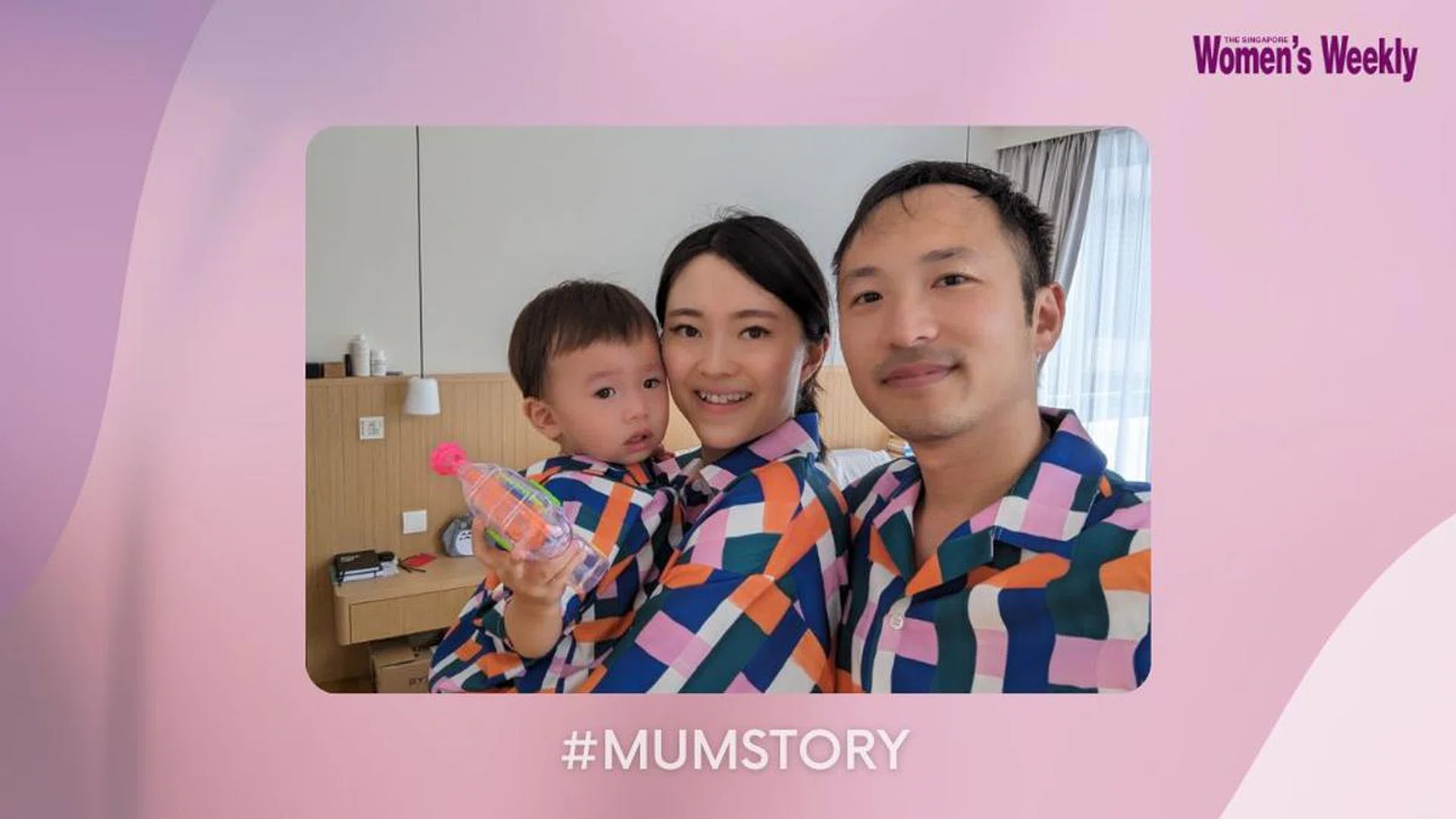
#MumStory: Pilates Helped Her Sail Through Pregnancy
"Despite gaining 16kg during pregnancy, I still felt light on my feet up to the day I delivered."
By Balvinder Sandhu -
Share this article
#MumStory is a series by The Singapore Women’s Weekly to uncover the underrated and underreported moments in motherhood, parenting and everything in between — because we believe every mum has a story worth telling. Got a story to share? Email us at sww@sph.com.sg or slide into our DMs on Instagram.
Pek Li Jun has always been active. She was on the track and field team as a high jumper in secondary school and junior college and, over the years, has done yoga, taekwondo, capoeira, swimming, running and hiking. However, she admits that, no matter how much she moved, she had never been taught how to move. This only happened when she picked up pilates, especially after taking private sessions in 2020.
“For the first time, I was being educated about the whys and hows of my body and movement. I wasn't just learning what exercises to do, but gaining an awareness and understanding that I had never even realised I lacked,” the 37-year-old reveals.
“Most importantly, I have gained knowledge about my body. If anything comes up, because life’s activities - like carrying a toddler around all day - can strain the body, I generally know how to make things better, whether it is to rest, stretch, release, mobilise or strengthen. That has also given me a lot of confidence,” she adds.
Li Jun currently runs Her Wellness Club with her mother, who was passionate about pilates after experiencing not just weight loss, but also gaining strength and confidence in her senior years. Inspired and encouraged by her mum, Li Jun embarked on her pilates instructor certification.
“We started working together in 2020. I was managing the boutique pilates studio SmartFit Pilates that she had acquired at the end of 2019. I started my own transformative journey with pilates and we had the opportunity to acquire The Moving Body group in 2021,” she shares.
Li Jun confesses she initially thought “pilates was great for older people”. But when she experienced how the movement practice supported her through pregnancy, Li Jun saw how it could be a positive game-changer for women's health.
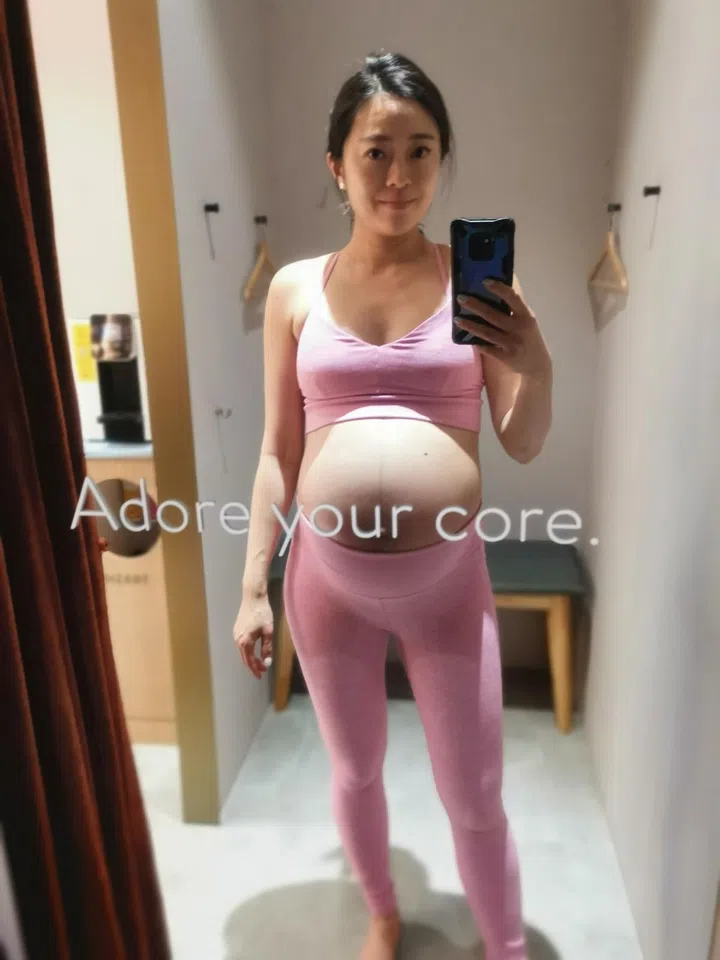
Li Jun at 38 weeks of pregnancy. Photo credit: Pek Li Jun
“As women who have gone through different phases in life, we wanted to offer that specific support to other women – because pilates offers such tangible support through pregnancy, postpartum, all the way to perimenopause, menopause and beyond. That is how Her Wellness Club was founded," she elaborates.
Read on for her #MumStory.
Who looks after your child while you're at work? How hands-on are you as a parent?
As they always say, it takes a village to raise a child. I’m very fortunate to have that village of support. My child goes to preschool for a few hours every morning, and then we have different caretakers rostered to different days of the week – my parents (two days), parents-in-law (two days) and aunt (two half days) until I come back from work. I usually wash him up and tuck him into bed six nights a week. On Friday nights, my parents-in-law kindly stay over and my husband and I try to have some couple time. Occasionally, when I have to work evenings or have dinner with my friends on special occasions, my husband will put our son to sleep.
What do you think are your points of privilege as a mum who's a business owner?
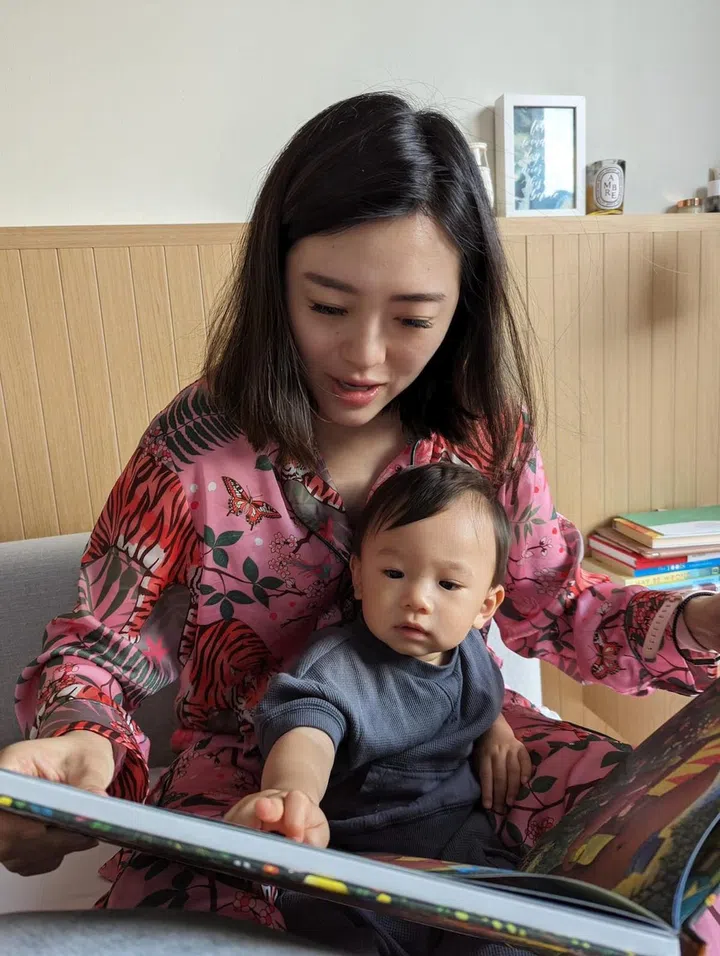
Storytime in the morning. Photo credit: Pek Li Jun
My greatest privilege, which I am grateful for every day, is having flexibility. When my son was younger, before the entire village of caregivers was set in place, I spent a lot more time taking care of him.
I could start working from his naptime onwards and over the weekend when my husband and parents were around. Sometimes, it did stress me out when there were more urgent matters at work that I had to take care of him. But on the whole I felt so lucky to have that kind of quality time with him, and I cherish those memories very much, although I guess other working mums would then have that on the weekend.
The flexibility was equally if not more valuable during my IVF journey as I not only had so many blood tests and doctor’s appointments, but also went for TCM appointments after my first cycle didn’t go well.
Could you share more about your conception journey?
I was married in late 2017 and we tried to conceive from late 2018 to 2021. I was diagnosed with a low ovarian reserve in 2019 and had hormone therapy in late 2020, to no success. In 2021, I started the process of IVF – and ended up doing three consecutive cycles of egg retrieval. We did what is known as "embryo banking" – collecting multiple cycles of eggs and have them fertilised and frozen, before my first implantation.
My first IVF cycle was cancelled on day 10 of my cycle, because even with hormone therapy I had only ONE egg, and my gynae did not think it made sense to proceed. I was devastated and felt very helpless but on his advice, went ahead with the next cycle. I also implemented multiple dietary and life changes and started going for TCM treatment. On the second cycle, he increased the dosage of hormone medication; I retrieved four eggs and ended up with one high-quality embryo. Since I wanted more than one child, I followed up immediately with my third cycle. This time, I retrieved 16 eggs and ended up with eight embryos!
I rested for one month, then implanted the one embryo from my second cycle retrieval – it was unsuccessful. I still remember the nervous excitement that pervaded my days from implantation up to the point of the pregnancy blood test, and then the crushing disappointment. I did a second implantation on my next cycle, with two embryos this time. I became pregnant with my son who is turning two years old this year. I still have six embryos and I definitely plan to have more children if all works out.
How did pilates help with your pregnancy?
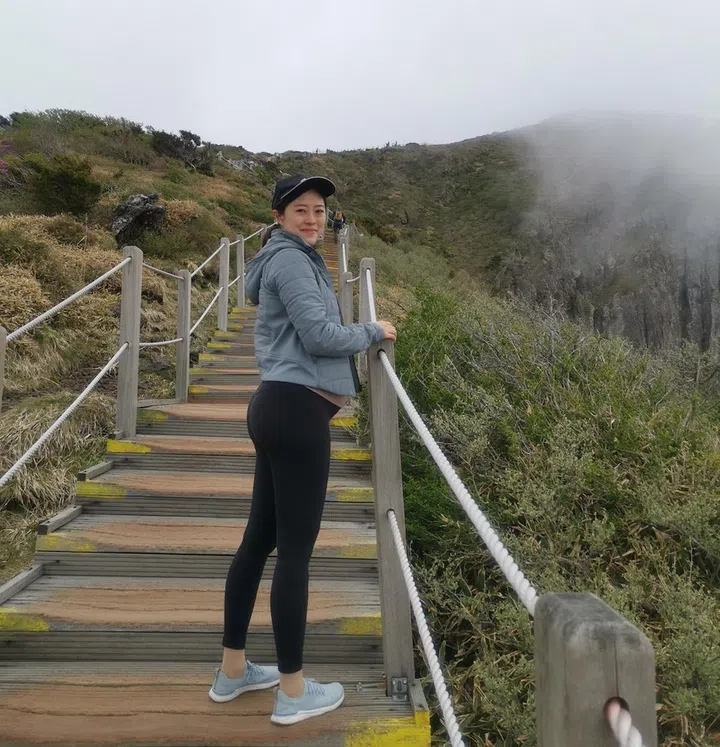
Li Jun on her babymoon hike in Jeju Island at 32 weeks of pregnancy. Photo credit: Pek Li Jun
Doing pilates two to three times a week until I was 39 weeks pregnant kept me strong, mobile and confident. My legs were continually strengthened. Despite gaining 16kg during pregnancy, I still felt light on my feet up to the day I delivered. I still remember my babymoon in Jeju Island at 32 weeks of pregnancy. I was happily hiking up a paved mountain to the consternation of some ajummas (middle-aged or older women in Korean) when they saw my belly. I also did not have typical pregnancy backache. I could even sleep through the night from the second trimester onwards without waking up to pee due to a strong pelvic floor.
You experienced diastasis recti after delivery and have mentioned that it’s possible to close the abdominal gap with certain exercises. What are they?
I had diastasis recti of about two fingers' width, which is quite normal for women after delivery. I would say that pilates can help reduce the gap, by helping women reconnect, engage and strengthen their core muscles through gentle exercises done in a quadruped position (all fours on hands and knees). Many people associate deep core activation with crunches, planks and lots of abdominal flexing, but it actually is much gentler than assumed. It is easier to start with the guidance of a certified pilates instructor.
What are your thoughts on women wanting to "bounce back" after giving birth?

Li Jun with her family. Photo credit: Pek Li Jun
To idealise "bouncing back" feels like it is negating that entire journey of hormonal changes, discomfort, pain, sweat, tears, energy, anxiety and more. Women deserve to understand, rediscover, reconnect with and appreciate their postpartum body. To be aware that their body has changed, probably forever, and that’s okay. Not expect or demand for it to go back to exactly the way it was.
In postnatal pilates, we see this as a three- to six-month process. However, there are women who rush back to doing intense exercise like they were doing pre-pregnancy, before their body is ready. Some of them end up with diastasis recti, or a worsened DR. We have seen women in our studios over five years after giving birth who still have DR – they didn't know they had it and they had never rehabilitated it. I would think of the postpartum period as at least one year, and even longer for women who breastfeed. The hormone relaxin which is produced during pregnancy continues to be produced until a few months after breastfeeding stops.
I'm not discouraging women from getting back in shape after pregnancy, but we should do so in a way that is kind, healthy and sustainable – physically, mentally and emotionally. For myself, it was only about 18 months after delivery, when I could finally wear my pre-pregnancy clothes again, although of course they didn’t fit in quite the same way.
What would you say to mums of young children who struggle to prioritise their own wellbeing because they have little or no help at home?
I really admire mums who do so much on their own and their immense strength. I would say that they could try injecting a bit of health and wellness throughout the day, and it will add up. For example, they could do a few stretches in the morning when they wake up, or get into squats or lunges while their kids are getting ready or if they’re waiting for the bread to toast, or water to boil.
Healthier nutrition habits like choosing whole grains, snacking on nuts and fruits, and drinking lots of water also help. They could also check in on their posture periodically through the day and consciously make an effort to sit or stand tall, imagining a string lifting them from the top of their head. Other things could be picking active family activities, like babywearing while hiking, or playing sports with older kids. They can round off the evening with five minutes of meditation and mindful breathing before sleeping.
When do you manage to squeeze in me time? What do you do?

Li Jun self-practising at Her Wellness Club's pilates studio. Photo credit: Pek Li Jun
I try to do a pilates class or self-practise twice a week, if I can fit it into the work day. It helps that I’m working in a pilates studio, but it still takes some effort and commitment to make it happen. I’m also a fan of temptation bundling or time-optimisation. For example, I blow dry my hair with a face mask on and watch Netflix at night after I shower. On Sunday afternoon when my son is usually at his grandparents' house, it’s my time for admin and planning the week ahead. I try and book a foot massage during that time, and bring my laptop along. Finally, I try to make time for some mindfulness meditation (mainly breathwork) every day. Sometimes it’s just 10 breaths when I wake up in the morning, or if I reach work early, I meditate in the car before I head up to the office.
What would you be doing if you didn't start this business venture with your mum?
I would probably still be working in advertising as a creative director, leading a far unhealthier lifestyle with bad posture.
What advice do you have for women who want to be mumpreneurs?
I’m pretty new in both aspects but I think being clear about your vision and values is important for both happiness and success. As many people say, your own business is like your baby. But what happens when you have an actual baby who is rivalling for your time, energy and attention?
There’s no right answer or formula for time management and prioritisation. You need to decide yourself what is essential in your double role. I think it’s also important to have no regrets, so I try to plan out my schedule ahead of time, ensure there is enough quality time with my son, and leave mum guilt behind when I’m putting my business first.