9 Signs You're Being Way Too Overprotective Of Your Kids
How do you know when it gets unhealthy? Here's what to look out for
By Gwyneth Goh -

Share this article
While protecting our children is absolutely necessary and the right thing to do, a more recent concept of “overprotective parenting” has surfaced with strong negative connotations in psychology. The general idea is that shielding your child from too much can become detrimental to their personal development—not just physically, but mentally and emotionally, preventing them from growing into well-adjusted, independent individuals.
Rescuing a child too quickly from situations, or unnecessarily helping them with tasks that are age-appropriate, sends certain messages to them such as “the world is too dangerous” or “you are not able” or “failure is unacceptable”. Albeit motivated by love and care, this kind of parental behaviour has counterproductive effects on a child’s discovery of the world and their own identity. Instead of swinging too far the other way into negligence though, the key is to strike the right balance between being protective and controlling. Granted, every child is different and some may need more guidance (and protection) than others, but these are some strong signs that you should maybe rein it in.
You’re constantly reminding them of potential dangers.
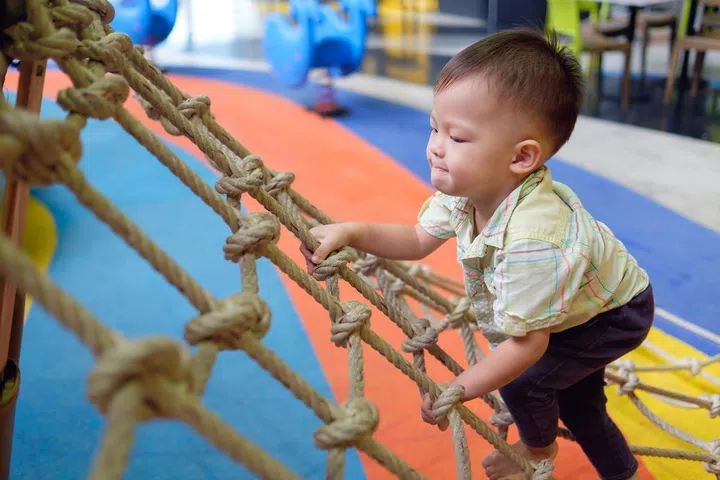
It’s important to establish this from the start: quite often, overprotective parents are simply anxious parents trying to keep their children safe from the many perceived dangers in the world. Because anxiety inevitably breeds anxiety, we should be careful that any personal bias towards threat or heightened perception of danger does not create undue stress and anxiety in our children.
For example, a personal fear of heights (acrophobia) or fear of falling (basophobia), when unchecked, can cause a parent to unduly fuss over a child learning to climb at the playground. It can thereafter lead to restricting the child from rock climbing with their peers when it becomes an age-appropriate risk they can take. This kind of overprotective parenting behaviour conveys to the child a sense that the world is dangerous, and children raised in such an atmosphere tend to have more phobias and anxieties themselves, less confidence and less competent social skills.
You continuously check in on your child when they’re away from you.
When they were younger, this probably looked like classic “helicopter” parenting at the playground where you hovered over them, fearful that they’d hurt themselves. Of course, our degree of care needs to be tuned to what is age appropriate—it is necessary to hover around a one-year old who is just beginning to walk, but a four-year old should have the freedom to explore play without a parent attached at the hip.

Now that your child is even older and out with their friends at a playdate or party, texting or calling them incessantly is hardly necessary. Contacting their friends or friends’ parents once you can’t get a hold of them demonstrates a lack of trust and impedes their sense of independence. If a child feels micromanaged and mistrusted, they may become even more guarded and deceptive because they fear they can’t be honest with their parents. Several studies have also shown that children with helicopter parents were more susceptible to anxiety and depression in their college years.
You decide who your child should spend time with, and habitually monitor their social activity.
It is definitely important to stay involved in your child’s life and take an interest in the company they keep, and if it becomes necessary to interfere because they are being corrupted by bad company, you must. On the other hand, an overprotective parent tries to tell their child who are the “right” people to hang out with from the very start. Overprotective parents also tend to intrude on their children’s worlds without regard for privacy, by reading their journals or logging into their social media accounts and reading their private messages.
Even though it can be tempting to discourage your child’s friendships with some children you may have found unacceptable, it is important that you give them the chance to learn for themselves how to discern good friends from bad friends, and how to be a friend in the process. It is also important to teach them, by example, the importance of privacy, respect and trust. Instead of attempting to dictate their behaviour and choices, teach them how to behave well, and leave the final choices to them. Otherwise they will not develop the necessary skills for conflict management, self-regulation and self-protection.
You choose which extracurricular activities your child takes, and plan and supervise their daily activities closely.

Clearly this is correct, because you know what’s best and want your child to have the very best so that they will succeed in life. Wrong! Children who grow up in overprotective households are often indecisive, procrastinate and lack the initiative, drive and motivation necessary to be successful in life.
Kids learn the vital life skill of decision-making through practice and with wise guidance, but overprotected children are denied the opportunity to make their own choices in life. Without practice or preparation, they grow up unable to make major decisions—they are either genuinely incapable of making a decision, or fearful of making the wrong one, since they’ve grown dependent on their parents to make choices for them. Without practice and the confidence acquired with experience, an overprotected child will flounder when it comes time to make critical life choices related to career and marriage and finances, etc. Ironically, overprotective parenting sets them up to fail rather than succeed.
You strictly discourage your child from taking risks.
Drawing from the earlier example of the child not being allowed to participate in rock-climbing, an overprotective parent often takes unreasonable precaution to protect their kid from the slightest physical threat or emotional discomfort. If we are constantly trying to keep our children from experiencing any negativity in life, they can end up detached from reality and later unable to cope with “the real world”.

It is impossible to keep them safe in a bubble, and attempting to do so can really backfire. Instead of helping your child learn how to navigate the unpleasant realities of life, preventing them from taking age-appropriate risks can nurture unhealthy fears (such as fear of injury, fear of failure and fear of the world) and cripple their ability to handle difficulties later in life.
You find yourself constantly doing things for them which they should be doing for themselves.
Undermining your child’s ability can lead to a lack of independent coping skills, lower self-esteem and diminished confidence in their own ability to solve everyday problems. Constantly monitoring and micromanaging your children sends the message that they are not capable or good enough to manage life by themselves.
If you “help” them with everything, from basic personal care and chores to homework, they will start expecting you to do other simple things that they can and should do themselves. Instead of embracing challenges and tackling problems independently, they will more likely become reticent and content to wait for others to take the lead. At the heart of it, you’re really not helping them by constantly helping them, because you’re simply not teaching them responsibility.
You go out of your way to ensure your child does not fail.
Another classic sign of overprotective parenting is the strong desire to prevent failure for your child. This includes rescuing them too quickly and offering unnecessary assistance, usually without being asked and often despite protests. The idea is to protect them from experiencing the pain of failure, which comes from a very well-intentioned place.

Though loving and well-meaning, by sheltering your child from the discomforts of failure and frustration, you are inadvertently denying them the opportunities to develop courage and resilience. It is only through exposure to risks and challenging experiences (including failure) that a child’s coping mechanisms can be honed and mature into courage and resilience—those qualities that will enable them to weather future adversity and unhappiness, instead of plummeting into depression on first encounter with hardship.
You overcompensate if and when your child does fail.
Do you find yourself defending your child’s mistakes or poor behaviour to friends or other family members? The idea of them failing or making mistakes might cause you so much personal grief and pain, even fear, that you involuntarily make excuses for them. Perhaps you feel like their failure or inadequacy reflects on you poorly as a parent, making you confront your own insecurities as a parent.
Overprotective parents often call their child’s teacher, hoping to resolve problems that way, rather than by coaching their child to deal with an issue themselves. They may request more attention or special treatment from a teacher like the do-over of a test, or adamantly defend their child even when they were obviously in the wrong. Kids used to having their messes cleaned up by their parents are often unprepared to deal with life’s curveballs—they are more easily stressed out by minor difficulties and prone to collapsing under major pressures.
You feel like it’s your job to manage your child’s emotions.

No parent likes to see their child upset, whether it’s because they fell down or had their feelings hurt by a friend at school. It hurts to see them hurt, and we want to try and make them feel better, so we console them—it’s only natural! The trouble starts when we make a habit of “over-consoling” them, of overcompensating for their unhappiness, e.g. an ice-cream treat for a boo-boo, a new toy because they were upset by a playmate, etc.
By hastening to cheer them up when they’re sad, and rushing in to calm them down when they’re angry, we’re not allowing our kids to learn how to self-soothe and work through their emotions. This inability to self-regulate emotions can give rise to mental and emotional issues in adolescence and adulthood.
Different studies have concurred that parental overprotection can lead on one end of the spectrum to narcissistic tendencies where overprotected children believe they’re extremely important and always entitled to special care and attention from others, and on the other hand, when these grown children have left the nest, to be prone to depression and dissatisfaction with life, once they’ve encountered reality and are unable to cope with the negative aspects of life. So do your kid a favour — love them loads but protect them just enough!