Why I Still Believe In Single-Gender Schools
As single-gender schools in Singapore become fewer, I’ve found myself thinking more deeply about why three of my children attend them — and why this choice still matters to me
By Kelly Ang -
Share this article
My older three children, who are 13, 11, and 8 this year, all attend single-gender schools.
That’s three different schools, if you’re counting.
“WHY?” is the question I get asked all the time.
And then, almost immediately: “Wouldn’t it be easier to put them all into the same co-ed school?”
Well. That argument is certainly compelling, considering how much time I spend daily driving up and down between my children’s schools.
My decision may also seem counter-intuitive, especially now. Single-gender schools in Singapore seem to be becoming a rarer breed. With falling birth rates and fewer children to fill classrooms, more long-time single-gender schools are turning co-ed.
Maris Stella High School’s primary section will start taking in girls from its 2027 Primary 1 cohort. Montfort Junior School will turn co-ed in 2028, with its secondary school planning to do the same by 2034 or earlier. ACS (Primary) will also become co-ed when it relocates to Tengah in 2030.
So yes, I understand why choosing an all-boys or all-girls school today can sound almost old-fashioned. Maybe even impractical.
And yet, as Primary 1 registration season rolls around, this is still a choice many parents find themselves quietly considering.
For me, it was never only about convenience. If it were, my life would look very different. It was also never simply about tradition, although I will admit that being an old CHIJ girl probably shaped me more than I realised.
It was about the kind of environment my husband and I hoped our children would grow up in — and what we still believe single-gender schools can offer, even in a world that is very much co-ed.
Yes, I know it sounds inconvenient
In spite of all this, my husband and I unanimously decided to enrol both my sons into his boys’ school alma mater in Primary 1.
One eventually made the switch to a different boys’ school in Primary 4 due to his placement in the Gifted Education Programme, while the other decided to go to the affiliated boys’ secondary school of his younger brother after his PSLE.
My daughter currently attends my girls’ school alma mater, CHIJ.
We chose to place them in our respective single-gender alma maters for a few reasons: because we had Phase 2A advantages during Primary 1 registration, because we enjoyed our time in our schools and wanted them to be part of that longstanding tradition and heritage too, and because we strongly believe in the benefits of a single-gender school experience.
Not everyone will agree with this, of course. But for our family, this was not a decision made only out of nostalgia.
Although nostalgia was definitely in the room.
The freedom to just like what you like
Growing up, I enjoyed watching football and Formula 1 racing, playing video games, tinkering with electronics and robots, and catching tadpoles and insects — activities more often associated with boys than girls.
I simply enjoyed these activities for what they were, without daily reminders of what boys and girls were “supposed” to like.

Looking back, it was a great privilege to be able to explore my own interests free from those gender pressures.
In school, I signed up for robotics competitions, spent some time in the media club fiddling with cameras and computers, and learnt to pitch a tent and start a fire outdoors as a Girl Guide.
Twenty-five years later, I see my children reaping similar benefits from being in single-gender schools.
While my sons do pursue some traditionally boy-coded activities like football, video games and coding, they are also equally interested in what society may deem to be more girl-coded activities, like singing in the choir or playing musical instruments in the band.
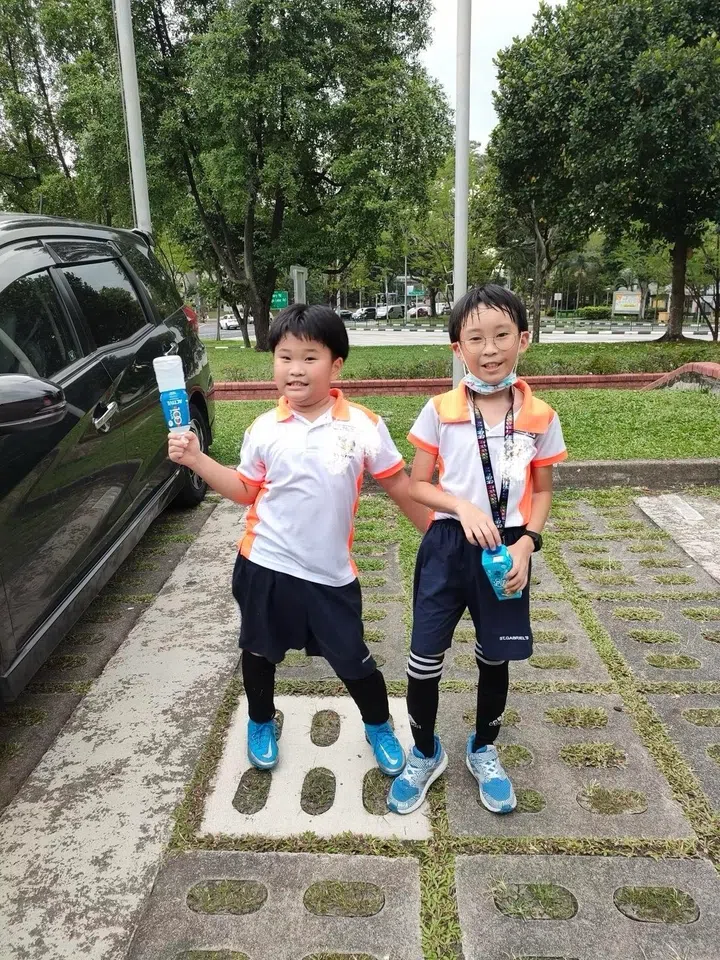
One of my sons enjoys cooking too, and likes to whip up breakfasts of grilled cheese sandwiches for the family.
Similarly, my daughter dances and plays the piano, but she also enjoys doing things her brothers like to do — playing video games, trying new sports, and reading books about dragons and zombies.
To them, these are just activities, not “boy activities” or “girl activities”.
I put it down to them being given the freedom to try these things in their schools (and definitely at home too) without the social pressure of certain activities being more boy- or girl-dominated.
And I love this freedom for them.
Growing up without asking if girls or boys can lead
Growing up in a girls’ school, I never questioned whether girls could lead, excel in math or science, or play sports.
In my reality, every sports captain, every head prefect, every top student — was a girl, like me.
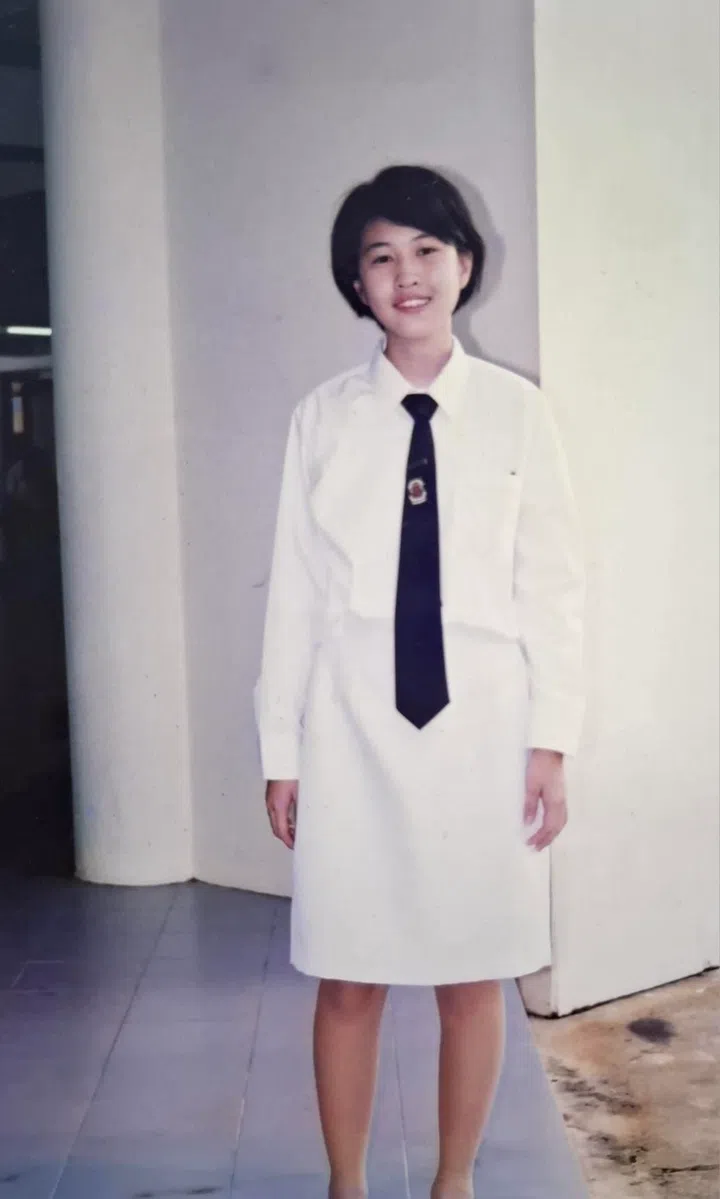
We settled our own logistics at camps, did the heavy lifting when tables and chairs had to be shifted around, led the whole school in cheering on our schoolmates at national sporting meets, and emcee-ed every event in school.
Being surrounded by role models who were not defined by gender stereotypes was profoundly liberating. It shaped the way I approached life as I moved into higher education and eventually, the working world.
I was unafraid to speak up in public, and I spoke to everyone in the same way, regardless of their gender.
This also sometimes came across as being a tad too blunt, as I later found out from my male classmates and eventually, senior colleagues.
Of course, this may have been partly due to my own personality. But more often than not, my classmates and colleagues would ask me, “You’re from a girls’ school, right?” whenever they wondered why I was so direct in the way I spoke and acted.
As a mum, I want my children to be able to grow up in the same kind of environment I did — surrounded by children of their own gender being given the same opportunities and participating in all areas of school life.
And I see it happening already.
My sons were both appointed Peer Support Leaders in their schools — roles that are often more associated with girls because they involve nurturing and caring for their peers. Although maybe this instinct of theirs is from years of having to be caring big brothers to their gaggle of younger sisters.
My daughter enjoys being the Prayer Monitor in her class, leading her classmates confidently in daily prayers after recess.
She feels no embarrassment about being loud and bold in school and outside. She feels no need to present herself as demure or soft in contrast to boys.
And I hope she holds on to that for as long as possible.
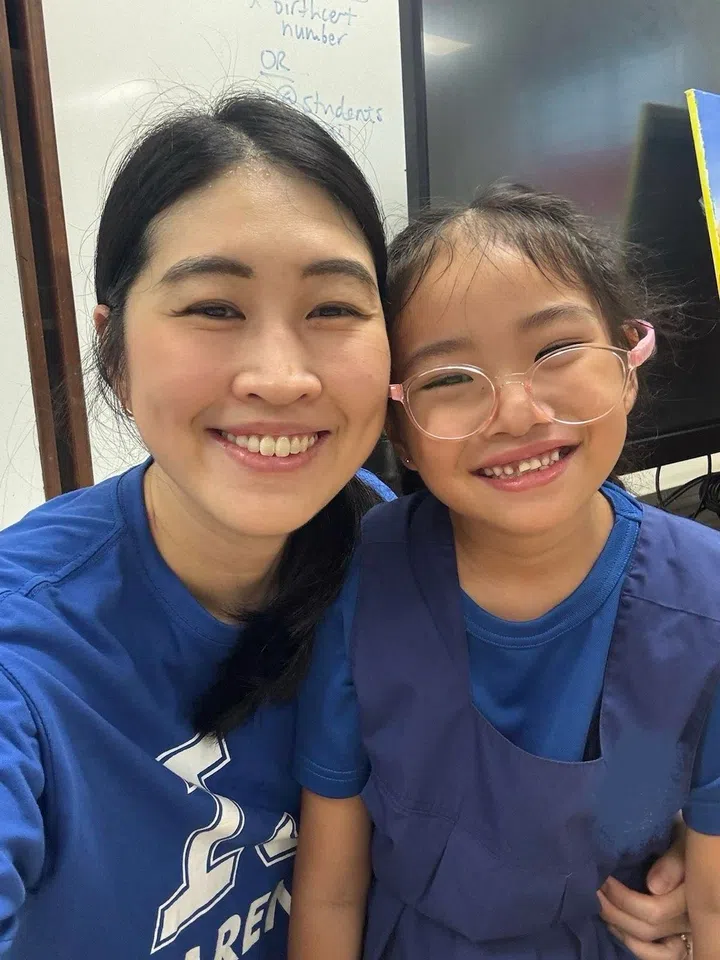
The world is co-ed. I know.
Ironically, one of the other reasons my husband and I sought out single-gender schools for our children is that we also believe there are important developmental differences in how boys and girls learn.
Broadly speaking, having children of a single gender in the classroom can help teachers tailor their approach to the general developmental needs of that group, without having to manage quite as wide a range of maturity levels.
These differences can feel more pronounced as children move towards adolescence, when girls tend to score better academically than their boy counterparts.
Girls generally reach puberty earlier than boys, and may mature earlier too, which can help with self-regulation and collaborative skills at a younger age. Boys, on the other hand, may have higher activity levels and benefit from more hands-on and play-based learning.
I see this firsthand among my own children, the oldest two of whom are boys.
They have always been more difficult about sitting down for extended periods of time at the table with me to do their revision or workbooks.
Anything past 20 minutes and I’ll hear choruses of: “I’m bored, mum!” or “I feel like I can’t sit another minute!” — and off they disappear to roll on the floor or jump on the couch.
My girls definitely complain too, but they are able to concentrate on their work for a much longer time than their brothers.
Yes, even the five-year-old.
My boys’ schools have also been very intentional about rolling out programmes throughout the term to keep the boys meaningfully engaged — things like multi-term inter-class sports meets and assigned play areas at recess, so they can really enjoy their playtime.
They tell me they look forward to school every day. The recess play also helps them focus better in class after they have run some of that energy off.
And honestly, I understand. If I had to sit still for hours at a stretch at their age, I would probably want to roll on the floor too.
Maybe this choice won’t be around forever
That said, I’m not unaware of what is happening around us.
When I hear that more single-gender schools are turning co-ed, I don’t think, “How dare they?” I understand why it is happening. Schools have to respond to numbers. Singapore has fewer children being born. Families are smaller. Practical realities matter.
But as these schools become fewer, I also find myself thinking about what gets lost when a certain kind of school culture disappears.
While my husband and I appreciate the single-gender school dynamic, I also recognise that it’s not for everyone.
Some people I know didn’t have good experiences in single-gender schools growing up and hope their children will have a better schooling experience. Some people had wonderful experiences in co-ed schools, and strongly believe in the benefits of a boy-girl schooling environment.
I can understand that too.
Single-gender schools have worked well for us so far, but I wouldn’t rule out sending my younger children to co-ed schools either, if I really felt they would do better there.
Because as with everything in parenting, the question is not who is right, but what is right for each unique child.
For my family, this is the choice that still feels right.
Yes, it means more school runs. Yes, it means explaining myself every time someone asks why we didn’t just make life easier. And yes, I know my children still need to grow up learning how to relate to the opposite sex, because the world outside school is not neatly divided into boys and girls.
But single-gender schools gave me something I still value.
A sense of identity. A space to grow into myself. Friendships that felt formative. A school culture that stayed with me long after I left.
Maybe that is why, even as these schools become fewer in Singapore, I still find myself choosing them for my children.
Not because I think the old way is always better.
But because some things are worth thinking twice about before we let them fade away.
Kelly Ang (@kelthebelle) is a freelance writer who spends an equal amount of time each day writing, driving her kids around, nagging at them (sadly) and planning her next family adventure. She’s still learning new things about being the mum her kids need, 13 years into this motherhood gig.