United By Loss, These Two Friends Are Working To Normalise Mental Health Conversations
A well-being festival, a podcast, and facilitated workshops are part of Calm Collective's efforts to break the stigma around mental health
In the past few years, the veil around mental health and self-care has slowly been lifted, and conversations surrounding such topics have been brought into the open with more acceptance.
But it’s only the tip of the iceberg. According to Calm Collective, a local mission-driven organisation that aims to break the stigma of mental health, there’s still more that can be done.
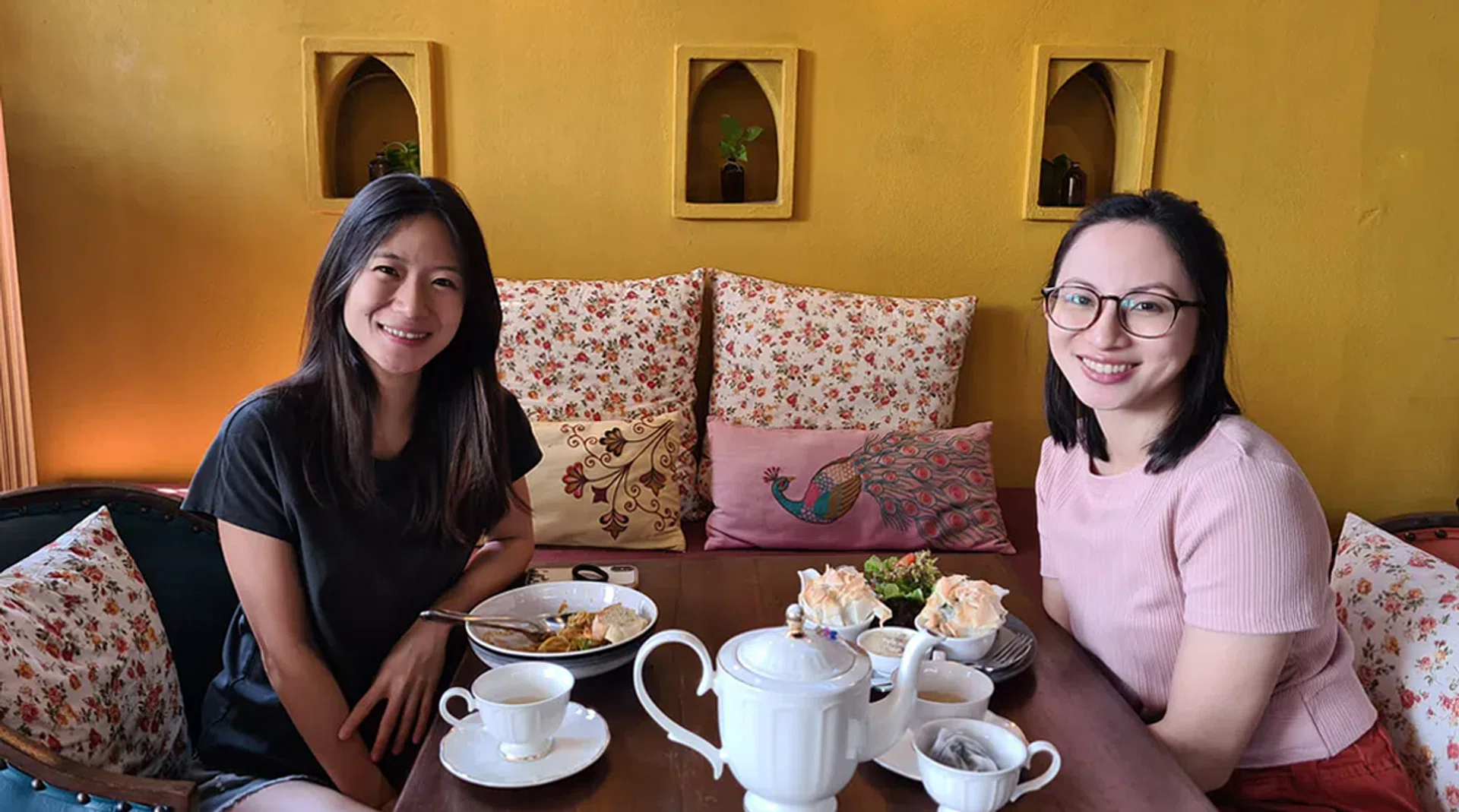
While the Covid-19 pandemic has “at the very least accelerated the attention on mental health, with more people starting to realise how important it is”, normalising conversations around mental health – especially in Asia – will take time as it’s “a huge topic, with many aspects to unpack and normalise”, says Sabrina Ooi and Alyssa Reinoso, founders of Calm Collective. The duo launched the organisation in the thick of the pandemic in 2020, as a community response to Singapore’s COVID-19 lockdown.
The founders had gotten to know each other through mutual friends, and are tragically united by loss. “I met Sabrina through my husband’s close friend, and tragically, we lost both [my husband and his friend] to suicide within two years of each other (in 2015 and 2017). Both men struggled with mental health issues but the societal stigma around mental health stopped them from getting the help they needed before it was too late,” reveals Alyssa.
Sabrina continues: “Fast forward to Singapore’s COVID-19 lockdown, mental health services were considered non-essential during a time where our mental wellbeing was put to the test – being forced together or apart and navigating all the changes. This gave us the impetus to band together to form Calm Collective, to support our community through a series of webinars that featured mental health professionals and practitioners who shared practical strategies to support our well-being.”
Their vision? To break the stigma of mental health in Asia, so that people can get the help they need. In order to do so, they’re working towards normalising the mental health conversation in Asia.
“Much of the stigma in this part of the world is cultural,” the duo notes, highlighting that it’s common for those who have grown up in Asian cultures to be “ingrained by the previous generations that we need to ‘save face’ and not let anyone know if we’re struggling because it could reflect badly on our families”. A lack of understanding around the topic as it’s not often taught about in schools – or spoken about at home – is also a factor.
“It’s a vicious cycle – if nobody talks about mental health and nobody around us ever shares that they’re going through a mental health struggle, we naturally feel alone or even ashamed of ourselves if we struggle with mental health and are less inclined to seek help. Misconceptions also grow in the dark. Without the proper discourse around mental health, it becomes even scarier to deal with and tackle.”
As the duo explains, Calm Collective has a wide range of programmes and “a breadth of topics from mental illness to mental wellness” which helps “make content as relatable and accessible as possible”.
Their Calm Circles programme, for example, has them hosting facilitated peer-to-peer conversations for the community around various topics, from navigating change to drawing healthy boundaries.
They have also launched Calm Conversations, a mental health podcast delving deeper into mental health stories and issues such as suicidal loss, toxic relationships, and anxiety.
The organisation also regularly organises various mental health talks and workshops, spotlighting mental health professionals and also people with lived mental health experience. Past talks include topics such as dealing with imposter syndrome, or dating with a mental health condition. These programmes are all part of the effort to encourage society to speak openly about mental health and get the help that they deserve.
The past couple of years have perhaps seen the quickest rise in conversations around mental health. This is in part due to the loneliness and anxiety exacerbated by the pandemic and its multiple lockdowns, which then placed a focus on such issues.
“When we started in 2020, there was not that much discourse on mental health in Singapore at the time. Since then, the mental health landscape has become really vibrant, with many more organisations working on different aspects of mental health. We’re also seeing many more individuals and corporate organisations reaching out to learn more about mental health.”
Conversations and discussions around why mental health is important might have increased, but there’s still more work to be done, highlights the duo. “While there’s more mental health awareness, there’s still relatively low mental health literacy, which leads to misconceptions like: ‘mental health is only important for people who are struggling or suicidal’, or that ‘mental health is only for young people’. Moving forward, we hope to educate the community to learn that mental health is for everyone, and each of us can work towards having good mental health proactively. One simple thing to realise is that our brain is an organ, and it can fall sick too.”
To reach out to the wider community through specially curated programmes, the organisation started CalmCon, an annual mental health & well-being festival. “While we’ve hosted lots of talks around mental health and grown a passionate community, we wanted to expand and scale our reach through CalmCon, as there’s still a large population who don’t know much about mental health and still perceive it as something that only pertains to mental illness,” they explain.
A festival helps to “appeal to the broader community by featuring topics and speakers that would resonate with them”, they elaborate. 2022 marks the second consecutive year that the festival has taken place, and this year’s iteration is focused around “well-being for your whole being”, whether it’s workplace well-being, navigating mental health challenges, or being one’s best self both mentally and physically.
The duo summarises: “Ultimately, we wanted to highlight the fact that mental wellness encompasses taking care of both our mind and body, and that will affect how we show up in the world, whether at work, with friends, or with our families.”
Text: Cheryl Lai-Lim/HerWorld