Meet The Gen Z Mums Who Had Kids Before 25
Despite doubts and stigma, they chose the path of young motherhood and are fully embracing it
By Cherie Lok -
Share this article
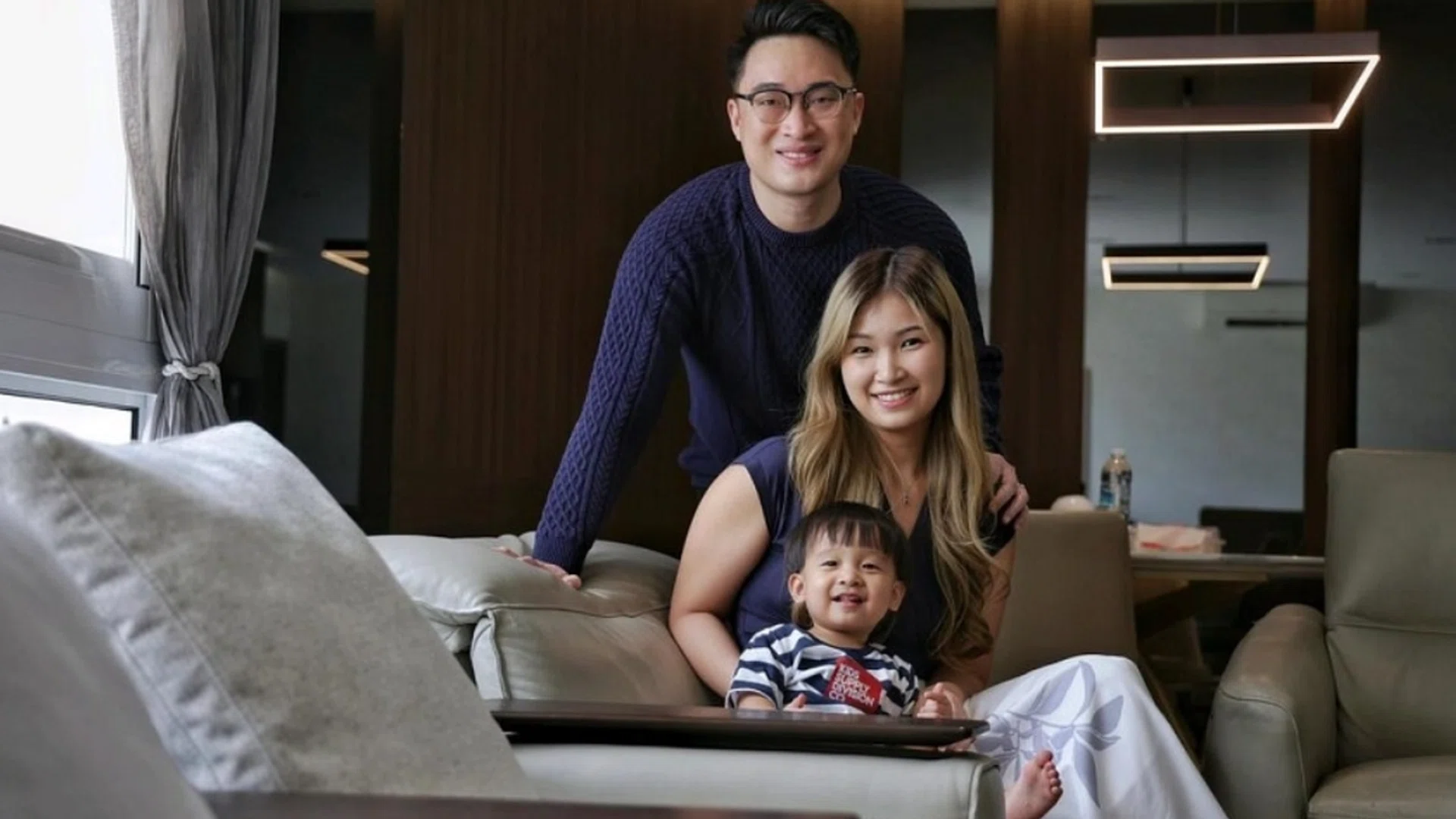
In another life, 22-year-old Louisa Iswahyudi Yeo’s days might have been spent at the office, poring over stacks of legal documents. Perhaps she would have migrated to Australia, got called to the Bar and scaled the corporate ladder. For a while, that was what she thought she wanted. Then, everything changed when she found out she was pregnant in her second year of law school. The University of Melbourne student was just 19 years old, and she had met Singaporean Justin Yeo, her then-boyfriend and classmate, only a year ago.
“I was nervous, of course, because there’s a stigma attached to becoming pregnant at a young age,” the Indonesian national tells The Straits Times in an interview at her in-laws’ HDB flat in Pasir Ris.
“At the same time, I felt like a child was a blessing, so it’s something I shouldn’t be ashamed of, especially since we love each other.”
Still, she fretted about how her strict parents would react, joking that she considered booking a hotel room in case her father kicked them out of his house when they flew to Yogyakarta, where her family lives, to deliver the news.
To her surprise, the businessman embraced Mr Yeo, saying “I now have a son”.
“My dad told him, ‘You must be a good father, build a nice family.’ And because he was so supportive, I didn’t care what anyone else thought,” says Mrs Yeo, who is the elder of two daughters. She moved here in November 2022 with Mr Yeo.
The couple tied the knot at the end of 2022, and in April 2023, their son, Hans Kingsley, was born. They moved into a five-room HDB flat in north-east Singapore which their families helped them purchase in early 2024. Mr Yeo, 26, found work as a financial consultant, while Mrs Yeo became a stay-at-home mum.
She never finished her law degree, but has no regrets.
“I thought it was cool once, but I now know that a career in law is not for me. Being a lawyer is such a stressful job, and you need to invest so much time and mental energy in order to succeed.
“I was not sure about my future before, but I’ve now found my purpose in life. I know that I want a loving family and to raise my child to be a good man. It’s the small things – like having dinner at the end of the day – that warm my heart,” she adds.
While Mrs Yeo was thrust unexpectedly into motherhood, some of her peers made the deliberate choice to settle down early.
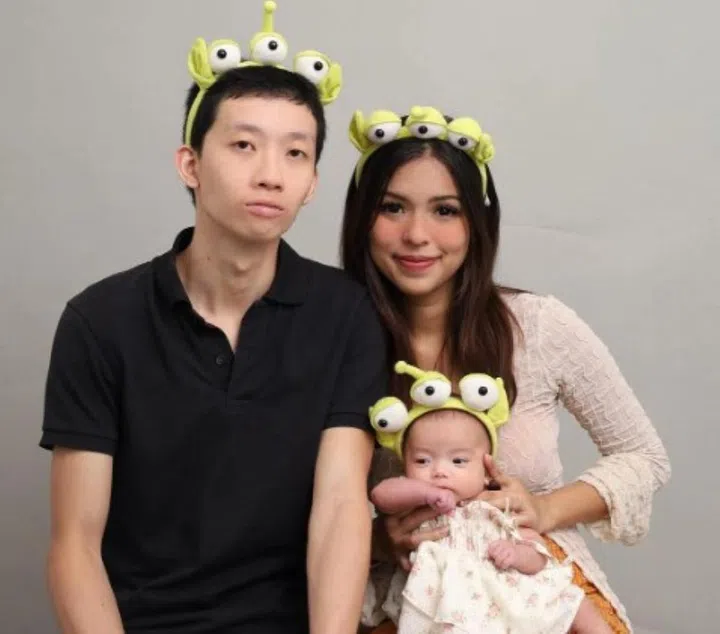
Ms Khairun Nisa with her husband, Mr Chin Ze Xiang, and daughter Inaya. Photo: Courtesy of Khairun Nisa
Senior pre-school teacher Khairun Nisa, 24, got married three years ago at the age of 21, eight months after a mutual friend introduced her to her now-husband, Mr Chin Ze Xiang, also aged 24, who works as a chef.
The speed at which their relationship progressed shocked her friends – one even blurted out, “Why”, instead of the usual congratulations when Ms Nisa broke the news – but the couple was sure they were ready for marriage.
“Part of the reason was because I craved independence. Growing up in a strict household, I didn’t get a lot of freedom. My parents used to say that I could have my freedom once I got married,” says the mother-of-one, who is the third of four children.
“Of course, marriage is a very serious thing, but I felt like I had met the right person, so I felt ready. Plus financially, I was okay.”
In late 2022, the couple moved into a four-bedroom HDB flat in Bukit Panjang. A year later, they welcomed daughter, Inaya, on a warm Wednesday afternoon in September 2023.
That was also the year 28-year-old Mavis Huang gave birth to her third child.
“I’ve wanted to be a mum since I was 16. So getting married young would help me achieve that because I want to give my children my youth,” says the social media manager, who is married to Mr Joel Peh, a youth pastor at 3:16 Church, who is eight years older.
The couple met around 15 years ago, at a study group organised by their church for the community. Mr Peh, then 21, was helping out as a tutor and struck up a friendship with the then 13-year-old Ms Huang, though she clarifies that neither had romantic feelings for the other yet.
It was only after she turned 18 that they became an item. At the time, she was midway through her studies at Singapore Polytechnic, while he had just started work as a teacher after graduating from Nanyang Technological University with an engineering degree.
They bonded over their shared values, though the large age gap meant that his parents initially had concerns.
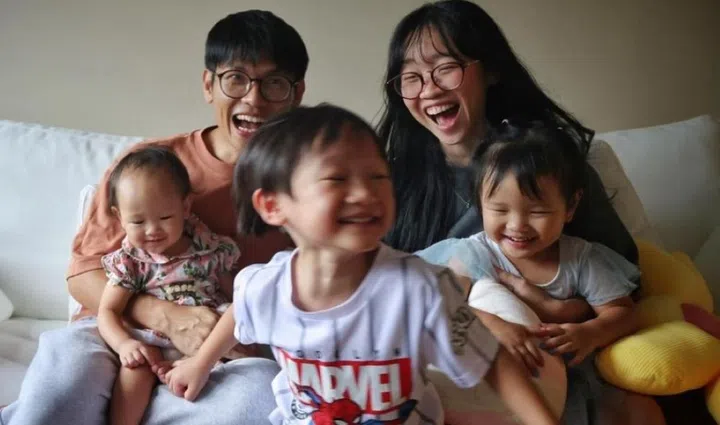
Ms Mavis Huang with her husband Joel Peh, and children (from left) Miyabeth, one; Jonathan, five; and Jemmalyn, three. ST photo: Jason Quah
She, however, had no qualms.
“Even though he’s eight years older, it’s not like I don’t know him because we’ve had a long friendship. So we’ve seen each other at our worst selves, and I know he’s not a creep. Also, he’s young at heart because he works with youth in church, so we could connect.”
Encouraged by their friends not to wait too long after finding the right person, the couple got married in 2018 when Ms Huang was 22. They started a family soon after: son Jonathan was born in 2019, followed by daughters Jemmalyn in 2021, and Miyabeth in 2023. Home is a five-room HDB flat in Bedok, which they bought with their own savings.
Kids versus career
The path of young motherhood, a once-perennial rite of passage for most girls on the cusp of adulthood, is the road less travelled these days. Amid expanding opportunities for women, few are choosing to have children before 25.
In 1980, the resident age-specific fertility rate for females between the ages of 20 and 24 was 84.9 per thousand women. By 2023, that figure had fallen to 10.6.
The median age of first-time mothers has continued to trend upwards, rising from 30.3 years in 2013 to 31.6 years in 2023, according to the Family Trends Report published by the Ministry of Social and Family Development in July 2024.
The reasons are no secret: In the battle between family and career, women often feel like they have to pick a side.
Dr Mathew Mathews, a principal research fellow at the Institute of Policy Studies (IPS), who studies issues like family and social inclusion, says: “People tend to wait until they’re more secure in their career to have children. If they are concerned about career mobility and progression, they might want to focus on their career for a certain season, to show that they’re competent and deserving of a promotion.”
He adds that while having children is still an important milestone for many young people, many now derive a stronger sense of identity from their career.
“We keep saying it (juggling a career and motherhood) can be done. But I think, realistically, it’s very difficult because when an employee is young, they have to battle with a larger contingent of contenders,” says Professor Paulin Straughan, a professor of sociology at the Singapore Management University.
She explains that someone in his or her 30s, in contrast, would have had some time to garner the respect of colleagues and establish a foothold in the company.
Ms Huang, however, flipped the script by choosing to get her home in order first.
“I think many times, we feel like we need to get our careers sorted out first, have this amount of money, then start a family. But I think I’m in a very blessed place to say I was able to grow with my husband. I wasn’t that concerned about needing to be in a certain position in a career before getting married.”
An aspiring video editor with a diploma in communication and media studies from Singapore Polytechnic, she had an inkling of the kind of work she wanted to do, but had no firm career path in mind. She worked for a social media agency for around two years before taking on a full-time video production role with 3:16 Church in 2017.
However, the long hours and weekend shoots meant that work was clashing with her parental duties. With the arrival of her youngest child, she made the switch to social media management within the church at the end of 2023, and now enjoys greater flexibility.

Ms Huang has wanted children since she was a teenager. ST photo: Jason Quah
“This phase in life that I’m going through doesn’t make me better or worse than other people. This is just my path that I can grow from. Someone else who’s put his or her career first can grow from that. How we grow is very different, but it’s still growth.”
But beyond career prestige, there is another, more practical consideration to delaying parenthood.
Dr Mathews points out that career stability often goes hand in hand with financial security, and most couples wait until they have built up a larger stash of savings before deciding to start a family.
That was in part why Ms Nisa initially wanted to wait a bit longer before having her first child.
“When I found out I was pregnant, I had actually just started a new job. I hadn’t even passed probation. But thankfully, that new job came with a big increment from my previous role, so I thought that maybe it would be okay,” she says.
Her husband also received a promotion around the same time, and the couple had already secured a flat, in part with the money they had saved over half a decade.
Ms Nisa, now studying part-time for a bachelor’s degree in early childhood education at the Singapore University of Social Sciences, has been working part-time jobs since she was 16. On top of that, they had a small Covid-19-era wedding for around 100 people, which cost them only around $5,000.
The family now has enough to hire a domestic helper, whose arrival in August freed Ms Nisa up to focus on her full-time teaching job at a pre-school.
“For now, I want to settle into my new role as a senior teacher. But in the long term, I’d probably look into becoming a vice-principal, then principal.”
A lonely journey
They may have cracked the career conundrum – or at least made peace with it – but these young mothers still face obstacles because of their youth.
Though at 23, she was no teen mum and does not have to contend with the ridicule this group sometimes faces, Ms Nisa still had her fair share of doubters.
“People around me were not very confident in my abilities because I was very young. I was always getting unsolicited advice, which people think I’d be grateful for because of my youth, but it could get quite annoying,” she says, relating unwanted opinions she got on swaddling or feeding her baby.
“I had a lot of things that I wanted to be done my way. I’m on social media a lot, so I see a lot of information that might differ from my parents’ era. So it was very overwhelming because a lot of people around me weren’t understanding my decisions,” she adds, recalling instances when she clashed with her parents over how many visitors to receive after giving birth.
Her preference was for only immediate family, but her parents invited extended relatives too. In the end, she had more than 10 visitors on the day she returned from the hospital.
For her next birth, she says she will hold her ground. “It made me so tired and affected me so much that I won’t be doing it again with my No. 2.”
Like other Gen Z mums, she is determined to do things her own way.
Ms Nisa wants to inculcate the values her parents taught her – qualities such as good manners, being polite, respectful and empathetic – in Inaya, yet will try not to resort to physical punishment to get her point across.
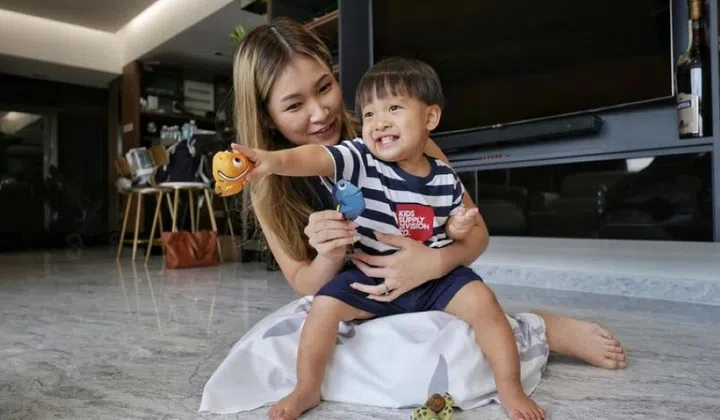
As a stay-at-home mum, Mrs Yeo sometimes struggles with loneliness. ST photo: Kevin Lim
Mrs Yeo, who weighs her parents’ advice against what she reads on Google or TikTok, is determined not to shelter her son too much. She says she was overly coddled and did not learn how to be independent until she moved to Australia for university. So, she wants to let her son make his own mistakes and learn from them.
She will not be hiring any help either. Because her parents, who owned a small business, were busy working, she grew up under the care of maids.
“Even though my parents tried to be present, I saw them only at night. So I chose to be a stay-at-home mum so that I can look after my son myself and make sure he has the emotional security that I’ll always be there for him.”
But with only her child and mobile phone for company on most days, she feels isolated.
She did not grow up here and has not had much time to socialise since giving birth. Her days tick on at a set and steady pace: She gets up, does her chores, feeds her son, then plays with him. Rinse and repeat.
Occasionally, she creates user-generated content for brands to use as advertisements – a side hustle that keeps her occupied and financially independent – or films a TikTok video about her life as a stay-home mum.
“I love talking to people. But I don’t have any friends here, so I don’t have anyone to talk to. As a young mum especially, I don’t have any mum friends who understand my feelings as a mum. So I started making these videos in the hopes that other mums out there don’t feel as lonely,” she says.
The friends she does have are overseas and unable to relate to her struggles. “It’s harder to connect with them sometimes because I’m no longer in university. We still talk, but it feels different.”
It is a struggle shared by Ms Nisa, who felt somewhat alienated from her friends during her pregnancy. They were at vastly different stages of life – they were juggling university course work or going on first dates, while she was “literally expecting a child” – that their friendship sometimes seemed like a marvel.
In the end, however, they found their rhythm despite different trajectories.
“There’s no awkwardness now. I talk about my baby all the time and my friends are very involved. They love to ask about her, to see her. And when they talk about their dating life, I don’t freeze up. We participate fully in one another’s conversations.”
Combatting Fomo
But do they ever feel like they are missing out on their youth?
For all three, their answer is a resounding “no”.
Mrs Yeo says she has been there and done that. She has studied overseas, gone on road trips and travelled to different countries growing up. So, she no longer craves the “freedom” to up and leave any time she wants.
Besides, she points out, there are other ways of seeing the world and finding happiness – like going on walks with her family.

Ms Nisa’s daughter will take Malay as her mother tongue and learn spoken Mandarin at home. Photo: Courtesy of Khairun Nisa
In Ms Nisa’s case, her past life is an echo that sometimes resurfaces with a pang of yearning.
“Just the other day, I started to miss the feeling of riding my motorcycle and listening to music. Right now, I just ride to work and back, but last time, I used to ride everywhere with my friend. We would go to Johor Bahru or just ride around Singapore,” says the owner of a Honda NSR150 sports motorbike.
But motherhood does not mean having to give all of it up. Though she cannot go on joyrides as often now, she still goes on a quick jaunt around the island once in a while, leaving her baby in the care of her husband.
“I wouldn’t say I’m losing a part of myself. I think I’m just growing.”
With the reordering of her life came a reordering of priorities. She was surprised at how her own desires took a backseat after the arrival of her baby.
“If I had to pick between going to an indoor playground for my baby and going to some make-up pop-up, I’d probably choose the playground. It just makes me happy to choose my baby.”

Ms Huang has no regrets about having children early, and says she has found joy and meaning in motherhood. ST photo: Jason Quah
Ms Huang says motherhood has made her more intentional too. She has had to give up gossiping and girls’ trips, but counts sleep as her only real sacrifice. She used to wake up every three hours to feed her children, now reduced to once a night.
“I may be missing out on impromptu trips to Vietnam over the weekend, but my friends are missing out on watching a child grow. Everyone’s missing out on something – it’s just a matter of whether you’re okay with it,” she says.
How to help the stork
They may sound like they have got it all figured out, but like all families, theirs are not perfect.
Ms Huang says she struggled with mum guilt – whether she was doing the right thing, whether she was allowed to indulge in trips to Malaysia or date nights – after giving birth to her first child.
Ms Nisa, on the other hand, found herself helpless on many nights, unable to figure out how to calm her fussy, crying baby. And while waiting for her daughter to be granted a place at infant care, she and her husband used up almost all their annual leave taking turns to look after Inaya at home.
She plans to have another child after April 2026, in order to snag the extra 10 weeks of shared parental leave that will be rolled out then.
However, experts feel these extra provisions might not be enough to convince more Singaporeans to start families early, if they are not already inclined that way.
Prof Straughan says: “Every additional tweak to the pro-family basket will be welcomed by those who have decided to have children and perhaps bring their timeline forward, but won’t move the national needle.”
She adds that the key lies in persuading Singaporeans, especially those with access to more opportunities, that children are a worthwhile investment. And the ubiquity of badly behaved spoilt brats throwing tantrums in public – a result of society’s increasingly prized perception of children, she says – is making that harder and harder to do.
IPS’ Dr Mathews is not convinced that the extra parental leave can engender significant change on its own either. Instead, it has to be bundled together with other policy shifts like more housing, flexible work arrangements and other moves to make the cost of rearing a child more affordable.
“It needs to come as a package, so people get the confidence that society is right behind them,” he says.
Community will play a big role too, according to Prof Straughan. And indeed, the mothers ST spoke to say they could not have done it without their support systems of parents, in-laws, siblings and friends.
Still, are the new pro-family measures enough to convince these young mothers, who already have a head start in fertility and age, to have more children?
Mother-of-three Ms Huang does not have a firm answer, but she is not closing the door on the prospect just yet.
“I don’t want to say yes carelessly to having more kids because I do see the limitations, I can feel my attention and resources being stretched. But if God gives me another child, I will be open to it.”
Ms Nisa wants at least two. Her husband, however, is undecided. “He’s always changing his mind. Sometimes, he says three or more, then he looks at our bills and is like, never mind, one and done. Children are really expensive, so we have to be realistic.”
As for Mrs Yeo, she is sticking with one and done. “I want to be able to let my son go overseas and take piano lessons. I prioritise quality over quantity. This way, I can focus all my love and attention on him.”
This article was originally published on The Straits Times.